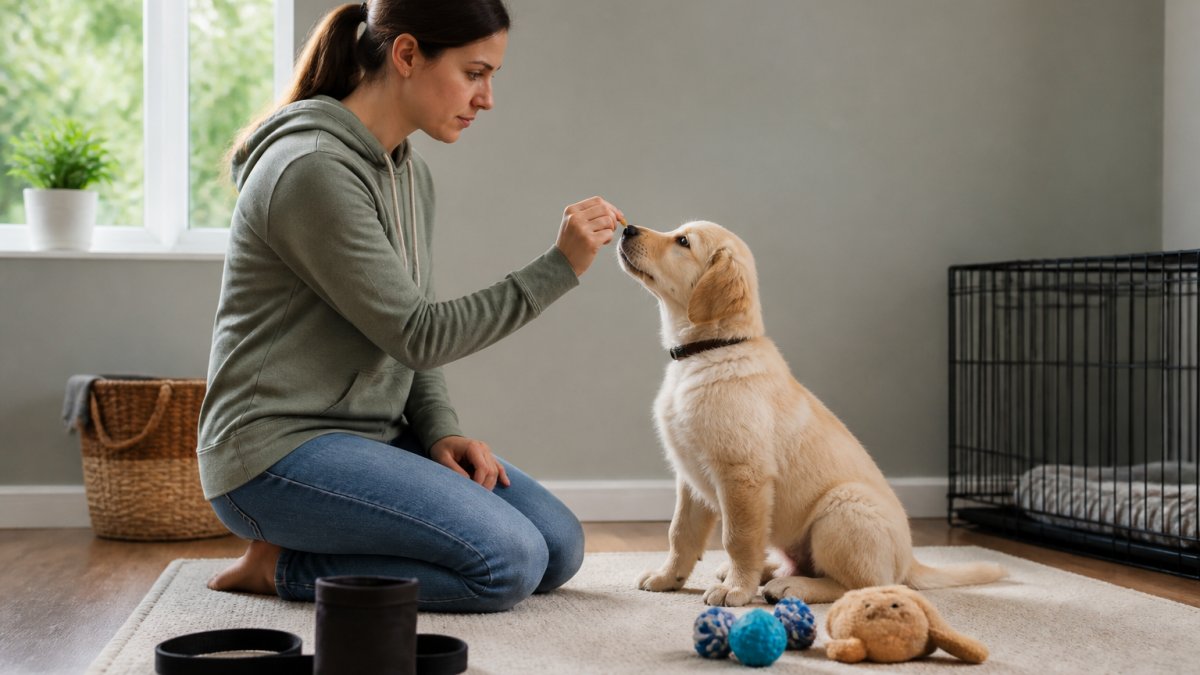
 how-to
Puppy Training Foundations for Beginners: 2026 Guide
Table of Contents
- What to Teach a Puppy First: The Foundation Skills That Matter Most
- Your Puppy Training Schedule: A Week-by-Week Plan for Beginners
- How to Stop Puppy Biting and Nipping Without Fear or Force
- Puppy Socialization Checklist: Safe Exposure at Every Stage
- House Training and Crate Training Foundations for Beginners
- Basic Obedience Cues and Leash Walking: Sit, Stay, Come, and Loose-Leash Skills
- Conclusion: Building a Lifelong Partnership Through Positive Foundations
- Frequently Asked Questions
Last Updated: October 8, 2026
What to Teach a Puppy First: The Foundation Skills That Matter Most
Puppy training foundations for beginners start with four skills: name recognition, sit, come, and calm settling.
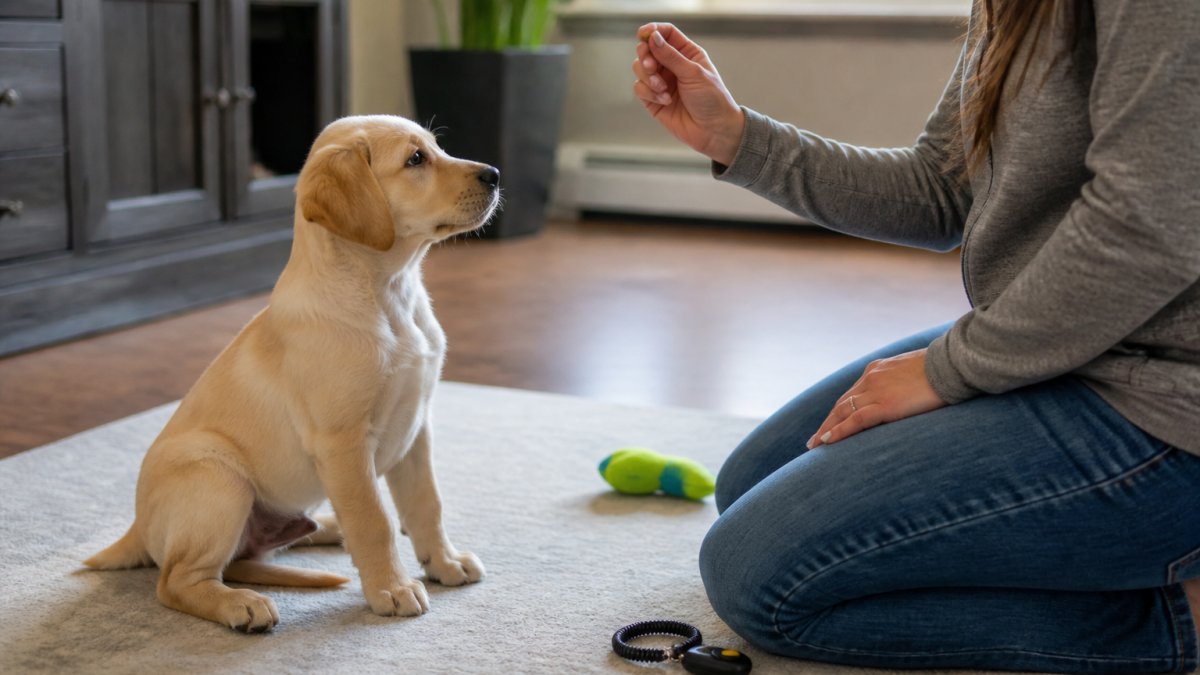
At Lake County Dogs, 25+ years of experience shows puppies who learn these skills early become confident adults.
Puppy training foundations are the first skills a young dog learns: attention, simple cues, bathroom habits, and calm behavior around people and animals.
Here's the order we recommend:
- Name recognition - Teach your puppy to look at you when you say their name
- Sit - The easiest cue to teach and the base for everything else
- Come - A safety skill you'll use for life
- Settle - Learning to relax instead of bouncing off walls
Skip the fancy tricks.
Age-Appropriate Training: What a Young Puppy Can Realistically Learn
A puppy's attention span is short: 1 to 2 minutes per session at 8 to 10 weeks, up to 5 minutes by 12 to 16 weeks. Pushing past that frustrates both of you.
Signs your puppy is done:
- Turning away or sniffing the floor
- Yawning or licking lips
- Walking off or lying down
- Ignoring treats they normally love
Stop there. End on a win, not a battle.
Your Puppy Training Schedule: A Week-by-Week Plan for Beginners
A good puppy training schedule runs 5 to 10 minutes per session, 2 to 3 times a day. Short and frequent beats long and rare.
Weeks 1-2: Name and Sit
- Say your puppy's name, reward when they look
- Lure a sit with a treat, reward, repeat
- Keep sessions under 3 minutes
Weeks 3-4: Come and Settle
- Call your puppy from a short distance, reward big
- Practice calm settling on a mat for a few seconds
- Add distance slowly
Weeks 5-6: Leash and Manners
- Introduce the leash indoors first
- Practice walking a few steps without pulling
- Add polite greetings around guests
Weeks 7-8: Real-World Practice
- Take skills to new places
- Practice around mild distractions
- Keep sessions fun and short
| Week | Focus Skills | Session Length | Daily Reps |
|---|---|---|---|
| 1-2 | Name, sit | 2-3 min | 3-4 |
| 3-4 | Come, settle | 3-5 min | 3 |
| 5-6 | Leash, manners | 5 min | 2-3 |
| 7-8 | Real-world proofing | 5-7 min | 2 |
How Long Should Puppy Training Sessions Be?
Keep sessions short: 2 to 5 minutes for young puppies, up to 10 minutes by 16 weeks. Tired puppies stop learning and start making mistakes, so three short sessions beat one long one.
How to Stop Puppy Biting and Nipping Without Fear or Force
Puppy biting is normal. It's how puppies explore and learn bite control. The fix isn't punishment. It's teaching what to do instead.
Try this approach:
- Yelp and pause - Say "ouch" and stop play for a few seconds
- Redirect - Hand your puppy a toy or chew item right away
- Reward calm - Praise when teeth stay off skin
- Repeat daily - Consistency matters more than intensity
Never hit, hold the mouth shut, or scruff your puppy. These methods create fear and can make biting worse. For puppies who bite hard or won't stop, a professional evaluation helps.
Puppy Socialization Checklist: Safe Exposure at Every Stage
Socialization means safely introducing your puppy to new people, places, sounds, and animals during the window when their brain is most open. Most behavior professionals point to roughly 3 to 14 weeks as critical, with benefits continuing through about 16 weeks. Start early, go at your puppy's pace, and pair every new experience with treats.
Safe vs. Risky Exposure: The Distinction Beginners Miss
Not all exposure is equal. A confident puppy versus a fearful one often comes down to whether experiences were controlled and positive or overwhelming and unpredictable.
Safe exposure (do this):
- Carrying your puppy through a parking lot, hardware store, or outdoor cafe
- Sitting on a park bench and watching the world from your lap
- Meeting one calm, vaccinated adult dog in a quiet yard
- Handling paws, ears, mouth, and collar during calm moments at home
Risky exposure (avoid until cleared by your vet):
- Dog parks, pet store floors, and unknown dogs of unknown vaccination status
- Crowded events where your puppy is passed around or cornered
- Forced greetings with dogs that growl, stiffen, or pin your puppy
- Repeated exposure to a scary thing without giving your puppy an escape route
Puppies flooded with too much at once become shut down or reactive; short, positive, one-at-a-time exposures keep them curious.
Reading Your Puppy's Signals
Signs your puppy is overwhelmed and needs distance:
- Tucking the tail, crouching, or trying to hide
- Freezing, whale eye, or lip licking
- Sudden refusal of treats they normally love
- Barking, lunging, or backing away from a new person or object
Increase distance, lower the intensity, and let your puppy observe from a comfortable spot. Never force an interaction, one bad experience can set socialization back more than ten good ones move it forward.
Socialization Checklist by Category
Use this list and check items off over several weeks, not all at once:
- Different people: kids, seniors, people in hats, uniforms, beards, sunglasses
- Surfaces: tile, grass, gravel, wood, metal grates, wobble boards
- Sounds: vacuums, traffic, thunder recordings, doorbells, babies crying
- Handling: paws, ears, mouth, collar, gentle restraint for vet exams
Go slow, one new thing at a time, and pair every new experience with treats.
Vaccination-Aware Socialization: Balancing Safety and Experience
Puppies aren't fully vaccinated until around 16 weeks, depending on your vet's schedule. That doesn't mean waiting to socialize, it means socializing safely.
Ask your vet what's safe in your area, since disease risk varies by region. The American Veterinary Medical Association's puppy care guidance offers clear advice on balancing exposure and disease risk, and the American Kennel Club's socialization resources outline the critical window in plain language.
House Training and Crate Training Foundations for Beginners
House training and crate training work best together: the crate teaches your puppy to hold it, and a schedule teaches them when and where to go. Most puppies are reliably house trained between 4 and 6 months, though small breeds and pet store puppies often take longer.
The House Training Schedule That Actually Works
Adjust the timing to your puppy's age and bladder:
- Take your puppy out every 1 to 2 hours during the day
- Go out immediately after meals, naps, play, and waking up
- Pick one bathroom spot and use it every time so scent cues build
- Praise and reward right after they finish, not before
- Supervise indoors, and crate or tether when you can't watch
- Feed on a schedule, not free-choice, so bathroom times are predictable
Rule of thumb: a puppy can roughly hold it one hour per month of age during the day, up to about 4 to 5 hours max. Overnight they can stretch a bit longer, but expect at least one middle-of-the-night trip until around 4 months.
Crate Training Without the Whining
Crate training tips:
- Make the crate a happy place with treats, a chew toy, and meals fed inside
- Never use the crate for punishment
- Start with the door open and short stretches, then build up
- Size it so your puppy can stand, turn around, and lie flat, but not so large they can potty in one corner and sleep in another
- Partially cover it with a blanket if your puppy settles better in a den-like space
Troubleshooting Accidents and Regressions
Accidents happen. What matters is how you respond.
- Clean with an enzymatic cleaner. Regular cleaners leave scent markers that invite repeat accidents.
- Don't punish after the fact. Puppies can't connect a correction to something they did minutes ago, and punishment teaches them to hide accidents.
- Interrupt, then redirect. If you catch your puppy mid-accident, calmly say "outside," carry them out, and reward if they finish there.
- Expect regressions. Growth spurts, schedule changes, illness, and stress cause setbacks. Go back to more frequent trips for a week and rebuild.
- Rule out medical causes. Frequent urination, straining, or accidents after months of success warrant a vet visit.
Adapting House and Crate Training to Your Home
Apartment living: Use a pee pad on a balcony or indoor spot only as a bridge, then transition outside.
Homes with children: Kids shouldn't be responsible for potty trips. Assign one adult to the schedule, and teach children to leave the puppy alone while eating or crated.
Small breeds and rescue puppies: Toy breeds often need trips every 60 to 90 minutes at first.
Basic Obedience Cues and Leash Walking: Sit, Stay, Come, and Loose-Leash Skills
Basic obedience cues give your puppy a shared language with you.
Sit: Lure with a treat, reward when the rear hits the floor.
Stay: Ask for a sit, take one step back, reward. Build distance slowly.
Come: Call in a happy voice, reward every time.
Loose-leash walking: Reward your puppy for staying near you. Stop walking when the leash goes tight.
For puppies who pull hard or ignore cues, structured classes help. Our customized programs at Lake County Dogs are built around your puppy's age, breed, and home life.
Conclusion: Building a Lifelong Partnership Through Positive Foundations
Puppy training foundations for beginners aren't about perfection. They're about small, steady wins that build trust. Start with name, sit, come, and settle. Add socialization, house training, and leash skills as your puppy grows. Keep sessions short, reward often, and stay patient.
If your puppy struggles with biting, fear, or leash manners, you don't have to figure it out alone. Our team, led by AKC-approved evaluator Gary Boots, uses compassionate, science-based methods to resolve tough behaviors, and we prepare dogs for AKC Canine Good Citizen certification.
Book a free evaluation with Lake County Dogs and give your puppy the foundation for a confident, well-mannered life.
Frequently Asked Questions
What should I teach my puppy first?
Start with name recognition and a positive association with training. Say your puppy's name, and when they look at you, mark with a clicker or a cheerful 'yes' and give a small treat. Once they consistently respond, introduce sit by luring a treat from their nose up and back over their head. Keep sessions to two to three minutes, several times a day. These early wins build focus and make everything else easier.
How long should puppy training sessions be?
Keep sessions short and frequent. For puppies under four months, aim for two to three minutes per session, three to five times a day. At four to six months, five-minute sessions work well. A good rule is to stop while your puppy is still engaged and successful. Short, upbeat sessions prevent frustration and build a strong foundation for puppy training foundations.
How do I stop puppy biting and nipping?
Redirect immediately. When teeth touch skin, say 'ouch' in a calm, high-pitched tone, pause the interaction for a few seconds, then offer an appropriate chew toy. Praise them for taking the toy. Consistent redirection teaches bite inhibition over several weeks. Avoid physical punishment, which can increase arousal and damage trust. If nipping is intense, increase rest and provide more appropriate chewing outlets.
When should I start socializing my puppy?
Begin safe socialization as early as possible, often before 16 weeks. Carry your puppy in public areas, invite calm, vaccinated dogs to your home, and expose them to new surfaces, sounds, and people. Use a puppy socialization checklist to track experiences. Balance exposure with vaccination guidance from your veterinarian, and keep interactions positive and low-pressure to build confidence.