 ultimate-guide
AKC Canine Good Citizen Training: Your Complete Guide
Table of Contents
- What Is the AKC Canine Good Citizen Program?
- The 10 Steps of the Canine Good Citizen Test
- Benefits of AKC CGC Training for Your Dog
- CGC Training Timeline: How Long Does It Take?
- How to Prepare for the CGC Test: A Step-by-Step Plan
- Troubleshooting Common CGC Test Failures
- CGC for Specific Breeds and Temperaments
- Cost Breakdown and Hidden Fees for CGC Certification
- Frequently Asked Questions
Last Updated: October 2, 2026
What Is the AKC Canine Good Citizen Program?
The AKC Canine Good Citizen program is a certification that tests whether a dog can demonstrate good manners at home, in public, and around other people and dogs. The American Kennel Club launched it in 1989, and it has since become a widely recognized behavioral standard.
The 10 Steps of the Canine Good Citizen Test
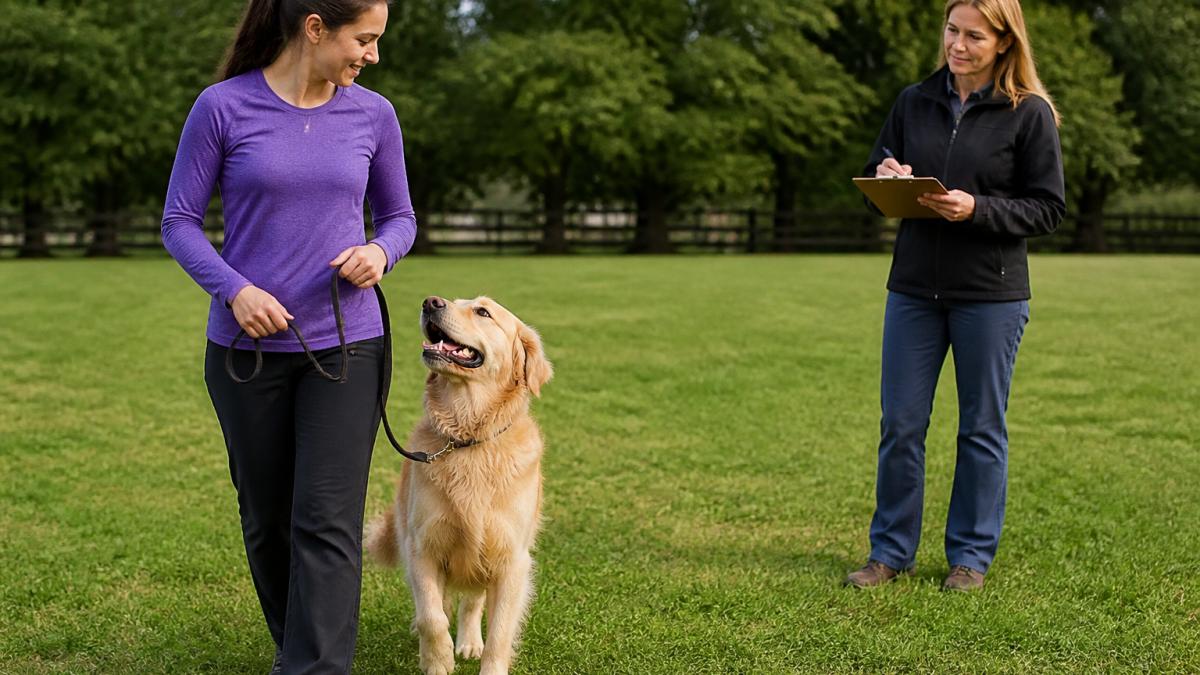
The CGC test consists of ten separate skills, each scored as pass or fail. A dog must pass all ten to earn certification, and the evaluator observes the entire sequence in one session.
Skills 1-5: Accepting a Friendly Stranger Through Walking Politely
The first half of the test checks how your dog handles people and basic leash control.
- Accepting a friendly stranger. The evaluator approaches and shakes the handler's hand. The dog must stay calm and not lunge or shy away.
- Sitting politely for petting. A stranger pets the dog while it remains seated and relaxed.
- Appearance and grooming. The evaluator examines the dog's ears, feet, and coat, simulating a vet or groomer visit.
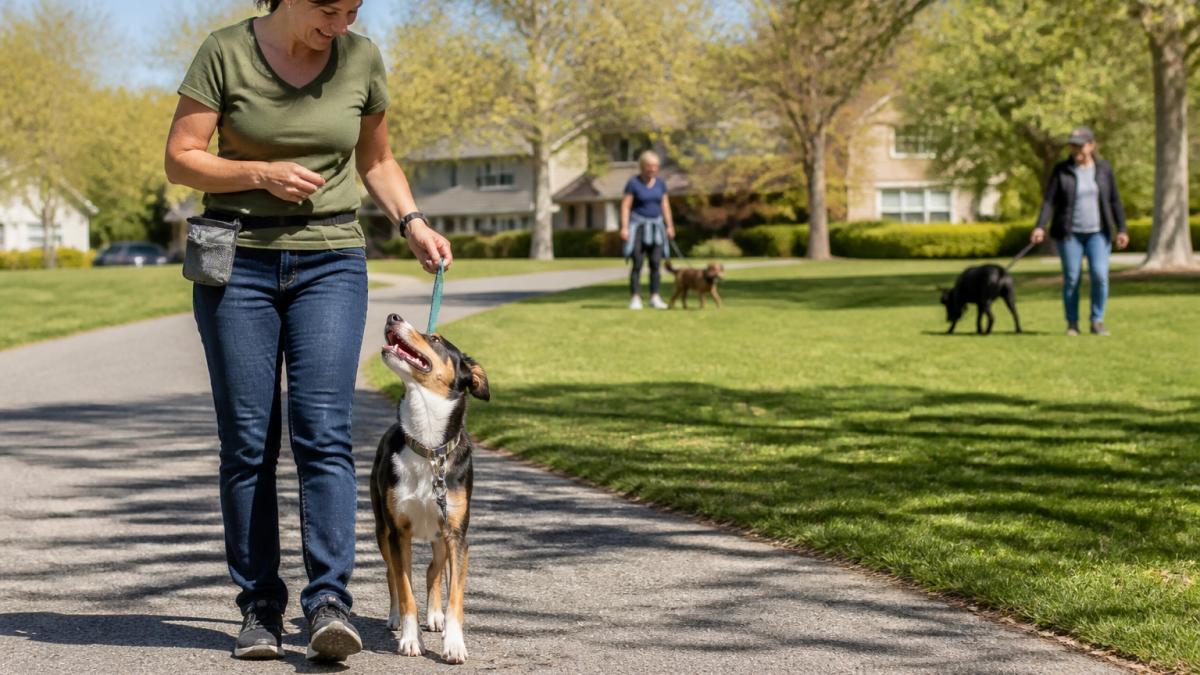
- Out for a walk. The handler and dog walk on a loose leash through a designated pattern, turning as directed.
- Walking through a crowd. The pair navigates around people without the dog jumping or pulling.
Skills 6-10: Sit and Down on Command Through Supervised Separation
The second half tests impulse control and environmental stability.
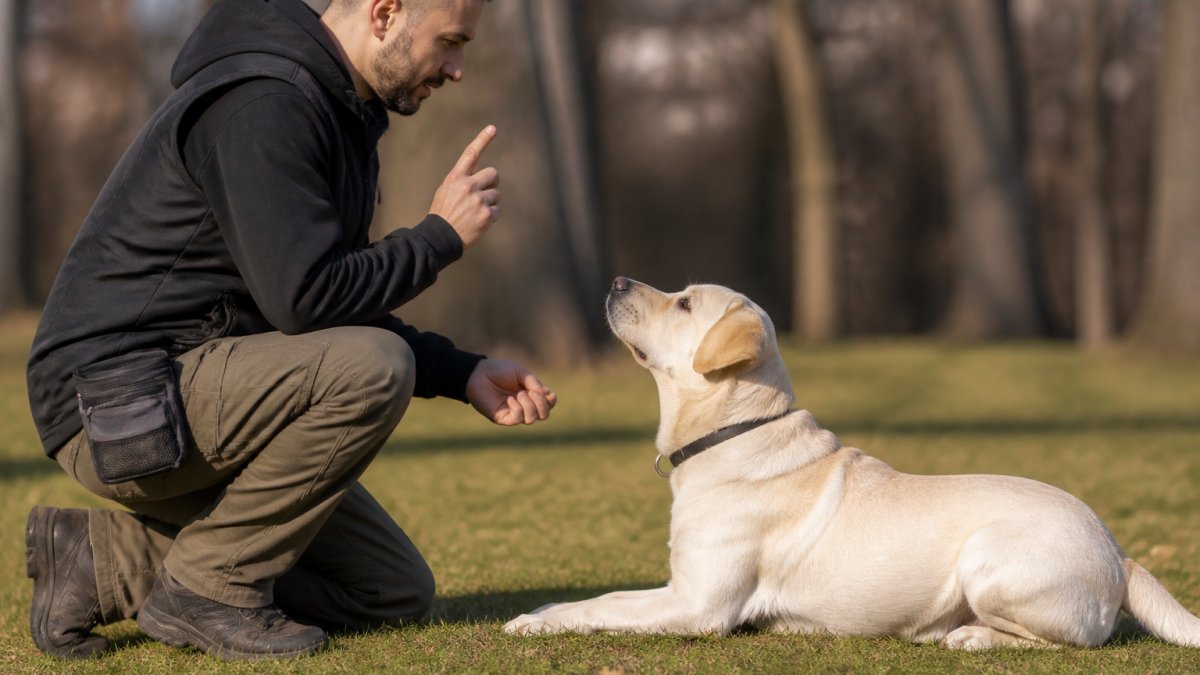
- Sit and down on command, staying in place. The dog responds to verbal cues and holds position while the handler walks away.
- Coming when called. From a distance of about ten feet, the dog returns on the first cue.
- Reaction to another dog. Two handlers and dogs approach, shake hands, and move on. Neither dog may lunge or bark.
- Reaction to distraction. A moving object, a jogger, or a dropped item is introduced. The dog may startle but must recover.
- Supervised separation. The handler leaves the dog with a stranger for three minutes. The dog may whine but must not panic or try to escape.
Benefits of AKC CGC Training for Your Dog
CGC training builds obedience that holds up outside the training ring. The skills overlap heavily with everyday manners, so owners who train for the test often find daily life gets easier along the way.
CGC Training Timeline: How Long Does It Take?
Most dogs need eight to twelve weeks of consistent practice before they are ready for the test, though this varies widely by age, temperament, and prior training. Puppies often move faster on socialization skills but slower on impulse control.
Factors That Affect Your Dog's Timeline
- Age and developmental stage. Adolescent dogs test boundaries; adult dogs with established habits may need more repetition.
- Prior training history. Dogs with basic obedience foundations progress faster.
- Temperament. A naturally confident dog handles distractions more easily than a fearful or reactive one.
- Practice environment. Training only in a quiet living room will not prepare a dog for a crowd.
- Handler consistency. Daily short sessions beat occasional long ones.
How to Prepare for the CGC Test: A Step-by-Step Plan
Preparation works best as a structured progression rather than a scramble in the final weeks. Break the ten skills into groups and train each group in progressively more distracting environments.
- Weeks 1-2: solidify basics at home. Practice sit, down, stay, and recall in a low-distraction room.
- Weeks 3-4: add the front yard. Introduce distance and mild distractions like passing pedestrians.
- Weeks 5-6: train in public. Move to a park or storefront where strangers, other dogs, and noise are present.
- Weeks 7-8: rehearse the full sequence. Run all ten skills in order, mimicking test conditions.
- Weeks 9-10: proof against surprises. Have a friend drop items or jog past during a stay.
- Final week: rest and light review. Over-training can create stress; keep sessions short and positive.
Troubleshooting Common CGC Test Failures
Most failures trace back to a handful of predictable problems, not to a "bad dog." Recognizing the weak points early lets you fix them before test day.
- Loose-leash walking breaks down. The dog pulls when it spots another dog. Fix: practice neutrality around dogs at a distance, then close the gap gradually.
- Supervised separation triggers panic. The dog whines, paces, or tries to follow. Fix: build duration slowly with a trusted stranger, starting at thirty seconds.
- Reaction to distraction fails. The dog fixates on a jogger or dropped object. Fix: teach a "watch me" cue and reward recovery, not just stillness.
- Sit-stay collapses under distance. The dog breaks position when the handler walks away. Fix: increase distance in small increments and return before the dog breaks.
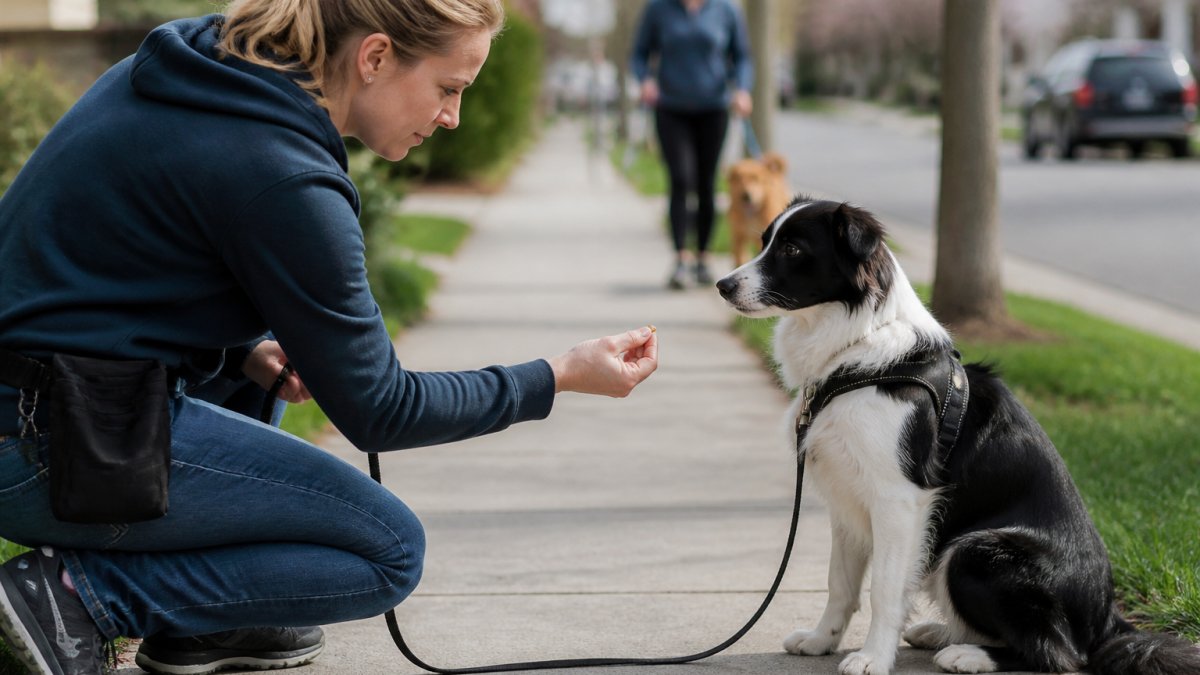
- Grooming handling causes resistance. The dog pulls away when feet or ears are touched. Fix: pair handling with treats daily for two weeks.
CGC for Specific Breeds and Temperaments
Breed tendencies do not determine whether a dog passes, but they do predict which of the ten items will need the most reps. Matching your training plan to your dog's genetic wiring saves weeks.
Herding breeds (Border Collie, Australian Shepherd, German Shepherd)
These dogs ace focus and recall but often fail item 9, reaction to distraction, because a jogger or a rolling object triggers a chase reflex. The fix is not suppression, it is teaching an alternative behavior. Practice a "watch me" cue while a training partner jogs past at a distance, then close the gap over several sessions. Reward the dog for orienting to you, not for freezing.
Guardian breeds (Rottweiler, Mastiff, Great Pyrenees)
Item 1, accepting a friendly stranger, is the usual sticking point. These dogs are bred to assess newcomers, and a handshake can read as a threat. Desensitize by having strangers approach without eye contact or direct reaching, toss a treat, and retreat. Build to a full handshake over two to three weeks. Do not rush this, pressure makes guardian breeds more suspicious, not less.
Terriers (Jack Russell, Scottish Terrier, Bull Terrier)
Item 8, reaction to another dog, is the hardest. Terriers are wired to engage, and neutrality around another dog feels unnatural. Train parallel walking with a calm, neutral dog at a distance where your terrier can still take food. If your dog will not eat, you are too close. Shrink the distance only when your dog stays relaxed.
Toy and companion breeds (Chihuahua, Pomeranian, Maltese)
These dogs often pass the people-facing items easily but struggle with item 3, appearance and grooming, because handling has historically been aversive. Pair every ear, foot, and muzzle touch with a high-value treat for two weeks before the test. Keep sessions under two minutes.
Reactive and rescued dogs
A dog with a bite history or severe fear may not be a safe candidate for a group test environment, and no amount of training changes that in a few weeks. For mildly reactive dogs, the timeline stretches to four to six months. Fear-based behaviors respond to gradual desensitization and counter-conditioning, not correction. Rushing the stranger-handling items is the single most common way to set a rescued dog back.
Cost Breakdown and Hidden Fees for CGC Certification
Most guides wave at "fees vary" and move on. That is useless when you are trying to decide whether to self-train or enroll in a class. Here is how the money actually breaks down, and where the surprise charges hide.
The three cost buckets
1. Instruction. This is the largest variable. Options range from free (self-study with the AKC's published test items) to group classes to private sessions. Group classes are the most common route because they supply the distractions the test requires. Private sessions cost more per hour but compress the timeline for reactive or fearful dogs.
Hidden costs that catch owners off guard
- Retest fees. If your dog fails a single item, you generally pay the full test fee again. Budget for at least one retest if your dog is under eighteen months or has a reactive history.
- Bundled class packages. A "CGC prep" package may include eight sessions when your dog only needs four. Ask for the per-session rate before committing.
- Travel and time. Evaluators cluster in metro areas. If the nearest testing site is an hour away, each attempt costs you a half-day plus fuel.
- Equipment. A properly fitted six-foot leash and a flat collar or martingale are required. Retractable leashes are not permitted at the test.
- Vet clearance. Some evaluators ask for proof of current vaccinations. A wellness visit you were putting off becomes a line item.
How to keep the total down
For current AKC program fees, check the official American Kennel Club page directly, since amounts change. Training costs vary by provider and program length; Lake County Dogs lists current program pricing on its website, and a free evaluation is available to map out your dog's specific path.
Frequently Asked Questions
How much does Canine Good Citizen training cost?
Costs vary by provider and location. For a personalized quote, check with local trainers or visit Lake County Dogs' website for current pricing.
How hard is the Canine Good Citizen test?
The CGC test is pass-fail with no partial credit. Most dogs pass with consistent practice, but the 10 skills require solid obedience and calm behavior around distractions. Common failure points include reacting to other dogs, breaking a sit-stay, or pulling on the leash. With a structured training plan and gradual exposure to real-world settings, the test is very achievable for most dogs.
What are the 10 skills for a Canine Good Citizen?
The 10 test skills are: 1) Accepting a friendly stranger, 2) Sitting politely for petting, 3) Appearance and grooming, 4) Out for a walk (loose-leash walking), 5) Walking through a crowd, 6) Sit and down on command and staying in place, 7) Coming when called, 8) Reaction to another dog, 9) Reaction to distraction, and 10) Supervised separation. Each skill tests your dog's manners, obedience, and neutrality in public.
What are the requirements for a dog to be considered a Canine Good Citizen?
To earn the CGC title, your dog must pass all 10 test items evaluated by an AKC-approved evaluator. There is no age minimum, but puppies should have completed basic vaccinations. Dogs must be clean, healthy, and under control during the test. The handler can use a collar and a 6-foot leash, but no special training equipment like prong collars or e-collars is allowed. Once passed, you can submit the form to AKC for official recognition.
Can any dog breed earn the Canine Good Citizen title?
Yes, the CGC program is open to all dogs, purebred and mixed breed alike. Any breed or temperament can earn the title with proper training and socialization. Some breeds may need extra work on specific skills like loose-leash walking or reaction to other dogs, but success depends on consistent practice rather than breed. Rescue dogs and older dogs can also pass with patience and positive reinforcement.
How long does it take to train for the CGC test?
Most dogs need 6 to 12 weeks of consistent training to prepare for the CGC test. Puppies and dogs with prior obedience training may be ready in 4 to 6 weeks, while rescues or dogs with behavioral challenges might need 3 to 6 months. The timeline depends on your dog's age, temperament, and how often you practice. Short daily sessions of 10 to 15 minutes are more effective than long weekly ones.