 ultimate-guide
Is Counter Conditioning Effective for Reactivity?
Table of Contents
- Is Counter Conditioning Effective for Reactivity? What the Evidence Shows
- Desensitization vs Counterconditioning: How the Two Techniques Work Together
- Threshold Management for Reactive Dogs: The Skill That Decides Success
- How to Run a Counterconditioning Protocol: Step by Step
- Common Mistakes in Counter Conditioning That Stall Progress
- Dog Reactivity Training Timeline: Measuring Progress With Observable Criteria
- Frequently Asked Questions
Last Updated: October 9, 2026
Is Counter Conditioning Effective for Reactivity? What the Evidence Shows
Counter conditioning is one of the most widely recommended approaches for reactive dogs because it changes the emotion behind the behavior rather than just suppressing it. At Lake County Dogs, we have used this method with dogs that lunge, bark, and freeze at other dogs, strangers, or moving vehicles.
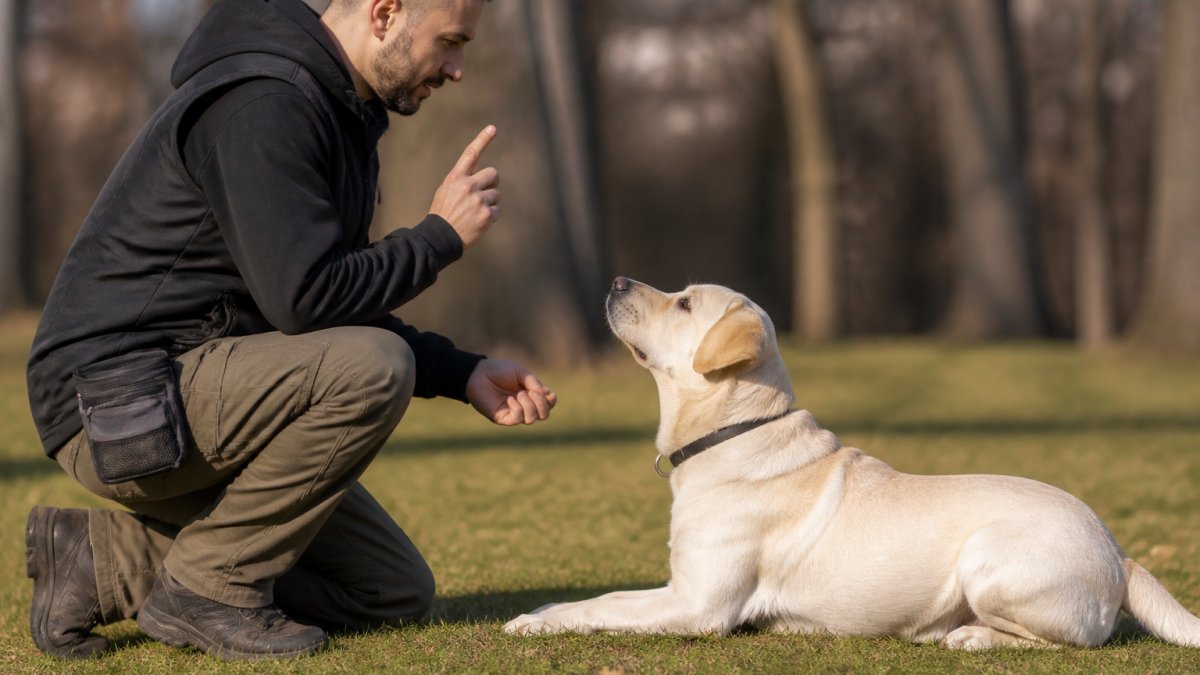
Counterconditioning changes a dog's emotional response to a trigger by pairing that trigger with something the dog values, typically food. Unlike obedience training, the goal is not a sit or a down but a genuine shift from fear or anxiety to a neutral or positive association.
Emotions drive behavior. A fearful dog will bark, lunge, or freeze regardless of how many commands it knows. Change the emotion, and the behavior follows.
What Counterconditioning Is (and What It Is Not)
Counter conditioning is not distraction or bribery. Waving a treat to pull a dog's attention away from another dog is a competing behavior, not counter conditioning. True counter conditioning requires the dog to perceive the trigger first, then receive the reward, trigger before food, every time. It is also not a quick fix: progress shows up in weeks, not days, and setbacks are normal.
How Counterconditioning Changes a Dog's Emotional Response
A dog reactive for years has a conditioned emotional response: trigger appears, fear fires, behavior erupts. Counter conditioning builds a new association that competes with the old one, so the sight of another dog starts to predict a treat rather than a threat. The process is gradual and depends on the dog staying calm enough to eat, a dog over threshold cannot learn, which explains most failures owners report.
Desensitization vs Counterconditioning: How the Two Techniques Work Together
Desensitization and counter conditioning are different techniques that work best combined. Desensitization exposes the dog to a trigger at an intensity low enough that no fear response occurs, then increases intensity slowly over many sessions. Counter conditioning supplies the positive association during that exposure. Think of desensitization as the volume knob and counter conditioning as the soundtrack. Alone, desensitization is slow and fragile, and counter conditioning fails when the trigger appears too close or too suddenly.
| Technique | What It Does | Handler's Job | Failure Point |
|---|---|---|---|
| Desensitization | Lowers fear by gradual exposure | Control trigger intensity | Moving too fast |
| Counter conditioning | Builds a positive association | Pair trigger with reward | Rewarding before the trigger |
| Combined | Changes emotion at a manageable dose | Manage distance and timing | Letting the dog go over threshold |
Why the Order of Operations Matters
The sequence in which you apply the two techniques determines whether the dog learns or shuts down. The mechanism is classical conditioning: a neutral stimulus (the trigger) is repeatedly paired with an unconditioned stimulus (food), and over time the trigger elicits the emotional response food naturally produces.
A practical combined session follows this order:
- Set the stage. Choose a distance where the dog notices the trigger but does not react. This is the desensitization threshold.
- Wait for the look. Let the dog perceive the trigger on its own. Do not point, lure, or cue attention.
- Mark and feed. The instant the dog registers the trigger, mark (word or click) and deliver food within one to two seconds.
- Repeat while the trigger is present. Feed only while the trigger is visible. Stop when it leaves.
- End on success. After five to ten calm repetitions, leave before the dog fatigues or the environment changes.
If the dog reacts at any point, the desensitization dose was too high. Increase distance, reduce the number of repetitions, or end the session. Counter conditioning cannot override a fear response that has already fired.
A Worked Example
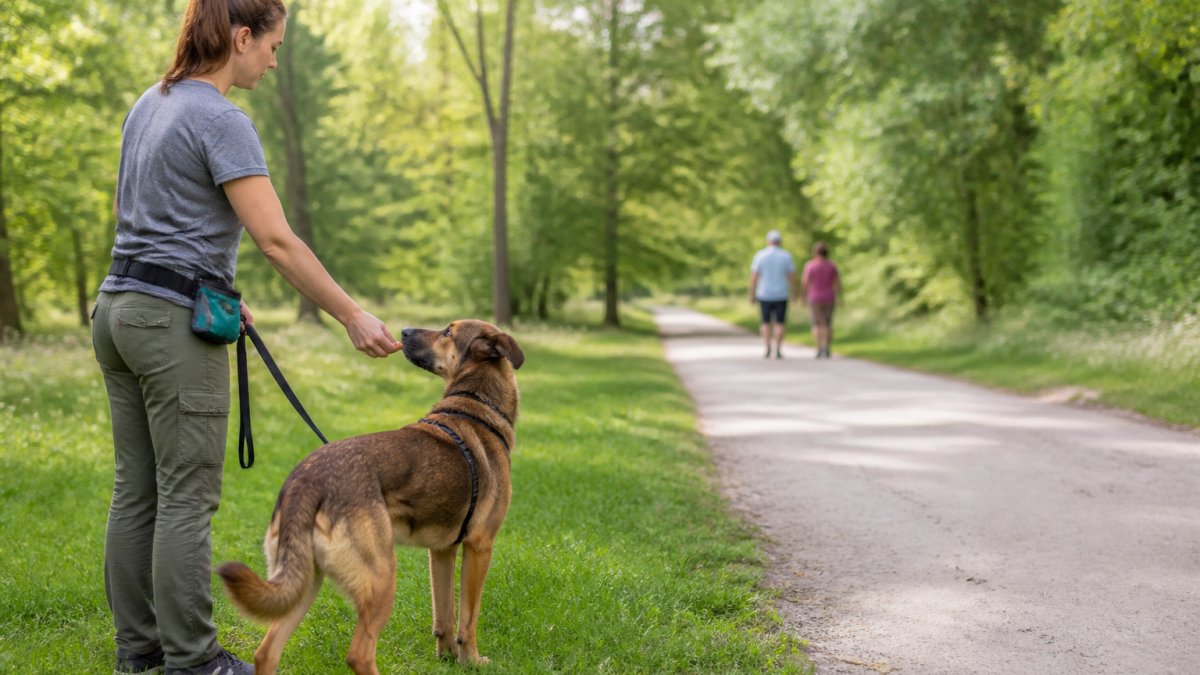
Suppose a dog reacts to other dogs at 30 feet but stays calm at 60 feet. Position at 60 feet from a walking path, wait for your dog to notice a passing dog, then mark and feed three to five small pieces while the other dog is in view.
For a deeper look at the science behind learned associations, the American Veterinary Society of Animal Behavior position statement on humane training is worth reading.
Threshold Management for Reactive Dogs: The Skill That Decides Success
Threshold management for reactive dogs means keeping a dog close enough to learn from a trigger but far enough to stay calm. Every other skill depends on it. A dog that is barking, lunging, or frozen is over threshold, and no reward will land.
A Decision Tree for Distance, Reward Timing, and Session Difficulty
Use this sequence at the start of every session:
- Can the dog eat? If not, increase distance immediately.
- Is the dog looking at the trigger with soft eyes and loose body language? If yes, mark and reward.
- Is the dog fixated, stiff, or silent? Add five to ten feet of distance and reassess.
- Did the dog recover within a few seconds of the trigger leaving? If not, the session was too hard.
- Did the dog succeed on three consecutive exposures? Consider a small step closer next session.
Short sessions beat long ones: five to ten successful exposures teach more than a thirty-minute walk spent managing a stressed dog.
Safety Planning and Management During Training
Training does not replace management. Until a dog is reliably under threshold, use barriers, side streets, and timing to avoid surprise encounters, one ambush by an off-leash dog can erase weeks of progress in seconds.
How to Run a Counterconditioning Protocol: Step by Step
A counterconditioning protocol pairs a controlled trigger with a high-value reward at a distance the dog can handle. The steps below work for leash reactivity, barrier frustration, and fear-based reactivity alike.
Identifying Triggers That Cause Reactive Behavior
Log incidents for a week, noting what the dog reacted to, the distance, and recovery time. Common triggers include other dogs, strangers, bicycles, children, and delivery vehicles. Some dogs react to a single trigger; others stack triggers, so a dog that ignores one dog may explode at three.
Pairing a Trigger With High-Value Rewards, Markers, and Timing
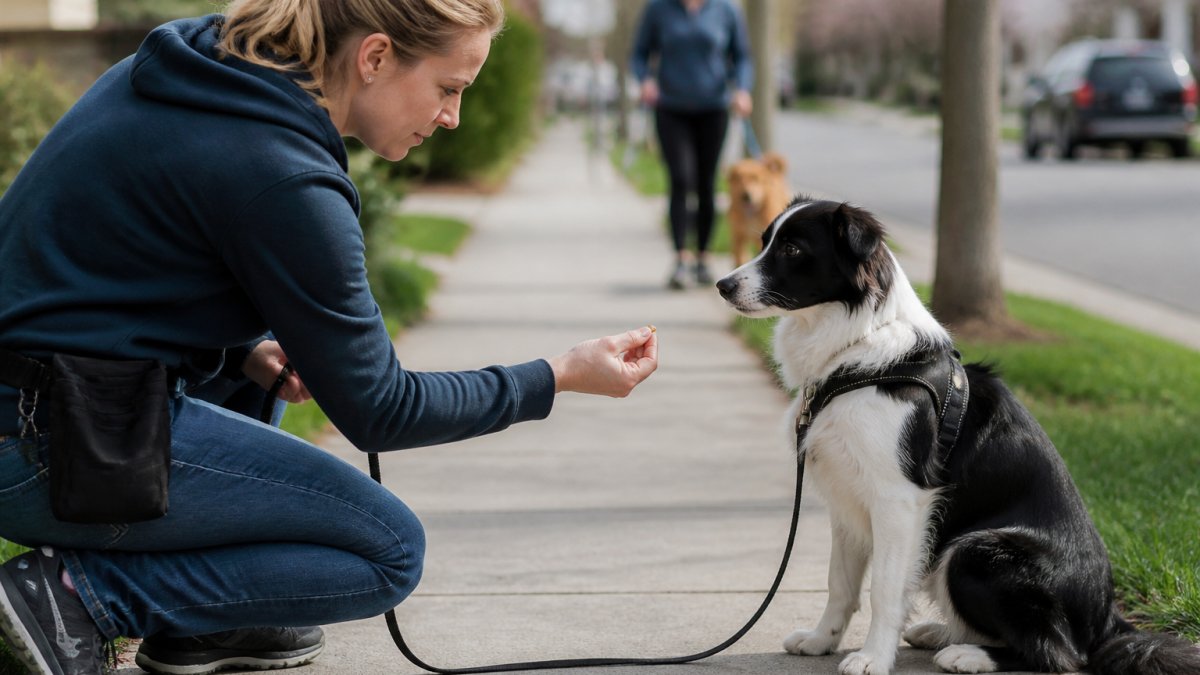
Order matters: trigger appears, then food. Mark (word or click) the moment the dog notices the trigger, then deliver the reward. High-value treats beat kibble because the food must compete with a real emotional response.
- Trigger appears at a distance the dog can handle
- Dog notices the trigger
- Mark the moment of noticing
Common Mistakes in Counter Conditioning That Stall Progress
The most common mistakes in counter conditioning trace back to intensity and timing: moving too close too fast, rewarding before the trigger appears, using low-value food, or training while the dog is already stressed. Each breaks the pairing the method depends on. The table below maps observable symptoms to the likely cause and the immediate fix.
| What You See | Likely Mistake | Immediate Fix |
|---|---|---|
| Dog takes food but never relaxes | Trigger too close or too intense | Add 10-15 feet of distance and reassess |
| Dog ignores food entirely | Over threshold | End the session; the dose was too high |
| Dog looks at you instead of the trigger | Reward is being used as a lure, not a consequence | Wait for the dog to notice the trigger before marking |
| Dog reacts after the treat | Reward is arriving too late or too early | Mark the moment of noticing, feed within 1-2 seconds |
| Progress stalls after a few weeks | Sessions are too long or too frequent | Shorten to 5-10 repetitions, add rest days |
| Dog is calm at home but reactive outside | Generalization gap | Treat each new environment as a fresh, easier starting point |
| Dog reacts to stacked triggers | Trigger intensity is additive | Train with single triggers first; avoid busy areas |
The Mistake Most Owners Never Notice
The subtlest error is feeding after the trigger leaves. If food keeps coming after the other dog is gone, the dog learns that food predicts the trigger's absence, not its presence, a reversal that quietly kills the association.
A second underrecognized mistake is training only on walks, where triggers appear unpredictably at uncontrolled distances. Structured setups, a friend with a calm dog at a fixed distance, or a quiet park bench, give you control over intensity.
When the Problem Is Not the Technique
If a dog has been trained consistently with correct timing and still does not improve, the issue may not be counter conditioning at all. Chronic anxiety, pain, thyroid dysfunction, and other medical conditions can mimic or worsen reactivity, so a veterinary assessment is a reasonable next step.
The Humane Society of the United States guide to dog behavior and training reinforces that punishment-based methods tend to worsen fear and aggression rather than resolve them.
Dog Reactivity Training Timeline: Measuring Progress With Observable Criteria
A dog reactivity training timeline is measured in observable behaviors, not calendar weeks. Owners who track concrete criteria see progress earlier and adjust faster.
Watch for these markers:
- Recovery time after a trigger drops from minutes to seconds
- The dog looks back at the handler after spotting a trigger
- Trigger distance at which the dog stays relaxed increases
Generalization takes time: a dog calm on your street may still react in a new park. Treat each new environment as a fresh, easier starting point.
Troubleshooting: When the Dog Will Not Eat or Stays Over Threshold
If the dog will not eat, it is over threshold, do not push through. Increase distance, shorten the session, or end it. A dog that refuses food is telling you the trigger is too close.
Reactivity rarely resolves with generic advice from a search result. At Lake County Dogs, we build customized behavior modification programs around your dog's specific triggers, using science-based methods.
Frequently Asked Questions
How can counterconditioning help with dog reactivity?
Counterconditioning pairs a trigger, such as another dog or a stranger, with something the dog values, usually food. Repeated pairings at a distance the dog can handle build a positive association, so the emotional response shifts from fear or anxiety toward calm. Over time the dog learns that the sight of a trigger predicts a reward rather than a threat. This is why counterconditioning works best alongside desensitization and careful threshold management rather than as a standalone fix.
What is the difference between desensitization and counterconditioning?
Desensitization means exposing the dog to a trigger at a low enough intensity, usually through distance, that no reactive behavior appears, then gradually increasing intensity over many sessions. Counterconditioning adds a reward to that exposure so the dog forms a positive association with the trigger. Used alone, desensitization changes how much the dog reacts. Paired with counterconditioning, it also changes how the dog feels. Most reactivity plans combine both.
How long does it take to correct dog reactivity?
There is no fixed timeline. Progress depends on the dog's genetics, history, trigger intensity, how often you train, and whether the environment is managed between sessions. Some dogs show clear improvement in a few weeks of consistent work, while others need months. Track observable criteria instead of the calendar: recovery time after a trigger, the distance at which the dog stays calm, and whether the dog offers disengagement on its own. Relapse is normal and does not mean the training failed.
Why does counterconditioning sometimes fail for reactive dogs?
The most common reasons are working too close to the trigger, using food the dog will not take under stress, poor timing of the marker and reward, and letting the dog rehearse reactive behavior between sessions. If the dog is over threshold, it cannot learn, and food reinforcement will not build a positive association. Other factors include pain, undiagnosed anxiety, and a training plan that skips environmental management. A veterinary assessment is worth considering when progress stalls despite correct technique.