 ultimate-guide
Benefits of Professional Dog Training: 2026 Guide
Table of Contents
- Why Professional Dog Training Changes the Relationship
- Clearer Communication and a Stronger Human-Animal Bond
- Behavior Improvement, Confidence, and Reduced Stress
- Positive Reinforcement Dog Training: How Modern Methods Work
- How to Choose a Dog Trainer You Can Trust
- How Long Does Dog Training Take?
- Professional Dog Training Cost and Value Over Time
- Conclusion: What Professional Dog Training Delivers
- Frequently Asked Questions
Last Updated: October 18, 2026
Why Professional Dog Training Changes the Relationship
Professional dog training is a structured, ongoing process in which a qualified trainer uses proven learning principles to teach a dog new behaviors and reshape problem ones, while coaching the owner on how to keep those behaviors in place at home. Professional dog training can do far more than fix a sit-stay.
Most owners come to us after months of guessing. They have watched videos, bought a clicker, tried three different approaches in the same week, and ended up with a confused dog and a frustrated household. Professional guidance replaces that guesswork with a plan built around the individual dog.
That is the core argument of this guide: training is not a list of commands you teach and check off. It is a communication system you build together. Below, we break down what that system delivers, how modern methods work, and how to judge whether a trainer is worth your money.
Clearer Communication and a Stronger Human-Animal Bond
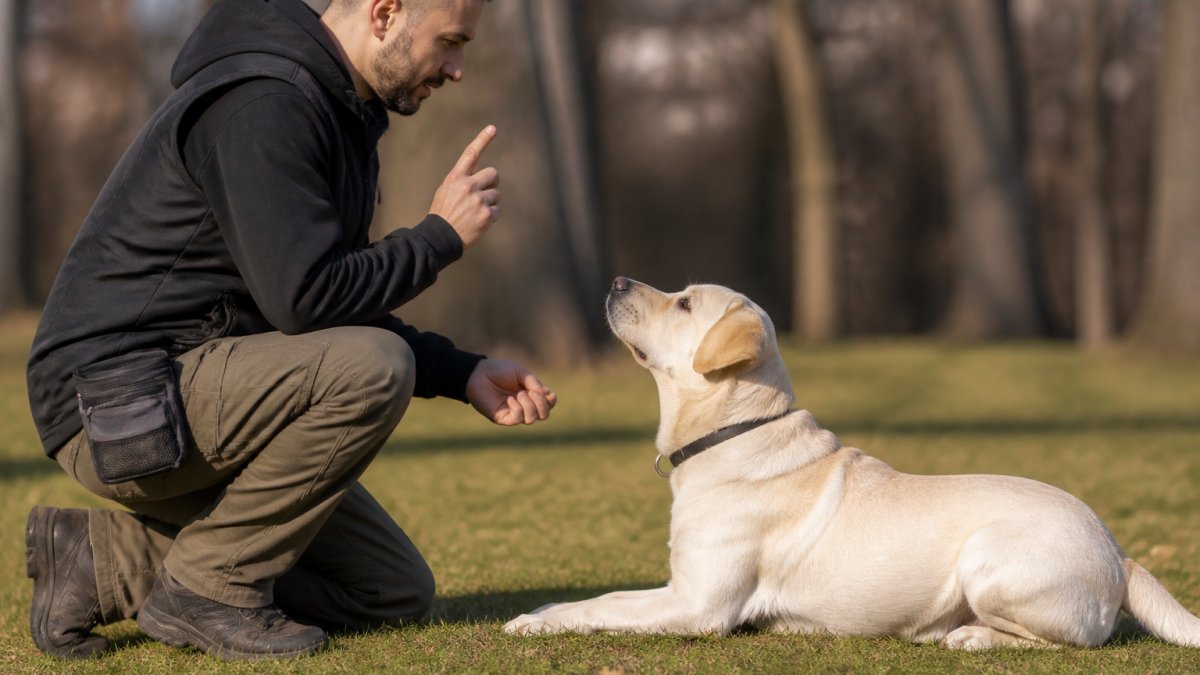
The first real payoff of professional training is a shared language. When a dog understands what a cue means and what happens next, the daily friction that erodes a relationship starts to disappear. Walks get calmer. Doors stop being a wrestling match. Owners stop repeating themselves.
A trainer's job here is partly to educate the owner. Most household behavior problems trace back to inconsistent signals: one family member rewards jumping up, another scolds it, and the dog simply learns to gamble. Professional dog training makes expectations clear and consistent across the whole household, which is why the bond improves fastest when everyone participates.
The American Veterinary Medical Association notes that a well-matched owner-dog relationship supports both animal welfare and household safety, which is exactly what structured training is designed to build (AVMA resources on dog behavior and welfare).
Behavior Improvement, Confidence, and Reduced Stress
Behavior improvement and confidence grow from the same root: predictability. A dog that knows what is expected stops living in a state of low-grade uncertainty, and that shift shows up as calmer behavior at home and in public.
Here is what reliable training tends to deliver:
- Impulse control around food, doorways, and other dogs
- Leash manners that make daily walks manageable instead of dreaded
- Recall that holds up when it matters, not just in the living room
- Social skills with strangers, guests, and other animals
- Reduced stress for the dog and the people living with it
- Safety, because a dog that responds reliably to cues stays out of traffic, fights, and trouble
Fearful and rescued dogs often show the most dramatic change. When a dog learns that people are predictable and that rewards follow calm behavior, confidence builds in small, repeatable steps. Owners feel it too. A household that stops managing crises every evening has more room for the good parts of having a dog.
Positive Reinforcement Dog Training: How Modern Methods Work
Positive reinforcement dog training is an approach that rewards the behaviors you want, so the dog chooses to repeat them, rather than suppressing behavior through fear or force. It is the standard modern method because it produces reliable responses without damaging trust.
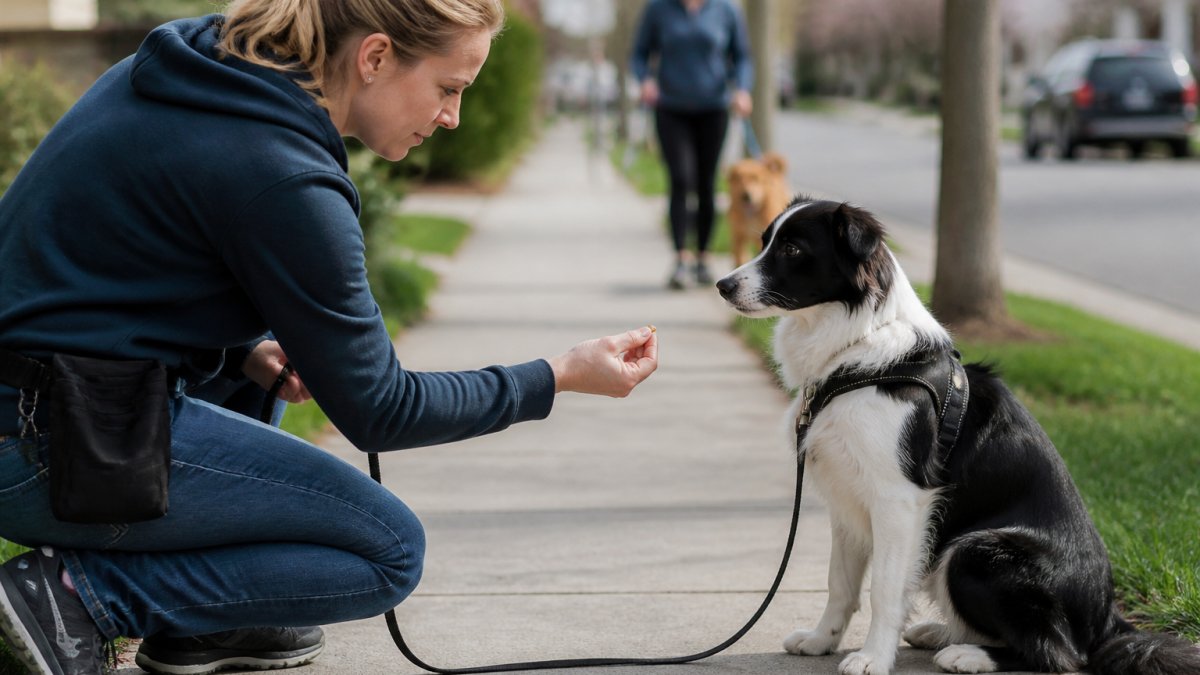
The mechanics are simple. A behavior that gets reinforced gets repeated. A trainer identifies the exact behavior wanted, marks it the instant it happens, and pays the dog with food, play, or praise.
This is where owners get stuck on their own. Rewarding a sit is easy in a quiet kitchen. Getting the same response on a busy sidewalk takes a plan for gradually raising difficulty, and that plan is what a professional brings.
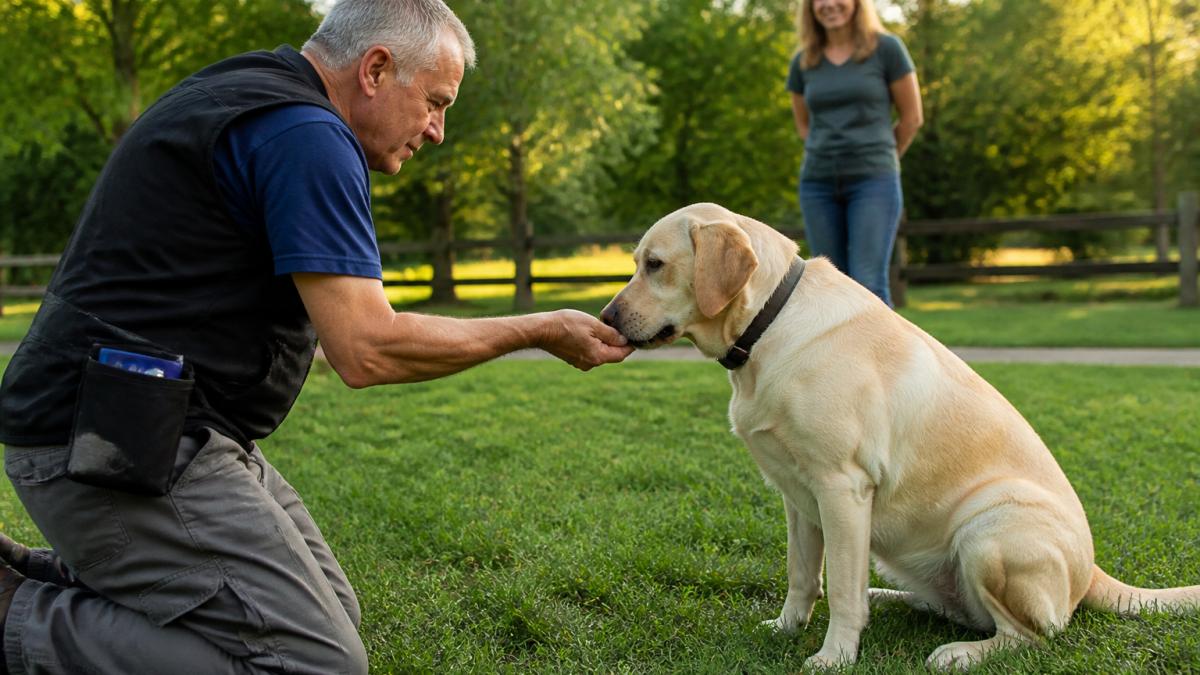
What a Session Actually Looks Like
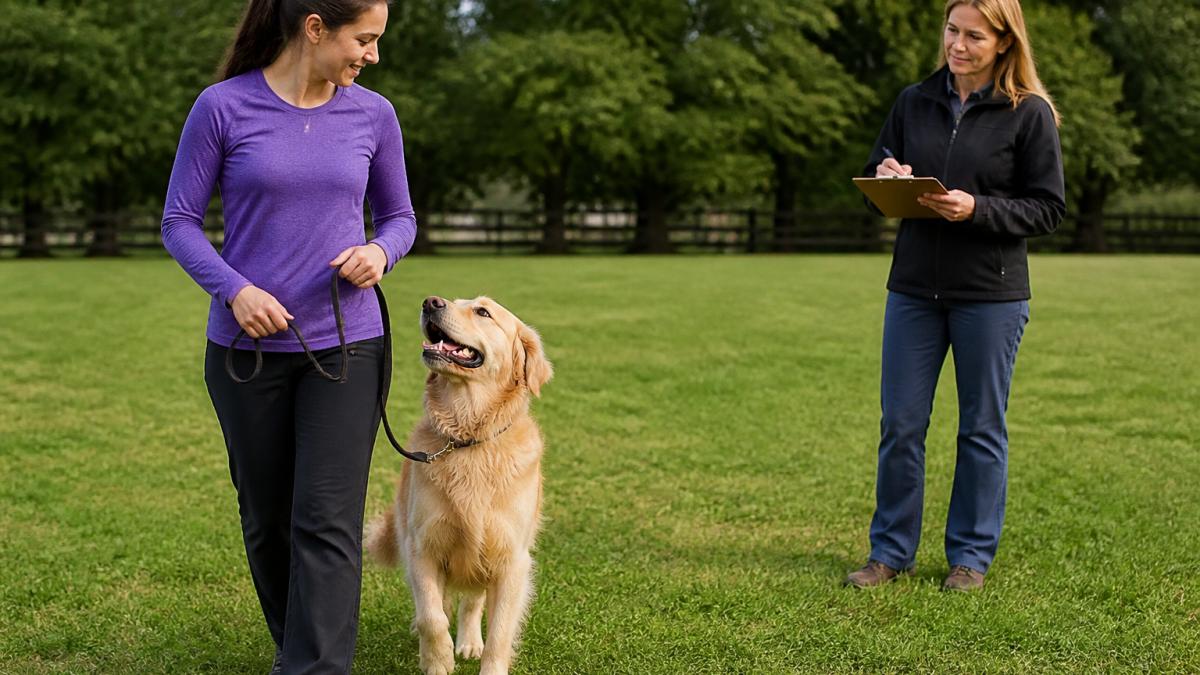
A typical session follows a clear arc. The trainer assesses where the dog is right now, picks one or two target behaviors, demonstrates the technique, then hands the leash to the owner and coaches in real time. Most of the work is the owner practicing while the trainer adjusts timing and criteria.
Between sessions, you get homework: short, frequent practice reps rather than one long weekly grind. A common mistake is skipping those reps because the dog "already knows it." Fluency comes from repetition in varied settings, and that is the part owners control.
How to Choose a Dog Trainer You Can Trust
Choosing a trainer comes down to method, credentials, and fit, in that order. Ask directly which techniques they use, how they handle a dog that fails a rep, and what happens if progress stalls.
Use this checklist before you book anyone:
- The trainer explains methods in plain language and welcomes questions
- Training relies on rewards and avoids fear, pain, or intimidation
- Credentials are specific and verifiable, such as evaluator status or instructor roles
- The trainer asks about your dog's history, health, and home environment
- You are invited to observe or participate, not just drop the dog off
- There is a clear plan with milestones, not a vague promise of "better behavior"
Welfare matters here, not just results. The American Kennel Club's guidance on training and canine good citizenship emphasizes reward-based methods and clear owner involvement, both good signals of a reputable program (AKC Canine Good Citizen program overview).
A trainer who cannot explain why a method works, or who dismisses your concerns about force, is a warning sign. The best programs teach you as much as they teach the dog.
How Long Does Dog Training Take?
Most dogs show meaningful improvement in basic manners within a few weeks of consistent practice, while reliable, real-world responses usually take several months.
Observable milestones to track
- Acquisition. The dog performs the behavior correctly in a quiet, low-distraction setting with your help. This is the fastest stage and the one owners most often mistake for 'trained.'
- Fluency. The dog performs the behavior reliably in the same setting with less help and more repetitions. Timing and consistency matter more than session length here.
- Generalization. The behavior holds in new places, around new people, and with distractions present. This is where most of the calendar time goes, and where professional coaching earns its keep.
- Maintenance. The behavior stays reliable over weeks and months with occasional practice. Without maintenance, even well-trained behaviors drift.
Realistic timelines by starting point
Puppies with no problem history move fastest through acquisition and fluency. Adult dogs with established habits take longer because you are replacing a practiced behavior, not starting fresh. Dogs with fear, anxiety, or reactivity need the most time, and progress often comes in small steps that owners have to learn to recognize.
What actually drives duration
Duration is driven by practice frequency and consistency, not by the number of sessions purchased. A dog trained twice a week and ignored the rest of the time will plateau. A dog trained in short daily reps with a clear plan will move steadily.
Maintenance after the program ends
Plan for maintenance from day one. Short practice bursts a few times a week keep behaviors sharp, and periodic refreshers help after disruptions like a move, a new baby, or a change in schedule.
Professional Dog Training Cost and Value Over Time
Professional dog training cost varies widely by format, session count, and the complexity of the behavior being addressed. Rather than quote a single figure that will not fit your situation, it helps to understand the factors that move price up or down and how to judge value over time.
What drives the price
- Format. Group classes are typically the lowest cost per session because one instructor serves several households. Private lessons cost more per hour but target one dog's specific issues. Day training and board-and-train carry the highest upfront cost because the trainer does the reps for you, then coaches you on the handoff.
- Session count and package size. Most programs sell in bundles of four to eight sessions. Per-session price usually drops as the package grows, but only buy the bundle that matches a clear plan.
- Behavior complexity. Basic manners and puppy foundations sit at the low end. Reactivity, fear, separation-related distress, and aggression require assessment, a longer roadmap, and sometimes coordination with your veterinarian, which raises cost.
- Credentials and specialization. Trainers with verified certifications, evaluator status, or behavior-specialist backgrounds charge more, and that premium often reflects more accurate assessment and fewer wasted sessions.
- Travel and location. In-home sessions and programs that require the trainer to travel carry a convenience premium over classes held at a fixed facility.
Group vs. private: the real trade-off
Group classes stretch your dollar and provide built-in distraction practice around other dogs and people, which is exactly the proofing most dogs need. The catch is less individual attention and a fixed curriculum.
Judging value over time
Do not compare programs on sticker price alone. Compare them on what the price includes: an initial assessment, a written plan with milestones, owner coaching (not just drop-off), practice homework between sessions, and a follow-up or maintenance path.
Think in terms of what training prevents and preserves. A dog with reliable recall stays out of emergency vet visits and traffic. A dog with leash manners makes daily life easier for years.
For exact figures on our current programs, see our pricing page, and use a free evaluation to get a plan matched to your dog's needs.
Conclusion: What Professional Dog Training Delivers
The real deliverable of professional dog training is not a dog that performs on command in a quiet room. It is a household that runs smoothly, a dog that handles the world with confidence, and an owner who knows how to keep it that way.
If you are managing aggression, anxiety, reactivity, or a multi-dog household that has reached its breaking point, guessing is expensive. Lake County Dogs brings more than 25 years of behavior modification experience, customized programs built around your family's needs, and preparation for AKC Canine Good Citizen certification. Book a free evaluation and get a clear plan for your dog.
Frequently Asked Questions
What are the benefits of hiring a professional dog trainer?
A professional dog trainer brings structure to your dog's learning and teaches you to read body language and timing. You get clearer communication, faster behavior improvement, and reliable responses to cues like recall and leash manners. Trainers also spot problems early, such as fear or reactivity, and adjust the plan before habits set in. For owners juggling work and family, that guidance saves months of trial and error and builds a calmer, more confident dog.
Is professional dog training worth the cost?
Professional dog training cost varies by format and program length, so check current rates directly with the trainer. The value shows up over time: fewer destroyed items, safer walks, and a dog that can join family outings. Group classes usually cost less than private sessions, while behavior modification for aggression or anxiety sits at the higher end. Many owners find the investment pays back in avoided property damage and reduced stress at home.
How long does it take to see results from dog training?
How long does dog training take depends on the dog and the goal. Simple cues like sit or name recognition can show in a few sessions, while leash manners and recall usually need several weeks of consistent practice. Fear and aggression cases take longer, often months, because the dog's stress response has to change gradually. Progress is measured in small wins, so track each behavior weekly rather than expecting an overnight transformation.
What should I look for when choosing a dog trainer?
When choosing a dog trainer, ask about methods first. A qualified trainer explains positive reinforcement dog training clearly and avoids fear or pain-based tools. Check credentials such as certification, AKC evaluator status, or teaching experience, and ask how sessions are structured and what homework you'll get. Watch a session if possible, confirm the trainer handles your specific issue, and make sure you feel comfortable asking questions before you book.