 blog
Best Dog Training for Aggression: A 2026 Guide
Table of Contents
- What the Best Dog Training for Aggression Actually Involves
- Dog Behavior Modification Techniques That Work
- How Long Does It Take to Train an Aggressive Dog?
- When to Hire a Dog Behaviorist or Veterinary Behaviorist
- Medication, Veterinary Collaboration, and Behavioral Health
- Safety Protocols and Liability for Aggressive Dogs
- Conclusion: Building a Plan for Lasting Change
- Frequently Asked Questions
Last Updated: September 26, 2026
What the Best Dog Training for Aggression Actually Involves
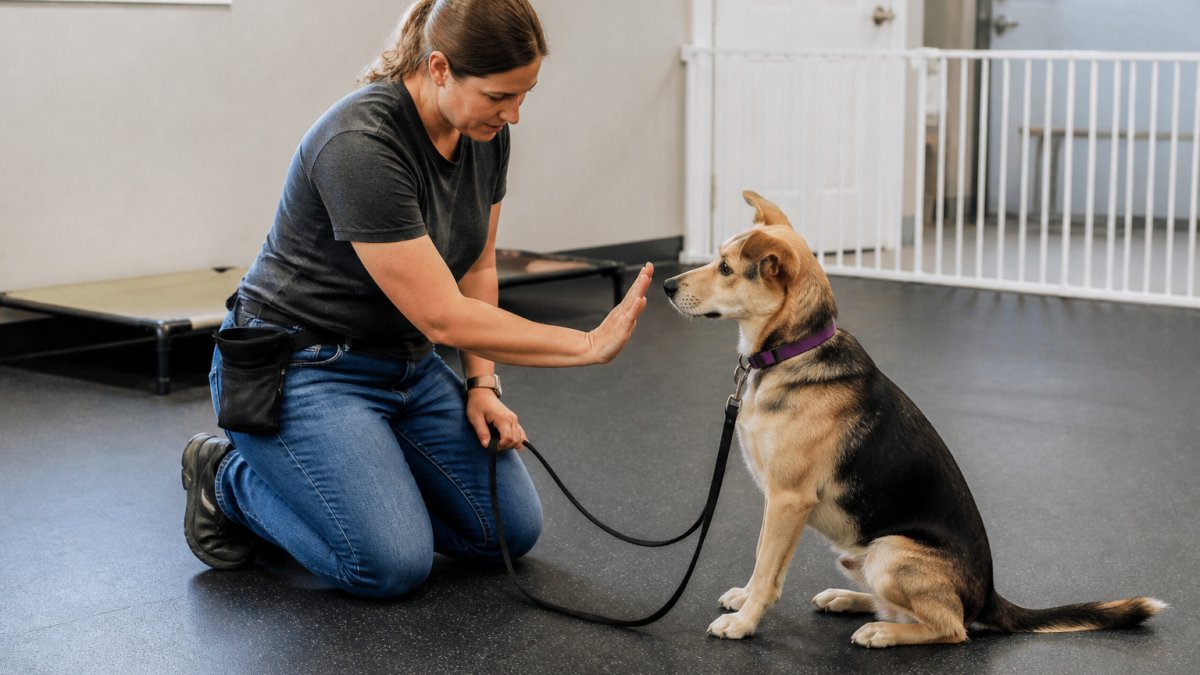
The best dog training for aggression starts with a full behavioral assessment, not a leash and a choke chain. At Lake County Dogs, we treat aggression as a symptom, not a personality flaw. That means finding the cause before changing the behavior.
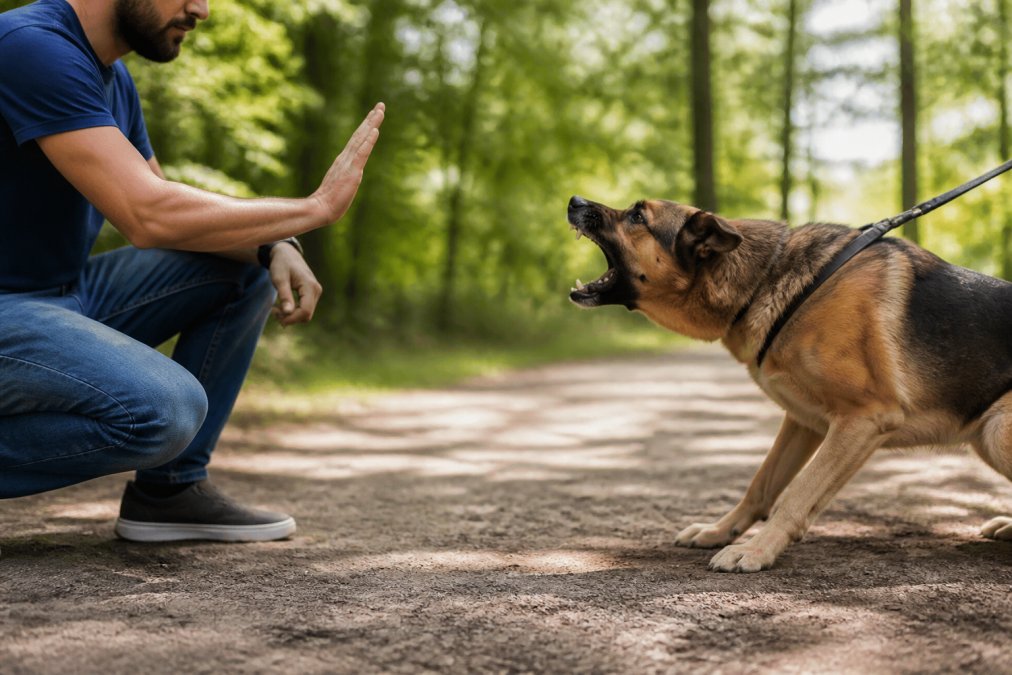
Aggression is any behavior a dog uses to increase distance from a threat. It can look like growling, lunging, snapping, or a stiff, frozen stare.
Most owners wait until a bite happens. That is a mistake. Early intervention is easier, safer, and faster.
Here is what a real program includes:
- A behavioral assessment with a certified professional trainer
- A written plan built around positive reinforcement
- Trigger management at home and on walks
- Obedience training to build impulse control
- Regular progress checks with the whole family
Why Punishment-Based Methods Backfire
Punishment can stop a growl without removing the fear behind it. You have not fixed the problem. You have only removed the warning label.
A dog that stops growling but still feels threatened may skip straight to a bite. That is how a manageable case becomes a dangerous one.
According to the American Veterinary Society of Animal Behavior position statement on punishment, punishment-based methods raise stress, damage the human-animal bond, and increase the risk of future aggression. The group recommends reward-based training instead.
Dominance theory, the old idea that you must "show the dog who is boss," has been set aside by modern behavioral science. Your dog is not plotting a takeover.
Dog Behavior Modification Techniques That Work
Dog behavior modification techniques change how a dog feels about a trigger, not just how it acts. The goal is a calmer emotional response, which produces calmer behavior on its own. That distinction is the whole game. Suppressing a growl with a correction changes the surface; changing the emotion underneath changes the outcome.
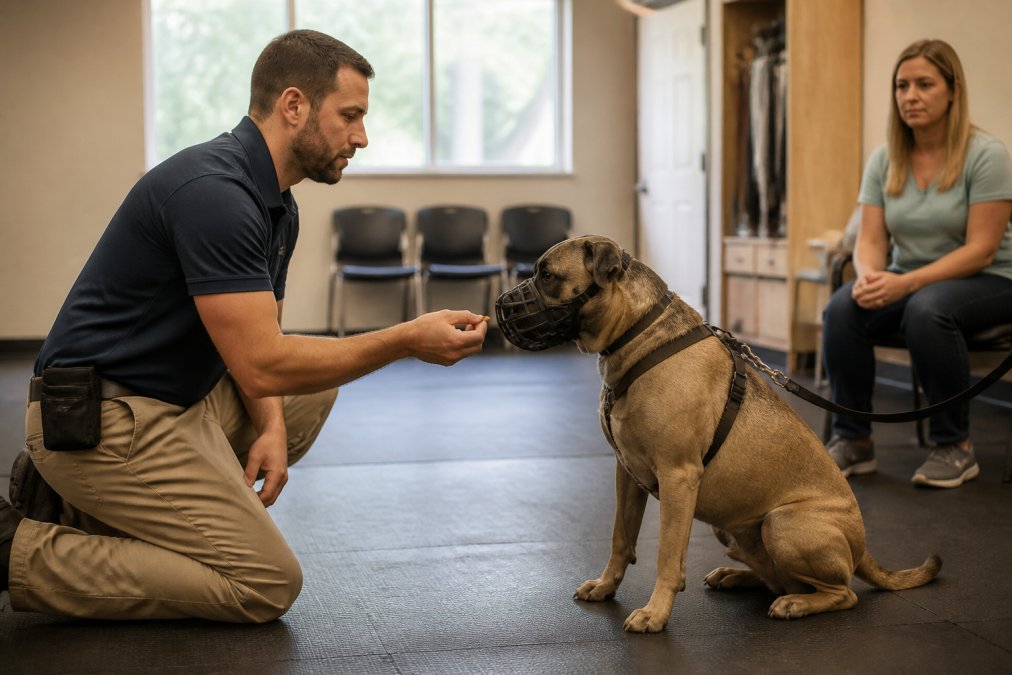
Desensitization and Counter-Conditioning
Desensitization means exposing your dog to a trigger at a level it can handle without reacting. Counter-conditioning means pairing that trigger with something good, usually food. Stack them and you get a dog that sees the trigger and automatically looks to you for the reward, a conditioned emotional response that replaces fear with anticipation.
A workable session looks like this:
- Pick one trigger and one controlled setting.
- Start at a distance where your dog will eat and stay loose.
- Trigger appears, treat appears. Trigger disappears, treats stop.
- Five to ten repetitions, then stop while your dog is still succeeding.
- Log the distance, the reaction, and the treat used so you can adjust next time.
Other Tools That Support the Plan
- Muzzle training so safety gear never becomes a fight. A basket muzzle lets your dog pant, drink, and take treats while it prevents a bite. Condition it with peanut butter or squeeze cheese smeared on the inside, starting with one second of wear and building up over a week or two.
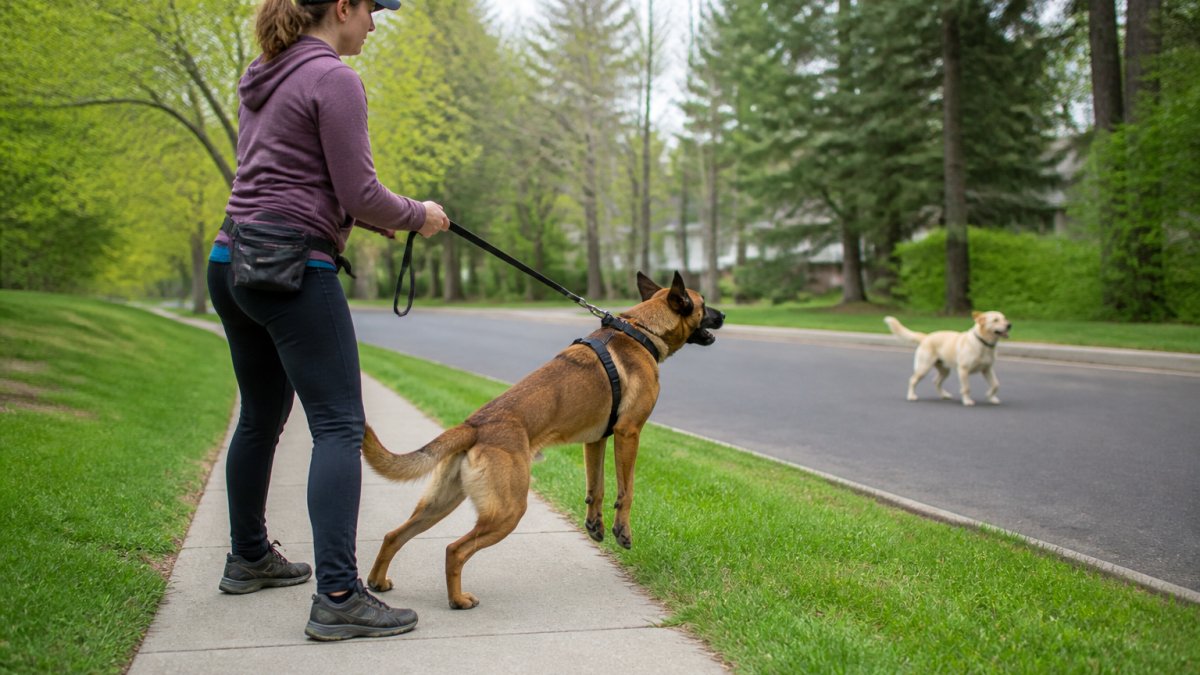
- Leash reactivity drills for walks. Teach a U-turn cue and a "find it" scatter so you have a graceful exit before your dog locks on.
- Resource guarding protocols that trade up instead of taking away. Approach, toss something better, walk away. Never reach for the bowl.
- Mental enrichment to lower baseline stress. Snuffle mats, frozen stuffed toys, and scent games burn nervous energy that would otherwise feed reactivity.
- Impulse control games like wait-and-earn. A dog that can hold a sit while you open a door is a dog that can hold a sit while a stranger passes.
Why the Order Matters
Do not stack new triggers before the old one is neutral. Do not train when your dog is already stressed from a vet visit, a move, or a schedule change. Do not train on an empty stomach if food is your reward, a hungry dog learns faster, but a starving dog is distracted. And do not train every day if your dog is showing signs of cumulative stress like lip licking, yawning, or refusing treats.
How Long Does It Take to Train an Aggressive Dog?
Most aggression cases require consistent work to show real, lasting change. Severe cases, or dogs with a long bite history, can take significant time.
A few things speed it up:
- Daily short sessions beat one long weekly class
- Everyone in the home follows the same rules
- Triggers are managed while you train
- A professional guides the plan and adjusts it
A few things slow it down:
- Punishment, yelling, or leash jerks
- Training only when the dog is already over threshold
- Skipping the veterinary side of the picture
When to Hire a Dog Behaviorist or Veterinary Behaviorist
Hire a certified professional trainer or behaviorist when aggression is a pattern, not a one-off. If your dog has bitten, guards food or toys, or reacts to strangers or other dogs most days, you need a pro.
Ask these questions before you book:
- What certifications do you hold?
- How do you measure progress?
- What does a typical plan look like?
- How do you handle a dog that bites during a session?
Medication, Veterinary Collaboration, and Behavioral Health
Medication is not a cop-out. For some dogs, it is the thing that makes training possible. This is the piece most guides skip.
Safety Protocols and Liability for Aggressive Dogs
Handler safety comes first, every session. A muzzle, a sturdy leash, a secure collar or harness, and a management plan are not optional for a dog with a bite history. A flat collar can slip; a martingale or a well-fitted harness with a backup clip to the collar is standard practice for dogs that lunge. Retractable leashes have no place here, they offer no control and can snap under load.
Emergency De-escalation During an Outburst
If a reaction starts, your job is to interrupt the sequence before it escalates to a bite. The window is short, often two to five seconds.
- Create distance. Back away, do not pull forward. Pulling tightens the leash and adds pressure, which most dogs read as conflict.
- Stay quiet. Shouting raises the dog's arousal. A single calm cue, or silence, works better than a raised voice.
- Put a barrier between your dog and the trigger. A parked car, a fence, a doorway, your own body positioned at an angle, anything that breaks the line of sight.
- Get to a safe space, then reward calm. Do not reward the outburst. Reward the moment your dog disengages and looks at you.
- Log what happened. Distance, trigger, time of day, what preceded it. Your trainer needs that data to adjust the plan.
Liability, Insurance, and Local Rules
Liability is real, and it is the piece most owners underestimate until it is too late. Under most state laws, an owner can be held responsible when a dog bites, and some jurisdictions apply strict liability, meaning you are on the hook regardless of whether you knew the dog was dangerous. A handful of states follow a "one-bite" rule, but do not count on it.
Check three things before you need them:
- Your local ordinances. Call your city or county animal control and ask what triggers a dangerous-dog designation and what it requires.
- Your homeowner's or renter's insurance policy. Many insurers limit or exclude coverage for dogs with a bite record, and some exclude specific breeds outright. Ask your agent in writing whether your dog is covered and what happens after a claim.
- Your state's dog-bite statute. The rules vary widely. Some states cap damages; others allow full recovery including medical costs and lost wages.
Breed, Risk, and What Actually Predicts a Bite
Breed matters less than most people think. Any dog can bite. Genetics, early socialization, environment, and, most of all, bite history shape risk far more than breed alone. A dog that has bitten once is statistically more likely to bite again than a dog that has never bitten, regardless of what it looks like. That is why the assessment comes before the label, and why the management plan has to be built around the individual dog in front of you, not the breed on its paperwork.
Conclusion: Building a Plan for Lasting Change
Aggression does not fix itself, and it rarely improves with punishment. It improves with a real plan, the right help, and daily consistency.
Frequently Asked Questions
Can a dog be trained out of aggression?
Aggression is manageable, not curable. With the best dog training for aggression, most dogs learn to reduce reactivity and respond safely to triggers. A 2026 survey by the American Pet Products Association found that 68% of owners reported significant improvement after six months of professional behavior modification. Success depends on consistency, early intervention, and addressing underlying anxiety or medical issues. Severe cases may need lifelong management.
Is positive reinforcement effective for dog aggression?
Yes. Positive reinforcement is the foundation of modern behavior modification. It rewards calm behavior instead of punishing reactions, which reduces stress and builds trust. Techniques like desensitization and counter-conditioning work best when paired with high-value treats and consistent timing. Punishment-based methods can suppress aggression temporarily but often increase fear and risk of bites. The American Veterinary Society of Animal Behavior recommends punishment-free training for aggression.
How do I find a certified behaviorist for my aggressive dog?
Look for credentials like Certified Applied Animal Behaviorist (CAAB), Diplomate of the American College of Veterinary Behaviorists (DACVB), or Certified Professional Dog Trainer (CPDT) with aggression specialization. Verify experience with your dog's specific issue, such as fear aggression or resource guarding. In Lake County, Illinois, Lake County Dogs offers free evaluations led by an AKC-approved evaluator with over 25 years of experience. Ask about safety protocols, training methods, and follow-up support.
What is the 3-3-3 rule for dog training?
The 3-3-3 rule refers to a rescue dog's adjustment timeline: 3 days to decompress, 3 weeks to settle into routines, and 3 months to feel fully safe. For aggressive dogs, this timeline often extends. Behavior modification may take 3 to 6 months or longer. Rushing socialization or trigger exposure during the first weeks can worsen fear and reactivity. Patience and predictable routines are critical for building lasting behavioral health.