 blog
Canine Dimensions Alternative for Rescues: 2026 Guide
Table of Contents
- Why Rescue Dogs Need a Different Training Approach
- What to Look for in a Canine Dimensions Alternative for Rescues
- The Rescue Dog Decompression Period: Why Timing Matters
- Positive Reinforcement Training for Fearful Dogs
- Fearful Rescue Dog Training: Desensitization and Behavior Shaping
- How to Choose a Dog Trainer for Fearful Rescue Dogs
- Measuring Training Outcomes for Rescue Programs
- Conclusion
- Frequently Asked Questions
Last Updated: October 4, 2026
Why Rescue Dogs Need a Different Training Approach
A rescue dog that cowers when you reach for a leash is not stubborn, it is frightened, and fear changes how training must work. This guide from Lake County Dogs covers how to compare options, what to ask before you pay, and how to spot a trainer who understands rescue behavior.
A dog raised in a home from eight weeks learns rules in a predictable world. A shelter dog may have spent months in a kennel run, been surrendered twice, or never walked on a leash. Those experiences shape behavior, and training that ignores them stalls, owners then blame the dog.
The good news: fear and anxiety respond well to structured, humane training. The work just looks different from a standard obedience class.
What to Look for in a Canine Dimensions Alternative for Rescues
Most guides list trainers and stop there, which does not help a rescue. This section gives you a framework for evaluating any alternative, in-home program, behavior consultant, group class, virtual platform, or volunteer training model, against what a rescue actually needs.
Start by naming the category. "Canine Dimensions alternative" can mean four different things:
- In-home private training programs, a trainer comes to the foster or adopter's home on a set curriculum.
- Behavior consulting, a credentialed consultant builds a custom behavior modification plan, often for severe fear or aggression cases.
- Group classes, lower cost per dog, but poorly suited to reactive or shut-down dogs.
- Virtual coaching and software, remote sessions plus behavior-tracking tools that a rescue can deploy across many foster homes at once.
Once you know the category, score each option against six rescue-specific criteria.
| Criterion | What to Ask | Why It Matters for Rescues |
|---|---|---|
| Volunteer capacity | Does the program train volunteers, or only the dog? | A rescue may have 5 fosters or 50; the model has to scale to whoever shows up |
| Intake volume | Can it handle 2 dogs a month or 20? | Waitlists kill placement momentum |
| Behavior needs | Does it separate mild manners work from severe fear or bite-history cases? | One curriculum cannot serve both |
| Budget | Is pricing per dog, per session, or per program? | Rescues run on donated dollars and need predictable line items |
| Staff expertise | Who on your team owns the plan? | Without an internal owner, plans die when the trainer leaves |
| Ongoing support | What happens between sessions? | Behavior change happens in the foster home, not the session |
Three questions separate qualified providers from the rest.
- Do they assess before they prescribe? A trainer who quotes a package before meeting the dog is selling a product, not a solution.
- Do they explain the "why"? Good trainers describe how learning theory applies to your dog's specific fear or reactivity.
- Do they work with you, not just the dog? Behavior change happens at home, between sessions. If the handler is not trained too, results fade.
Credentials, Methods, and Observable Behavior
Credentials matter less than methods, but both deserve scrutiny. The American Veterinary Society of Animal Behavior publishes position statements on humane training that are worth reading before you hire anyone.
Ask to observe a session. Watch how the trainer reads body language, adjusts when the dog disengages, and whether the dog relaxes. Observable behavior tells you more than any certification on a wall.
For a rescue evaluating a program across multiple foster homes, ask for a sample session recording or a live observation with a current client. If the provider will not show you the work, that is your answer.
Costs, Contracts, and Implementation Support
Pricing varies by region, format, and severity. Independent consultants typically charge per session, in-home programs bundle multi-session packages, and virtual platforms charge monthly or per seat. Ask for a written scope: session count, between-session support, and what happens if progress stalls. Avoid contracts that lock you in before an evaluation.
For rescues, three contract terms deserve extra attention:
- Transferability. If a dog is adopted mid-program, does the remaining package follow the adopter, or does the rescue eat the cost?
- Volume pricing. Ask whether the provider offers a rescue or nonprofit rate. Many do but do not advertise it.
- Exit terms. What happens if the dog is returned or the foster quits? Get the refund and pause policy in writing.
Implementation support is where programs fall short. A weekly session is one hour out of 168. Providers offering homework, video check-ins, or phone access between sessions produce real change. For rescues running multiple fosters, look for a shared portal or tracking sheet so every handler sees the same plan.
The Rescue Dog Decompression Period: Why Timing Matters
The rescue dog decompression period is the window, often the first few weeks after adoption, when a dog needs rest and predictability rather than training demands. Pushing formal obedience here usually backfires.
A newly adopted dog processes enormous change: new smells, people, routines, and the loss of prior familiarity. Many shut down or act out, and owners misread normal adjustment stress as a permanent problem.
Keep the first days quiet. Limit visitors. Establish routines for feeding, walks, and rest. Let the dog approach you.
This does not mean waiting months. It means reading the dog. Some settle in days; others need several weeks.
Positive Reinforcement Training for Fearful Dogs
Positive reinforcement training for fearful dogs pairs scary things with something the dog values, usually food. Over time, the emotional response to the trigger changes, the foundation of nearly all modern behavior work.
A dog that fears strangers gets a treat every time a stranger appears at a distance, so the brain associates the stranger with food rather than threat. Gradually the distance shrinks. This is counterconditioning, one of the most reliable tools available.
What does not work: forcing a fearful dog to confront what scares it. Flooding a dog with the thing it fears often makes the fear worse and can create new problems, including defensive aggression.
| Common Mistake | Better Approach | Why It Matters |
|---|---|---|
| Forcing interaction with strangers | Reward calm behavior at a distance | Builds trust instead of fear |
| Skipping the decompression period | Allow weeks of settling first | Prevents shutdown and regression |
| Punishing growls or barks | Treat the underlying fear | Suppresses warning signs, not the fear |
Fearful Rescue Dog Training: Desensitization and Behavior Shaping
Fearful rescue dog training combines desensitization, exposing the dog to a trigger at a level it can handle, with behavior shaping, which rewards small steps toward the desired behavior.
Start below the dog's threshold, the point where it notices the trigger but stays calm, and reward that calm response. When the dog is consistently relaxed, increase intensity slightly.
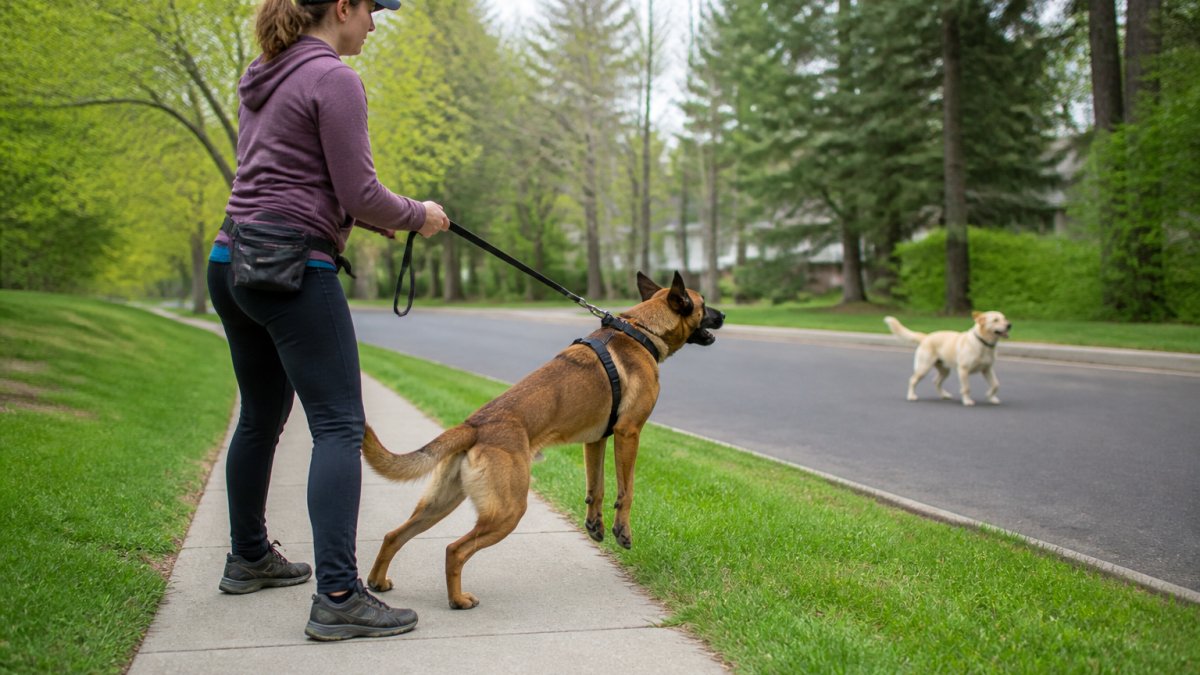
Behavior shaping breaks a big goal into tiny pieces. If the goal is walking past other dogs without reacting, the first step might be standing calmly while a dog passes across the street.
Progress is rarely linear, a dog that does well Tuesday may struggle Thursday. What matters is the trend over weeks, not any single session.
How to Choose a Dog Trainer for Fearful Rescue Dogs
Choose a trainer for fearful rescue dogs by asking about specific experience with fear and trauma, not just general obedience. Fear cases require a different skill set than teaching a puppy to sit.
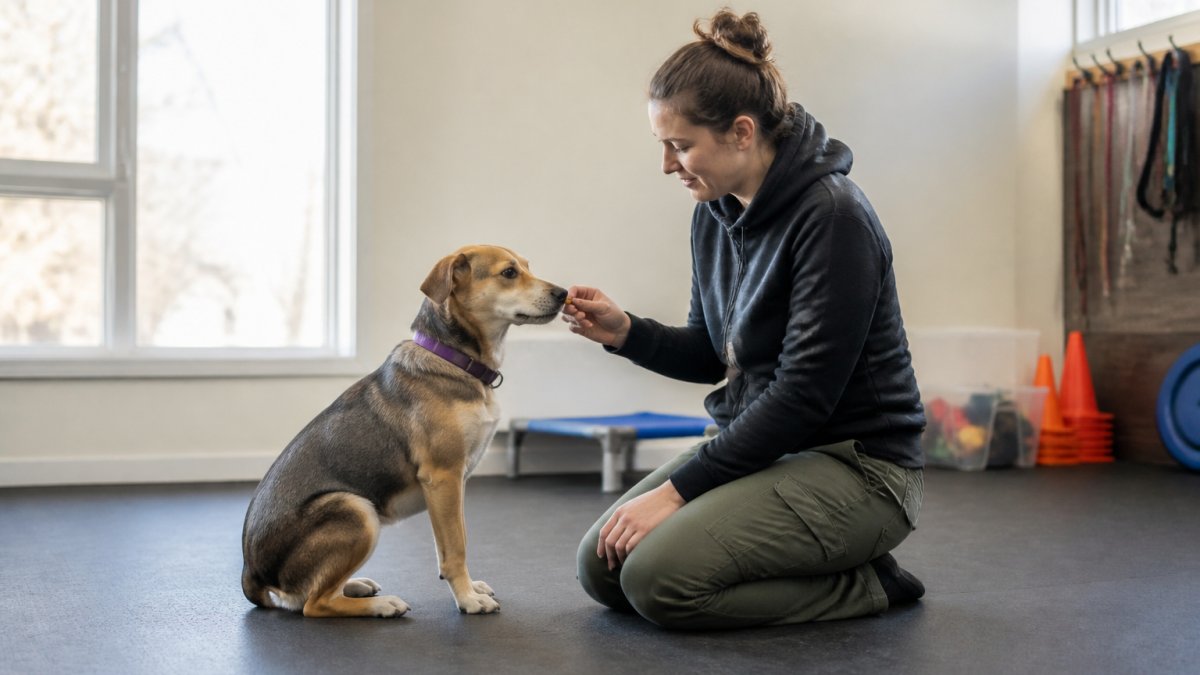
Here is what to ask any trainer before you hire:
- How many fear or trauma cases have you handled in the last year?
- What happens if the dog is not improving after four sessions?
- Do you provide written homework between sessions?
- Can I observe a session before committing?
- What is your policy on aversive tools like prong collars?
If a trainer cannot answer these clearly, keep looking. The American Kennel Club's guidance on choosing a trainer offers a solid starting framework for evaluating credentials.
Measuring Training Outcomes for Rescue Programs
Measure outcomes with observable behavior, not feelings. A program that cannot show what changed has proven nothing, and this is what lets a rescue compare alternatives on evidence instead of sales pitch.
For a rescue running a program across many dogs, build a simple scorecard. Five metrics cover most of what matters:
| Metric | How to Capture It | What It Tells You |
|---|---|---|
| Behavior progress | Weekly count of target behaviors (barks, lunges, freezes) | Whether the plan is working |
| Adoption rate | Dogs placed within 90 days of program start | Whether training is moving dogs out the door |
| Return rate | Dogs returned within 6 months of adoption | Whether placements are sticking |
| Volunteer competency | Handler self-rating plus observed session checklist | Whether the training is transferring to your team |
| Training fidelity | Percent of assigned homework sessions completed | Whether the plan is being run as designed |
Training fidelity is the metric rescues forget most, and it explains most failures. If fosters complete only 30 percent of assigned homework, the implementation is failing, not the program.
Review progress monthly, not daily.
When comparing alternatives, ask each provider to report against the same five metrics for past clients.
For rescues specifically, adoption outcomes matter most. A dog with documented improvement in fear recovery is easier to place responsibly than one with vague notes about "needs work."
Conclusion
Comparing training options for a rescue dog is harder than it looks, because most programs were built for dogs without a difficult history. The right choice comes down to assessment, humane methods, owner coaching, and measurable progress.
Lake County Dogs builds customized programs for exactly this situation. Our approach combines over 25 years of behavior modification experience, specialized fear recovery work, and owner coaching that keeps progress going between sessions.
If your rescue dog is struggling with fear, anxiety, or reactivity, book a free evaluation with Lake County Dogs and get a plan built for your dog.
Frequently Asked Questions
What is the 3-3-3 rule for rescue dogs?
The 3-3-3 rule is a common guideline for the rescue dog decompression period: three days to feel overwhelmed, three weeks to settle into a routine, and three months to feel fully at home. During this time, keep new experiences low-key and let the dog set the pace. Jumping into obedience training too soon can slow progress. A trainer for fearful rescue dogs can help you read your dog's stress signals and adjust the timeline to fit the individual dog, not the calendar.
What should I look for in a Canine Dimensions alternative for rescues?
Look for a program that starts with a behavioral evaluation, uses positive reinforcement training for fearful dogs, and measures progress with observable behavior. Ask whether the trainer holds credentials such as AKC evaluator status or formal behavior education. Also check how the program handles the rescue dog decompression period and whether it offers real-world coaching, not just group classes. Costs and contract terms should be clear before you commit.
How long does it take for a fearful rescue dog to adjust?
Most rescue dogs need at least three months to settle into a new home, but fearful dogs often take longer. Progress depends on the dog's history, age, and the consistency of positive reinforcement training for fearful dogs. Some dogs show clear improvement in weeks; others need six to twelve months of structured work. A dog trainer for fearful rescue dogs can set realistic milestones and adjust the plan as your dog's confidence grows.
Can a fearful rescue dog recover from trauma?
Yes, many fearful rescue dogs make significant progress with humane, evidence-based methods. Fear treatment and behavior shaping can reduce reactivity and build confidence, especially when training respects the dog's distance and pace. Full recovery varies by dog, and some will always need thoughtful management. Working with a qualified trainer who uses positive reinforcement and avoids aversive tools gives your rescue the best chance at lasting improvement.