 comparison
Custom Puppy Training Programs: 2026 Comparison Guide
Table of Contents
- Why Custom Puppy Training Programs Beat One-Size-Fits-All
- Quick Comparison: 5 Custom Puppy Training Programs
- 1. Lake County Dogs: In-Person Custom Training with 25+ Years of Experience
- 3. GoodPup: App-Based Private Puppy Training at Home
- 4. Tip Top K9: Custom Obedience Plans for Challenging Puppies
- 5. Custom Canine Unlimited: Structured K9 Programs with Handler Education
- How to Evaluate Any Custom Puppy Training Program
- Frequently Asked Questions
Last Updated: October 16, 2026
Why Custom Puppy Training Programs Beat One-Size-Fits-All
A puppy that chews furniture, ignores the leash, and melts down around other dogs rarely improves with a generic group class.
Puppies differ enormously in energy, confidence, and how quickly they pick up cues.
Custom puppy training also catches problems early.
Below, we compare five custom puppy training programs and show you how to judge them on curriculum, methods, and measurable results.
Quick Comparison: 5 Custom Puppy Training Programs
The five programs below differ mainly in format, personalization, and whether a trainer works with your puppy directly or hands you a course to follow. The table adds two columns most comparison pages skip: typical cost and owner workload between sessions.
| Program | Format | Best For | Trainer Access | Typical Cost Structure | Owner Time Per Week |
|---|---|---|---|---|---|
| Lake County Dogs | In-person, custom plans | Puppies needing assessment and behavior work | One-on-one with a specialist | Quoted after a free evaluation; priced per program, not per session | 15-30 min of daily practice |
| Baxter & Bella | Online, self-paced courses | Owners who want a structured home curriculum | Course-based | Subscription or one-time course fee; pricing not published | 20-30 min, 5-6 days |
| GoodPup | App-based private sessions | Flexible at-home scheduling | One-on-one, remote | Weekly or per-session fee; pricing not published | 15-20 min between sessions |
| Tip Top K9 | Custom obedience plans | Puppies with specific obedience challenges | Plan-based | Package pricing; varies by location and program | 20-40 min, 5-7 days |
| Custom Canine Unlimited | Structured K9 programs | Working-dog and handler-focused training | Handler education included | Program-based pricing; not published | 30-60 min, 5-7 days |
How to Read the Cost Column
None of the online or app-based providers publish a full price list, and that is itself a signal. When a program hides pricing, you cannot tell whether you are buying a $200 self-paced course or a $2,000 board-and-train package until you are on a call. Ask three questions:
- What is the total cost, all-in? Include the assessment, the sessions, any equipment, and any follow-up visits.
- What happens if my puppy needs more sessions than the package includes? The answer tells you whether the price is a ceiling or a floor.
- Is the assessment free, or is it billed? A free evaluation removes the risk of paying for a plan that does not fit.
How to Read the Owner Time Column
This is the column most buyers ignore and later regret. A board-and-train program can produce a well-behaved puppy in a kennel, but the behavior often fades within weeks at home because the owner never learned to maintain it. Programs requiring daily owner practice, even 15 minutes, produce behavior that holds up on walks, at the vet, and around guests.
Format Trade-Offs at a Glance
- In-person, custom plans win on assessment and behavior modification, but cost more and require travel.
- Online, self-paced courses win on price and convenience, but offer no live feedback, so timing errors go uncorrected.
- App-based private sessions split the difference: live coaching without travel, but limited hands-on handling.
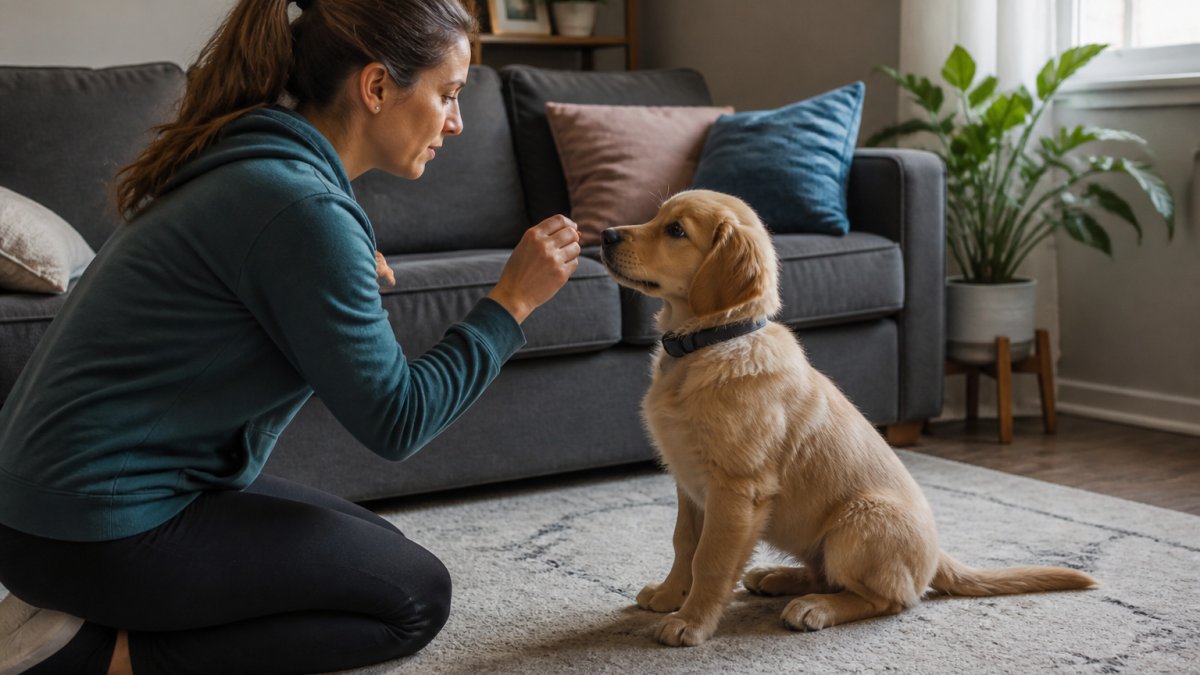
1. Lake County Dogs: In-Person Custom Training with 25+ Years of Experience
Lake County Dogs is our top pick because every plan starts with a real evaluation of your puppy, not a template. The practice is led by specialist Gary Boots, an AKC-approved evaluator and Animal Behavior College instructor with more than 25 years in behavior modification.
Genetics, temperament, and developmental stage all shape how a puppy learns, and a trainer who understands those factors builds a plan that fits instead of fights your dog's nature.
What Makes Lake County Dogs Different
Most programs teach obedience. Fewer address the root of a behavior. We work on both, which is why families come to us for puppy biting and nipping training, leash skills, and early socialization.
Our approach is compassionate and science-based: positive reinforcement to build confidence, then real-world practice so behavior holds up on walks, at the vet, and around guests.
- Custom training plans tailored to your family's needs
- Puppy foundations, basic commands, and everyday manners
- Behavior modification for fear, anxiety, and reactivity
Pricing and Free Evaluation
Pricing depends on the program and your puppy's needs, so we quote it after the evaluation.
American Kennel Club guidance on puppy socialization notes that early, positive exposure shapes how a dog handles new situations for life, which is exactly what the evaluation is designed to map out.
3. GoodPup: App-Based Private Puppy Training at Home
GoodPup delivers one-on-one training through an app, a reasonable fit for owners with unpredictable schedules. Sessions are private rather than group-based, and the format supports training from home.
What the available information does not detail is puppy-specific curriculum. If your main concern is puppy socialization training or early manners, confirm that the trainer assigned to you works with puppies regularly.
Pros:
- One-on-one sessions rather than group classes
- App-based and flexible
- At-home format removes travel time
Cons:
- Pricing is not shown in the available information
- Puppy-specific course content is not detailed
4. Tip Top K9: Custom Obedience Plans for Challenging Puppies
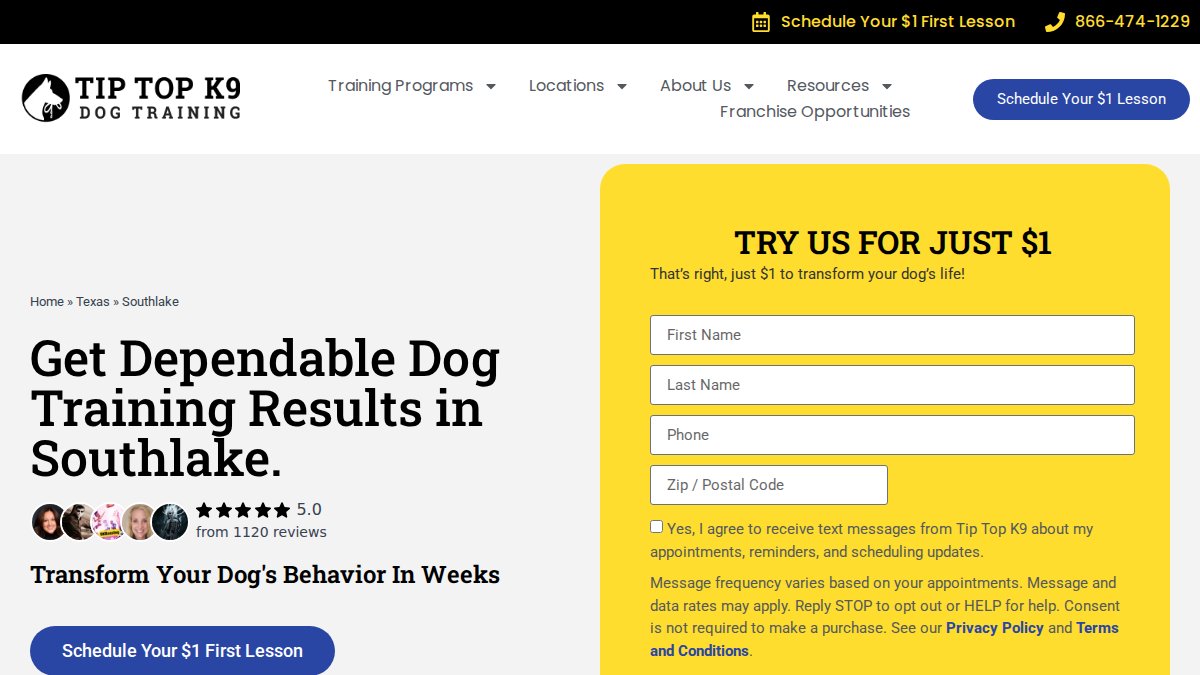
Tip Top K9 builds obedience plans around a dog's specific challenges, a step up from fixed packages. It fits owners whose puppy has already developed a stubborn habit needing targeted work.
The available information is location-specific, so puppy-only program details are not established. Ask directly what experience the trainer has with puppies versus adult dogs before committing.
Pros:
- Plans are described as custom to the dog's challenges
- Structured obedience programs
Cons:
- Pricing is not shown in the available information
- Puppy-specific program details are not established
5. Custom Canine Unlimited: Structured K9 Programs with Handler Education
Custom Canine Unlimited runs structured programs across obedience, detection, patrol skills, and tracking, with handler education built in. That focus is useful: a puppy learns faster when the owner understands timing, reward, and cue delivery.
The caveat is fit. The available information does not identify a puppy-specific program, so this is a better match for working-dog and advanced obedience paths than for a young puppy's first months.
Pros:
- Several distinct training areas
- Handler education included
Cons:
- No puppy-specific program identified in the available information
- Pricing is not shown in the available information
How to Evaluate Any Custom Puppy Training Program
Judge a program on six things before you pay: the assessment, the age-based curriculum, the methods, the trainer's access to your dog, how progress gets measured, and how welfare and fit are handled. A program that skips the assessment is selling a template, not custom training.
1. Start With the Assessment
A real assessment looks at your puppy's temperament, energy, and home environment, then sets goals you can name. Ask what your puppy will be able to do in eight weeks. If they cannot answer in specific behaviors, 'sit-stay for 10 seconds with a guest at the door' rather than 'better manners', keep looking.
2. Demand an Age-Appropriate Curriculum
This is the biggest gap in most puppy programs. A curriculum built for a 10-week-old is not the same as one built for a 6-month-old, and a program that runs both through the same lessons is not actually custom. Use this milestone map to check what a provider covers:
| Puppy Age | Developmental Focus | What a Good Program Teaches |
|---|---|---|
| 8-12 weeks | Socialization window, bite inhibition | Gentle handling, name recognition, potty routine, soft-mouth play |
| 3-4 months | Confidence, impulse control | Sit, down, come, leave-it, crate comfort, polite greeting |
| 4-6 months | Distraction tolerance, leash skills | Loose-leash walking, stay, settle on a mat, recall around mild distractions |
| 6-12 months | Reliability, adolescent regression | Proofing commands in new places, recall under distraction, public manners |
If a provider cannot tell you which row your puppy is in and what comes next, the plan is not age-appropriate.
3. Check the Methods and Welfare Safeguards
Positive reinforcement is the standard because it builds confidence without fear. Ask what happens when a puppy gets it wrong, and listen for redirection rather than punishment. Also ask which puppies the program will not take. A trainer who screens for severe fear, aggression, or medical issues, and refers those cases to a veterinary behaviorist, puts welfare ahead of enrollment.
4. Confirm Trainer Access to Your Dog
A course you watch is not the same as a trainer who handles your puppy. Ask how many sessions are live, whether the same trainer stays with you throughout, and whether you can reach them between sessions when a new behavior shows up.
5. Insist on Measurable Outcomes
Broad success claims are worthless. Ask for the tracking method: a behavior log, a command-reliability checklist, or a follow-up evaluation at a set date. A program that measures progress can prove it; a program that does not is guessing.
6. Ask About Follow-Up
Skills fade without practice. Ask how the trainer supports you after sessions end, a check-in call, a refresher session, or a written maintenance plan, and how progress is tracked between visits.
Frequently Asked Questions
What is the 3-3-3 rule for puppy training?
The 3-3-3 rule is a guideline for helping a new puppy adjust: 3 days to decompress, 3 weeks to learn your routine, and 3 months to feel fully at home. During this period, keep training sessions short and positive. Custom puppy training programs often build around this timeline, starting with basic commands and house training before adding more complex skills like leash manners and recall.
Are private puppy training sessions better than group classes?
Private puppy training offers one-on-one attention, which is ideal for puppies with specific behavior challenges like aggression, fear, or leash reactivity. Group classes provide socialization opportunities but may not address individual needs. Many owners combine both: private sessions for customized skill-building and group classes for controlled socialization. Your choice depends on your puppy's temperament and your training goals.
How do I choose a puppy training program?
Look for programs that start with an individual assessment, offer a customized training plan, and use positive reinforcement methods. Check the trainer's credentials, such as AKC approval or behavior certification. Ask about follow-up support and progress tracking. Pricing should be transparent. A free evaluation, like the one offered by Lake County Dogs, lets you see if the trainer's approach fits your puppy's needs before committing.
Can puppy training be customized for biting and nipping?
Yes. Puppy biting and nipping training focuses on teaching bite inhibition and redirecting mouthing to appropriate toys. Custom programs assess why your puppy bites (teething, overarousal, or play) and build a plan with consistent redirection, time-outs, and reward-based training. Early intervention is key; most puppies respond well when training starts before 16 weeks, but older puppies can still learn with patience.
How long does it take to train a puppy?
Basic obedience like sit, stay, and come can take 4-6 weeks with consistent daily practice. More complex behaviors like leash manners and impulse control may take 3-6 months. Custom puppy training programs set milestones and adjust based on your puppy's progress. Factors include breed, age, and how much you practice between sessions. Expect ongoing reinforcement throughout your puppy's first year.