 how-to
How to Help a Fearful Rescue Dog: 7 Steps That Work
Table of Contents
- Start Here: What You'll Need Before You Begin
- Recognizing the Signs of Fear in Rescue Dogs
- The 3-3-3 Rule for Rescue Dogs: What to Expect in the First 3 Months
- Step 1: Create a Safe Space for Your Fearful Rescue Dog
- Step 2: Build Trust Through Routine, Patience, and Hand Feeding
- Step 3: How to Socialize a Fearful Rescue Dog Without Overwhelming Them
- When to Hire a Professional Dog Trainer for Your Rescue Dog
- Medication, Veterinary Support, and Owner Self-Care
- Frequently Asked Questions
Last Updated: September 29, 2026
Start Here: What You'll Need Before You Begin
Helping a fearful rescue dog takes time, patience, and the right setup. At Lake County Dogs, we've spent over 25 years working with rescued and previously abused dogs, and the families who see the fastest progress are the ones who prepare before their dog comes home.
Here's what to have ready:
- A crate or quiet pen with soft bedding
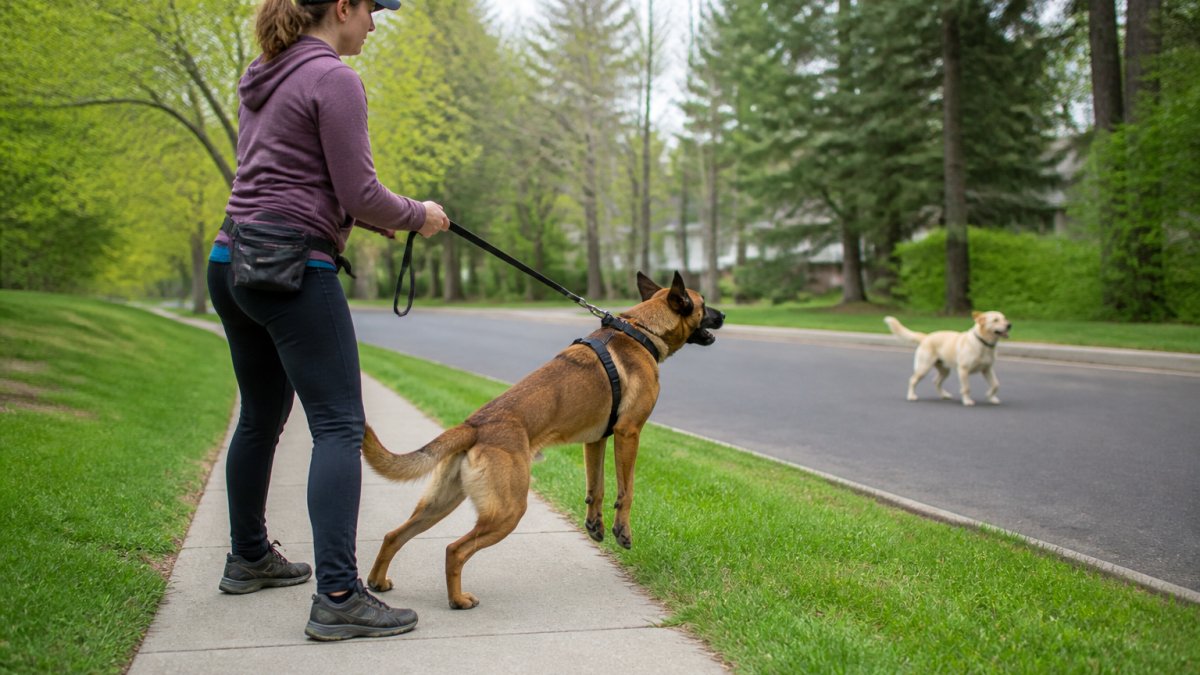
- A lightweight leash and a well-fitted harness
- High-value treats (small, smelly, easy to eat)
- A quiet room away from foot traffic
- A vet appointment on the calendar
Recognizing the Signs of Fear in Rescue Dogs
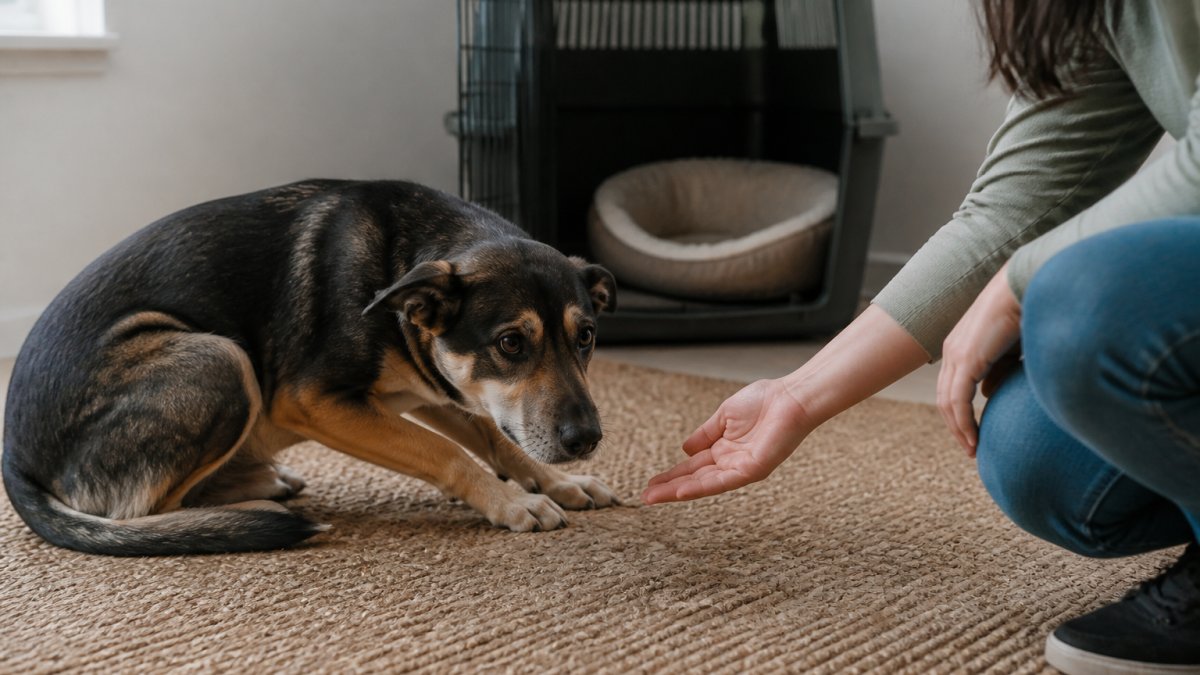
Fear in rescue dogs shows up in the body long before it shows up in behavior. Learning to read those early signals is the single most useful skill you can build.
Stress Signals to Watch For
Watch for these common stress signals:
- Lip licking with no food around
- Yawning when not tired
- Whale eye (showing the whites of the eyes)
- Tucked tail or lowered body posture
- Ears pinned back or swiveled
- Freezing in place
- Turning the head away or avoidance behavior
- Pacing or panting when it's cool
These are stress signals, not misbehavior. A dog showing them is asking for space.
When Fear Looks Like Aggression
A growl, snap, or lunge often comes from fear, not dominance. This is called fear-based aggression, and it's one of the most misunderstood behaviors in rescue dogs.
The 3-3-3 Rule for Rescue Dogs: What to Expect in the First 3 Months
The 3-3-3 rule for rescue dogs breaks the adjustment period into three phases: three days, three weeks, and three months. Each phase brings a different version of your dog.
Here's how it usually plays out:
| Phase | Timeframe | What You'll Likely See |
|---|---|---|
| First phase | First 3 days | Shutdown, hiding, refusing food, no tail wag |
| Second phase | First 3 weeks | Starting to settle, testing rules, personality peeking out |
| Third phase | First 3 months | Real bonding, growing confidence, true temperament |
Step 1: Create a Safe Space for Your Fearful Rescue Dog
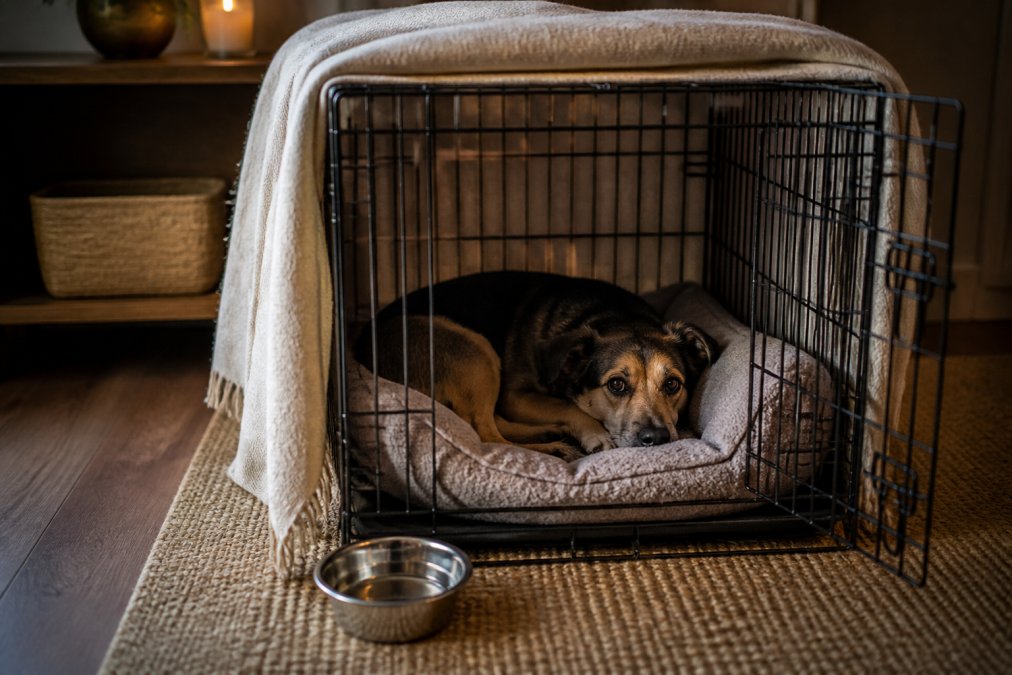
A safe space is a quiet spot your dog can retreat to at any time, and no one follows it there. This is the foundation of everything else.
Crate Setup and Room Selection
Crate training works well for fearful dogs when the crate feels like a den, not a jail.
- Leave the crate door open at all times
- Feed meals near or inside the crate
- Never use the crate as punishment
- Cover three sides with a light blanket
Gear That Helps Fearful Dogs Feel Secure
The right gear lowers stress for both of you:
- A front-clip harness (reduces pulling and pressure on the throat)
- A lightweight, fixed-length leash (retractable leashes give too much slack)
- A snug anxiety wrap or pressure vest
- A treat pouch for quick rewards
Skip anything that tightens or startles. Simple is better.
Step 2: Build Trust Through Routine, Patience, and Hand Feeding
Expect this to take weeks, not days. Consistency beats intensity every time.
Step 3: How to Socialize a Fearful Rescue Dog Without Overwhelming Them
Socialization for a fearful dog is not about meeting everyone. It's about safe, controlled exposure over time.
Desensitization and Counter-Conditioning Basics
Desensitization means starting with a tiny version of a scary thing. Counter-conditioning means pairing it with something good.
If your dog fears the doorbell:
- Play a quiet doorbell sound at low volume
- Give a treat right after the sound
- Repeat until the sound predicts a treat
- Slowly raise the volume over many sessions
When to Hire a Professional Dog Trainer for Your Rescue Dog
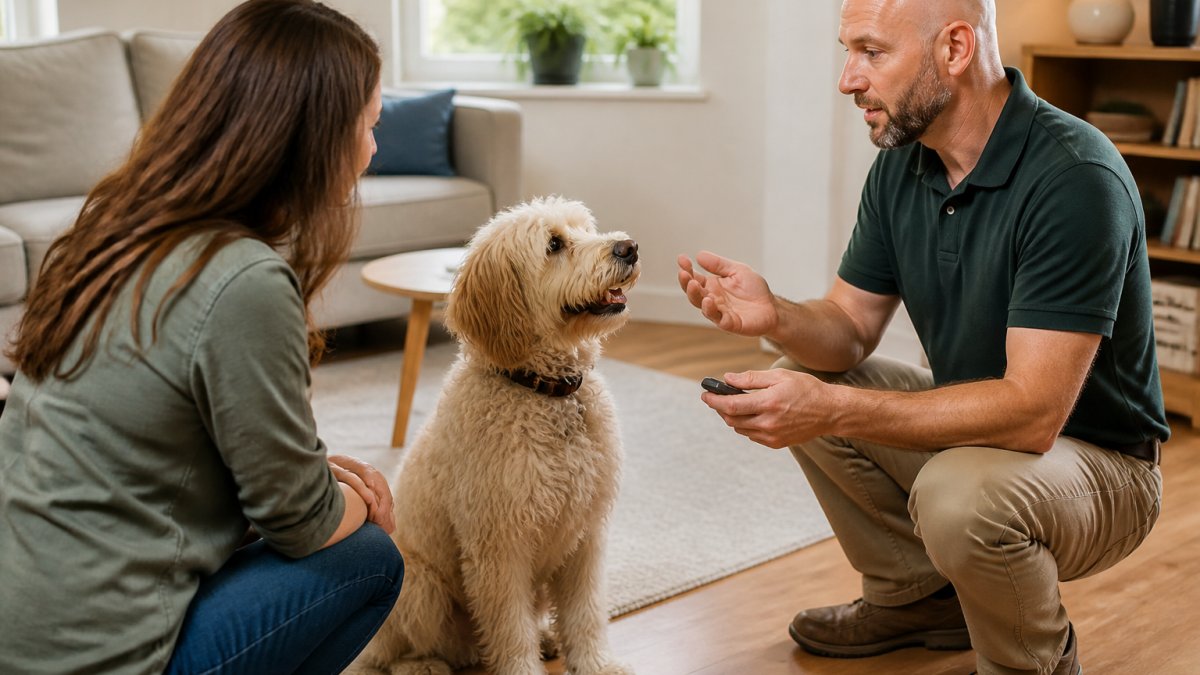
Hire a professional dog trainer when fear turns into fear-based aggression, when progress stalls for weeks, or when your dog's anxiety affects daily life.
Medication, Veterinary Support, and Owner Self-Care
This is the section most rescue-dog guides skip, and it is the one that decides whether a fearful dog actually recovers or just survives. Two things have to be true for progress: the dog's nervous system has to be calm enough to learn, and the owner has to stay functional long enough to teach. Ignore either one and the plan stalls.
When Fear Crosses Into a Medical Problem
Fear is a normal emotion. An anxiety disorder is a fear response that fires without a real threat, lasts far longer than the trigger, or prevents the dog from eating, sleeping, or eliminating normally. Those are the dogs that need more than training.
- Refusing food for more than 48 hours after arrival
- Pacing, panting, or drooling for hours with no trigger
- Destructive behavior or self-injury (chewing walls, licking paws raw) when left alone
- Freezing or shutting down so completely that no treat is accepted
- Fear that is getting worse, not better, after four to six weeks of consistent work
Medication: What It Is and What It Is Not
Behavior medication is not a sedative and it is not a shortcut. The goal is not to flatten your dog. The goal is to lower the background anxiety enough that the brain can form new associations during training. Most veterinary behaviorists describe it as turning the volume down, not turning the dog off.
The main categories your vet may discuss:
- SSRIs (such as fluoxetine or sertraline). These are daily medications that build up over four to six weeks. They are the workhorses for generalized anxiety, separation distress, and fear-based aggression. They do not work instantly, and they must be tapered off rather than stopped abruptly.
- Tricyclic antidepressants (such as clomipramine). Another daily option, often used for compulsive behaviors and separation anxiety.
- Situational medications (such as trazodone or gabapentin). These are given a few hours before a known stressor: a vet visit, a thunderstorm, a move, or fireworks. They are not for daily use in most cases.
- Amino acid supplements (such as L-theanine or alpha-casozepine, found in some over-the-counter calming chews). These are milder and evidence is mixed, but they are low-risk and some owners see a benefit during the first weeks.
A few practical points most articles leave out:
- Medication works best paired with training. A pill alone does not teach a dog that strangers are safe. It buys you a window where the training can take hold.
- Expect four to six weeks before you judge an SSRI. Owners who quit at two weeks often conclude "it didn't work" when it simply had not started working yet.
- Never stop a daily medication cold turkey. Discontinuation can cause rebound anxiety and, in some cases, seizures.
- Cost varies widely. Generic fluoxetine is inexpensive; brand-name options and compounded formulations cost more. Ask your vet about generic equivalents and about pharmacies that compound for pets.
- Report side effects. Decreased appetite, lethargy, and gastrointestinal upset are the most common early effects and often fade. Anything severe warrants a call to your vet.
The Owner Side: Burnout Is a Real Risk
What burnout actually looks like:
- Dreading coming home because you do not know what mood your dog will be in
- Skipping your own meals, sleep, or medical appointments to manage the dog
- Feeling resentful, then feeling guilty about the resentment
- Isolating from friends because you cannot leave the dog or cannot bring it along
- Crying after a bad walk, or avoiding walks entirely
What helps:
- Trade off. If there is a second adult in the house, split the care. One person takes mornings, the other takes evenings. A single night of uninterrupted sleep changes your whole week.
- Lower the bar on bad days. A day where the dog eats, eliminates, and rests is a successful day. Training can wait.
- Find your people. Fearful-dog and reactive-dog support communities exist online and in most metro areas. Talking to someone who has lived it is worth more than a dozen generic articles.
- Use respite care. A trusted friend, family member, or a force-free boarding facility can take the dog for a night so you can reset. This is not abandonment; it is maintenance.
- Talk to a professional. Therapists who work with caregivers, including pet owners, can help you separate your dog's progress from your own self-worth.
- Track small wins. Keep a one-line daily log: "Ate breakfast in the kitchen." "Walked to the mailbox." On a hard day, that log is the evidence that things are moving.
For families in the area, AKC Canine Good Citizen program details offers a goal to work toward once your dog is ready.
Frequently Asked Questions
What is the 3-3-3 rule for dogs with anxiety?
The 3-3-3 rule breaks the first three months into phases: 3 days to decompress and feel safe, 3 weeks to settle into routine and show personality, and 3 months to build full trust and comfort. For a fearful rescue dog, this timeline helps set realistic expectations. Don't rush introductions or training during the first phase. Let your dog observe from a distance and come to you on their own terms.
How long does it take a rescue dog to stop being scared?
There's no fixed timeline, but most rescue dogs show meaningful improvement within 3 to 6 months of consistent, patient care. Some dogs with severe trauma may take a year or longer. Progress depends on the dog's history, age, and the environment you provide. Tracking small wins, like a dog eating in your presence or wagging their tail, helps you see gradual change.
Should I force my rescue dog to socialize?
Never force socialization. Pushing a fearful rescue dog into situations they can't handle makes fear worse and can lead to reactive behavior. Instead, use gradual exposure: start at a distance where your dog notices the trigger but stays calm, reward calm behavior, and slowly reduce distance over days or weeks. If your dog freezes, tucks their tail, or tries to flee, you've crossed their threshold and need to back up.
When should I hire a professional dog trainer for my fearful rescue dog?
Reach out to a professional dog trainer or canine behaviorist if your dog shows no improvement after 4 to 6 weeks of consistent home effort, if fear escalates into growling, snapping, or biting, or if you feel overwhelmed or unsafe. A certified trainer with rescue dog experience can assess triggers, build a customized desensitization plan, and coach you through setbacks. Look for credentials like AKC evaluation experience or behavior college instruction.
Fear recovery is slow, uneven work, and some days will feel like a step backward. Lake County Dogs can help you move forward with a plan built for your dog. Our customized programs, over 25 years of experience, and compassionate, science-based methods are designed to build lasting confidence. Book a free evaluation with Lake County Dogs and give your rescue dog the calm, confident life it deserves.