 how-to
Is It Too Late for Training? Yes, You Can Teach an Old Dog
Table of Contents
- Is It Too Late for Training? The Short Answer
- How Age Changes Your Dog's Ability to Learn
- How to Train an Adult Dog: A Step-by-Step Plan
- Can You Train a Senior Dog? Yes, With Adjustments
- How Long Does It Take to Train a Dog?
- Behavior Problems You Can Still Resolve, and When to Get Help
- Measuring Progress and Getting Past Plateaus
- Frequently Asked Questions
Last Updated: October 17, 2026
Is It Too Late for Training? The Short Answer
No, it is not too late for training.
At Lake County Dogs, we have worked with dogs of every age for over 25 years. Older dogs often learn faster than puppies because they can focus. What changes with age is not the ability to learn.
So the honest answer is this: training works at any age, but the plan has to match the dog in front of you.
How Age Changes Your Dog's Ability to Learn
Age changes how a dog learns, not whether a dog can learn. Puppies absorb new information quickly but lose focus fast. Adult dogs have longer attention spans and stronger habits. Senior dogs may learn more slowly, but they often retain what they learn well.
Three things shift with age:
- Focus and attention span improve as a dog matures
- Physical energy and stamina decline in the senior years
- Established habits get harder to overwrite the older the dog gets
That last point matters most. A dog that has practiced a behavior for years is a creature of habit. You are not teaching a blank slate. You are retraining a practiced one.
Puppies, Adults, and Seniors: What Actually Differs
The table below shows how the training approach changes by life stage.
| Life Stage | Learning Pace | Main Challenge | Best Approach |
|---|---|---|---|
| Puppy (under 1 year) | Fast, short bursts | Short attention span | Short, frequent sessions |
| Adult (1-7 years) | Steady and focused | Established habits | Consistent daily practice |
| Senior (8+ years) | Slower, needs patience | Energy and health limits | Shorter, gentler sessions |
A one-year-old dog is still in the puppy stage mentally in many ways. An eight-year-old dog has had years to practice its habits. A ten-year-old dog can still learn, but the sessions need to be shorter and kinder on the joints.
How to Train an Adult Dog: A Step-by-Step Plan
Training an adult dog starts with a clear plan, not a pile of treats.
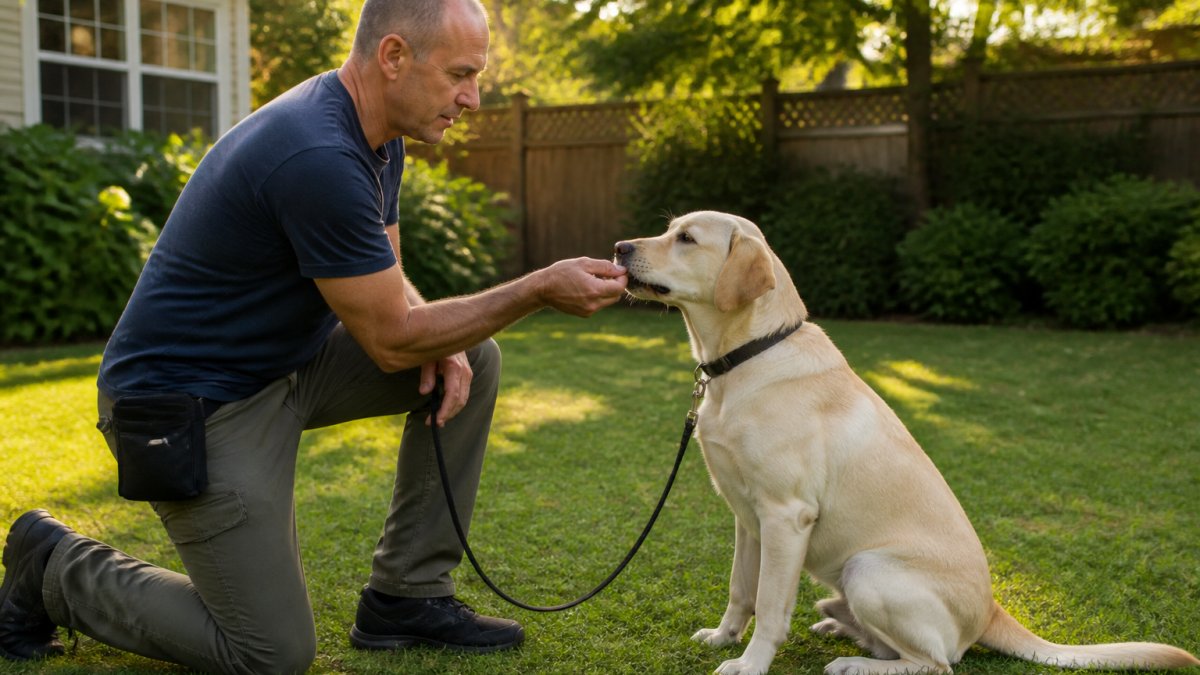
Step 1: Pick one behavior to change. Do not try to fix everything at once.
Step 2: Set up short daily sessions. Ten to fifteen minutes a day beats one long weekly session.
Step 4: Raise the difficulty one variable at a time. This is the step most owners skip.
Step 6: Stay consistent. Everyone in the household must use the same cues and rules. Mixed signals undo progress fast.
A Sample Two-Week Starter Plan
If you want a concrete starting point, this is the shape of a plan we commonly recommend for an adult dog learning a single behavior (for example, not jumping on guests):
- Days 1-3: Practice the replacement behavior (sit to greet) in a quiet room with no visitors. Five repetitions, twice a day.
- Days 4-7: Add one family member acting as a "guest" at the door. Reward sits; ignore jumps by turning away.
- Days 8-10: Practice with the doorbell and a guest who waits for the sit before entering.
- Days 11-14: Repeat with a less familiar visitor and mild distractions (bags, coats, talking).
If the dog regresses at any stage, spend two more days at the previous stage rather than pushing forward. Progress is rarely a straight line, and a plateau usually means the step was too big, not that the dog can't learn.
Breaking Established Habits
Established habits are the real obstacle in adult dog training, not age. A dog that has jumped on the couch for three years has practiced that behavior thousands of times. Habit strength is built through repetition, and it is broken the same way.
To break a habit:
- Remove the reward the dog gets from the behavior (attention, access, food)
- Teach a replacement behavior that earns a reward instead
- Practice the replacement in the exact spot where the old habit happens
- Stay patient through the backslide
Expect the old behavior to return under stress. That is normal. Go back to the basics and rebuild.
Choosing How You'll Train: Self-Guided, Group, or Private
Adult-dog training comes in three common formats, and the right choice depends on the behavior and your budget:
- Self-guided: Books, videos, and free guides. Lowest cost, best for simple manners like sit, stay, and loose-leash walking. Requires the most consistency from you.
- Group classes: Usually a few hundred dollars for a multi-week course. Good for socialization and basic cues, but less individualized attention and a fixed schedule.
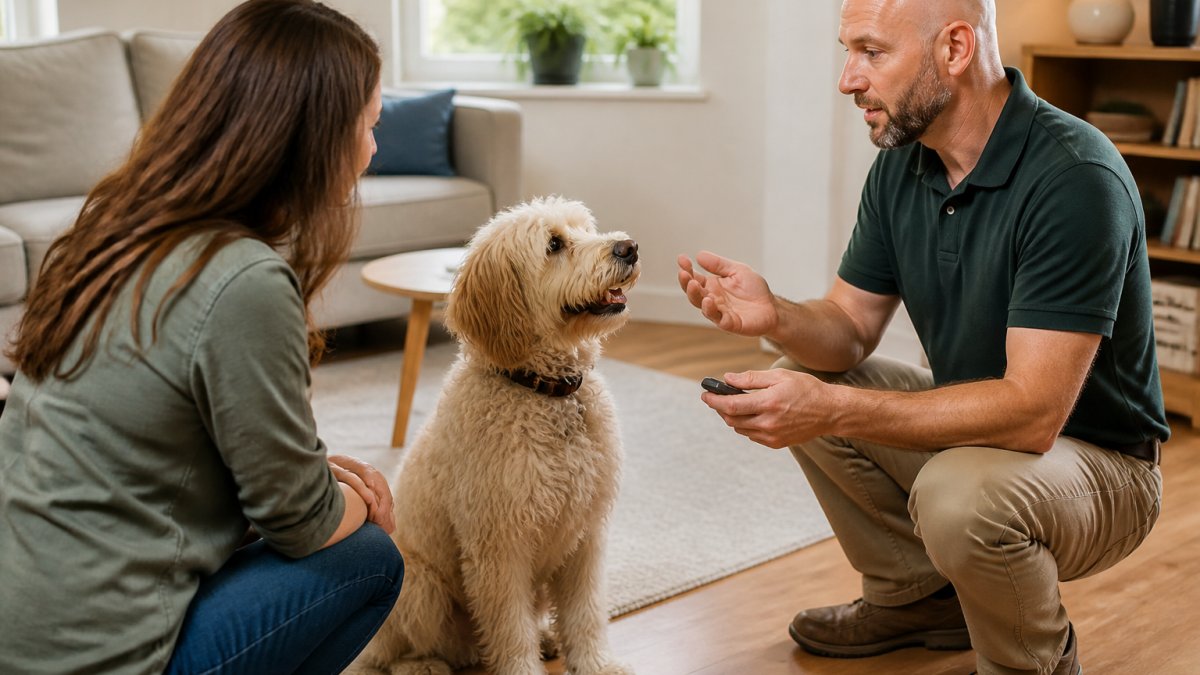
- Private sessions: The highest cost per hour, but the best fit for reactivity, fear, aggression, or a dog that can't focus in a group setting.
A practical rule: start self-guided for simple manners, move to group classes if your dog needs practice around other dogs, and bring in a private trainer or behavior professional for anything involving fear, aggression, or safety risk. Ask any trainer what methods they use and whether they rely on reward-based training before you book.
Can You Train a Senior Dog? Yes, With Adjustments
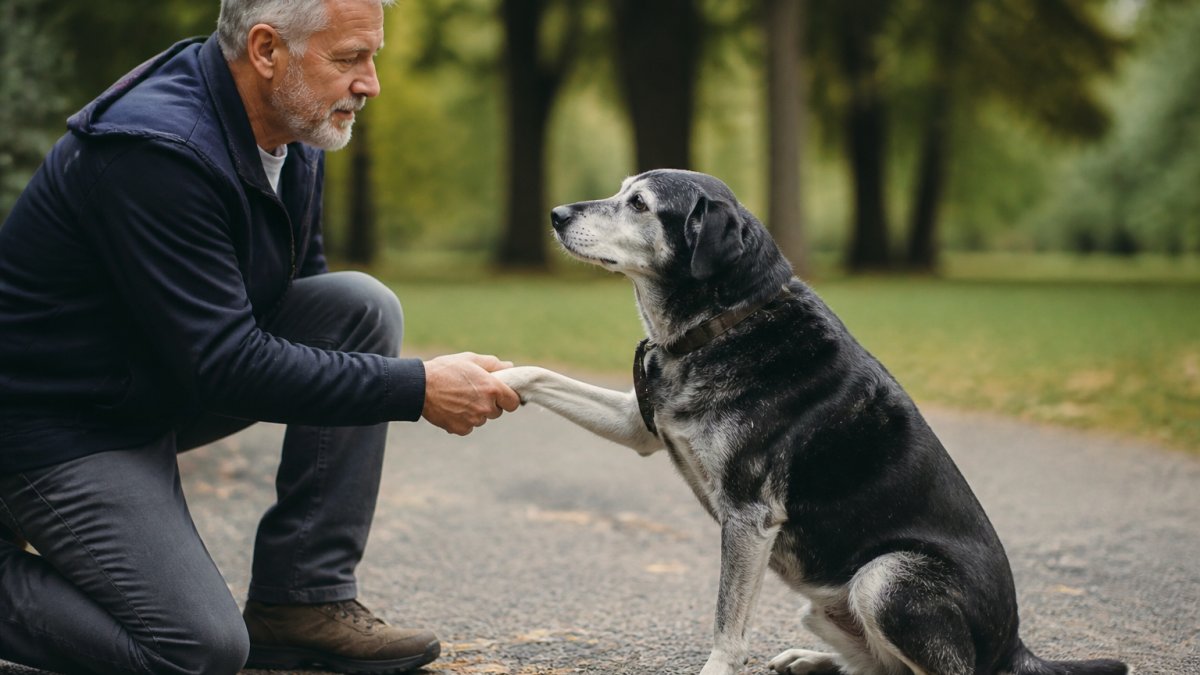
Senior dogs can absolutely learn new skills. The golden years are not a training dead end. You just need to adapt the method to the dog's body and health.
Adjustments that help older dogs:
- Shorter sessions. Five to ten minutes is plenty.
- Softer surfaces. Avoid slippery floors that strain the joints.
- Lower physical demands. Skip high-impact work and focus on mental tasks.
- Warm-up time. Give the dog a moment to loosen up before training.
Check with your vet first if your senior dog has pain, vision loss, or hearing loss. Health issues can look like stubbornness. A dog that suddenly stops listening may be hurting, not defiant.
How Long Does It Take to Train a Dog?
There is no single timeline. How long it takes to train a dog depends on the behavior, the dog's age, and how much practice happens between sessions.
Basic cues like sit and stay often come together in a few weeks of daily practice. More complex behavior change, like resolving reactivity or fear, can take months. Habits built over years take longer to unwind than habits built over weeks.
A realistic way to think about it:
- Simple cues: weeks of short daily practice
- Household manners: one to two months of consistency
- Behavior issues like fear or reactivity: months, often with professional help
Progress is rarely a straight line. Expect good weeks and rough ones.
Behavior Problems You Can Still Resolve, and When to Get Help
Most behavior problems can be improved at any age. The key is matching the method to the problem and knowing when to bring in a professional. The distinction that matters most is between a training problem and a medical or safety problem, because the wrong response wastes time and can make things worse.
Problems That Usually Respond to Training at Any Age
These are routine training needs. A reward-based plan, consistency, and patience are usually enough:
- Jumping on people: teach an incompatible behavior (sit to greet) and reward it every time.
- Pulling on the leash: reward the dog for walking near you; stop moving when the leash goes tight.
- Excessive barking: identify the trigger, then reward quiet and teach an alternative behavior.
- House-training setbacks: rule out medical causes first, then return to a strict schedule and reward outdoor elimination.
- Recall problems: practice in low-distraction areas, reward heavily, and never punish a dog that comes to you.
- Fear around new people or places: use gradual, low-pressure exposure and reward calm behavior; never force interaction.
For these, a two- to four-week plan with short daily sessions is a reasonable first attempt. If you see no improvement at all after that, change one variable (reward value, session length, or distraction level) before assuming the dog can't learn.
When It's More Than Training
Some cases need more than a training class. The following are signals to involve a veterinarian or a qualified behavior professional rather than working through it alone:
- Sudden behavior changes in an adult or senior dog, a dog that was house-trained and suddenly isn't, or that becomes irritable when touched, may be in pain. Untreated pain and hearing or vision loss are common causes of a dog that seems to ignore cues.
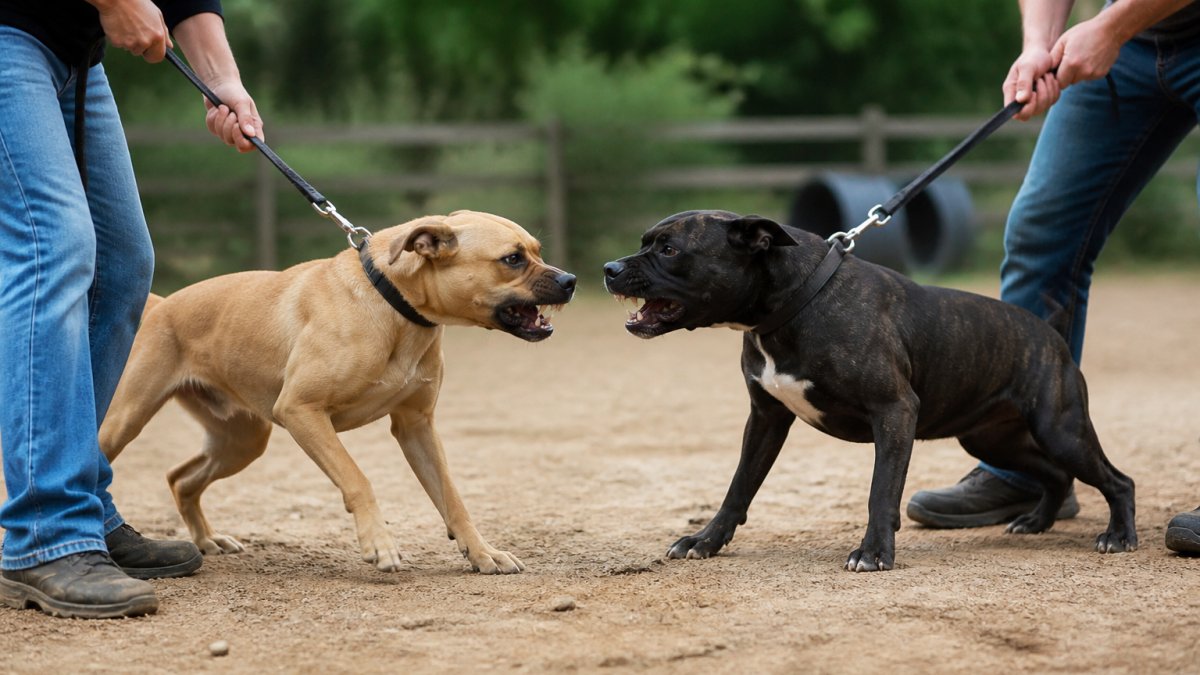
- Aggression with a bite history or a real risk of injury, this is a safety issue, not a manners issue. Work with a qualified behavior professional who uses humane, science-based methods, and coordinate with your veterinarian.
- Severe anxiety, panic during storms, constant distress when left alone, or fear that prevents normal activity warrants professional help.
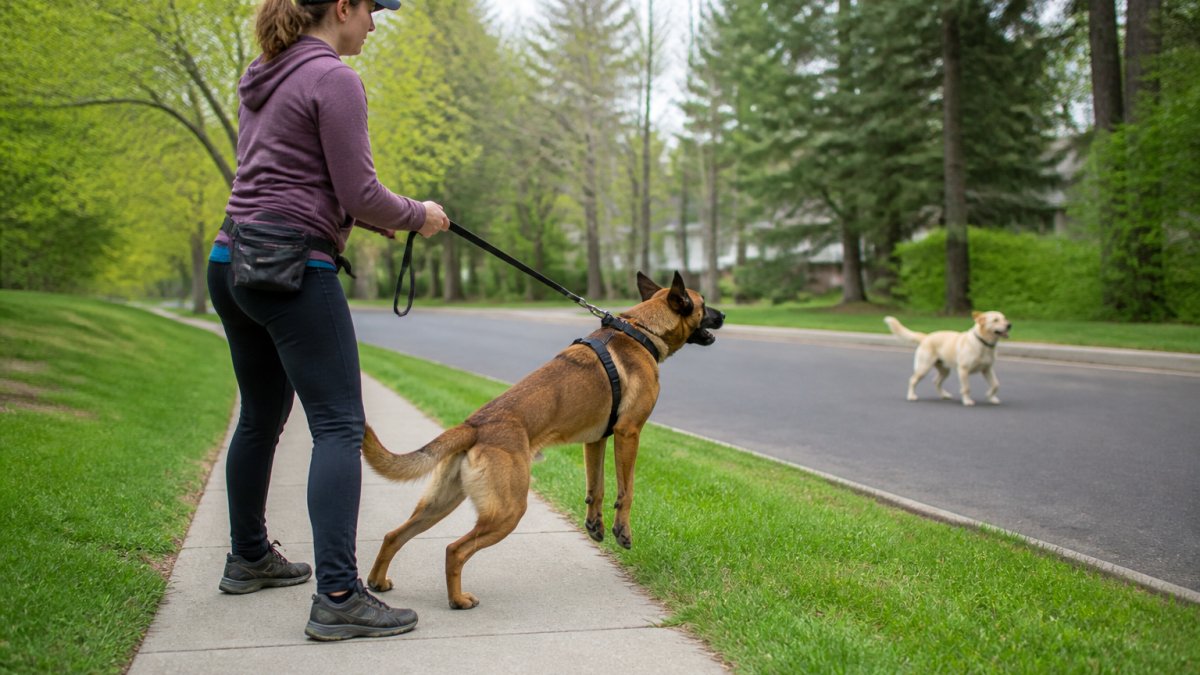
- Reactivity that puts anyone at risk, lunging, snarling, or snapping at people or other dogs on walks.
At Lake County Dogs, our behavior modification work is built around resolving aggression, fear, and anxiety with compassion, not force. But the first step for any of the cases above is a conversation with your veterinarian to rule out medical causes.
Measuring Progress and Getting Past Plateaus
Progress in dog training is measured in small wins, not perfect behavior. Track the little things: fewer jumps, a calmer reaction, a faster response to a cue.
A simple progress check:
- Does the dog respond to the cue at home?
- Does the dog respond in the yard?
- Does the dog respond on a walk with distractions?
- Is the response faster than it was two weeks ago?
When progress stalls, change one variable. Shorten the session, lower the distraction, or raise the reward value.
Consistency and patience carry more weight than any single technique. That is the throughline in all of this: age is not the barrier. Habits and follow-through are.
Frequently Asked Questions
Is it too late to train a 6-month-old dog?
No. Six months is still early. A 6-month-old dog has passed the earliest puppy socialization window, but it can still learn obedience, manners, and new skills quickly. At this age, expect more energy and shorter attention spans than an adult dog, so keep sessions to 5-10 minutes and practice several times a day. Established habits are still forming, which means a consistent training approach now prevents bigger behavior problems later. Many owners find this is the ideal age to start structured obedience and leash work.
Can you train an older dog that has never had formal training?
Yes. Dogs of any age can learn new skills, including an 8-year-old or 10-year-old dog with no training history. Older dogs may learn more slowly and tire faster, but they often focus better than puppies and already have established routines you can work with. Start with short, low-distraction sessions, use high-value rewards, and build in rest breaks. A senior dog with health issues should be checked by a veterinarian first so pain or vision loss isn't mistaken for stubbornness.
How long does it take to train a dog?
Basic manners like sit, stay, and loose-leash walking often take 4-8 weeks of consistent daily practice. Reliable obedience around distractions can take several months. Resolving deeper behavior issues such as reactivity or fear can take longer, sometimes six months or more, depending on the dog's history and how much practice happens between sessions. Progress depends on the individual dog, the specific goal, and how consistently the household reinforces the behavior. Short daily sessions beat occasional long ones.
When should you get professional help with dog training?
Get help when behavior puts anyone at risk, when progress stalls for several weeks despite consistent practice, or when the problem involves aggression, severe anxiety, or fear. A certified behavior professional can assess whether the issue is training-related or rooted in health, genetics, or temperament. Early intervention matters because established habits get harder to change over time. A structured evaluation also tells you whether the goal is realistic and what a practical timeline looks like.
Is your dog older, set in its ways, or struggling with a behavior you thought was too late to fix? It is not. Lake County Dogs builds customized training programs for dogs of all ages, led by specialist Gary Boots with over 25 years of experience in canine behavior modification. We offer free evaluations, science-based methods, and preparation for AKC Canine Good Citizen certification. Get started with Lake County Dogs and book a free evaluation to build a calmer, more confident dog at any age.