 ultimate-guide
How to Tell If Training Can Fix Your Dog's Anxiety
Last Updated: October 28, 2026
Quick Summary
Training can reduce dog anxiety, but it does not fix it in every case. Desensitization and counter-conditioning change the emotional response, while obedience work alone can make anxiety worse. Sudden anxiety in an adult dog needs a vet check first.
- Get a veterinary check before starting any behavior plan for your dog.
- Pair every desensitization session with high-value food, not regular kibble.
- Raise the volume one small step only after two calm sessions.
- Choose a veterinary behaviorist for bite history, self-injury, or sudden adult onset.
- Progress is measured in months, and expecting a cure leads owners to quit early.
Table of Contents
- Does Training Fix Dog Anxiety? The Honest Answer
- Recognizing the Signs of Anxiety in Dogs
- How Desensitization and Counter-Conditioning for Dogs Works
- Which Training Methods Actually Reduce Anxiety
- When Obedience Training Makes Anxiety Worse
- Veterinary Behaviorist vs Dog Trainer: Who You Need
- Factors That Decide Whether Training Succeeds
- Booking a Free Evaluation for Your Anxious Dog
- Frequently Asked Questions
Does Training Fix Dog Anxiety? The Honest Answer
Training can address challenging behavioral issues, including anxiety. Below, we'll discuss what training can change and what it can't.
Recognizing the Signs of Anxiety in Dogs
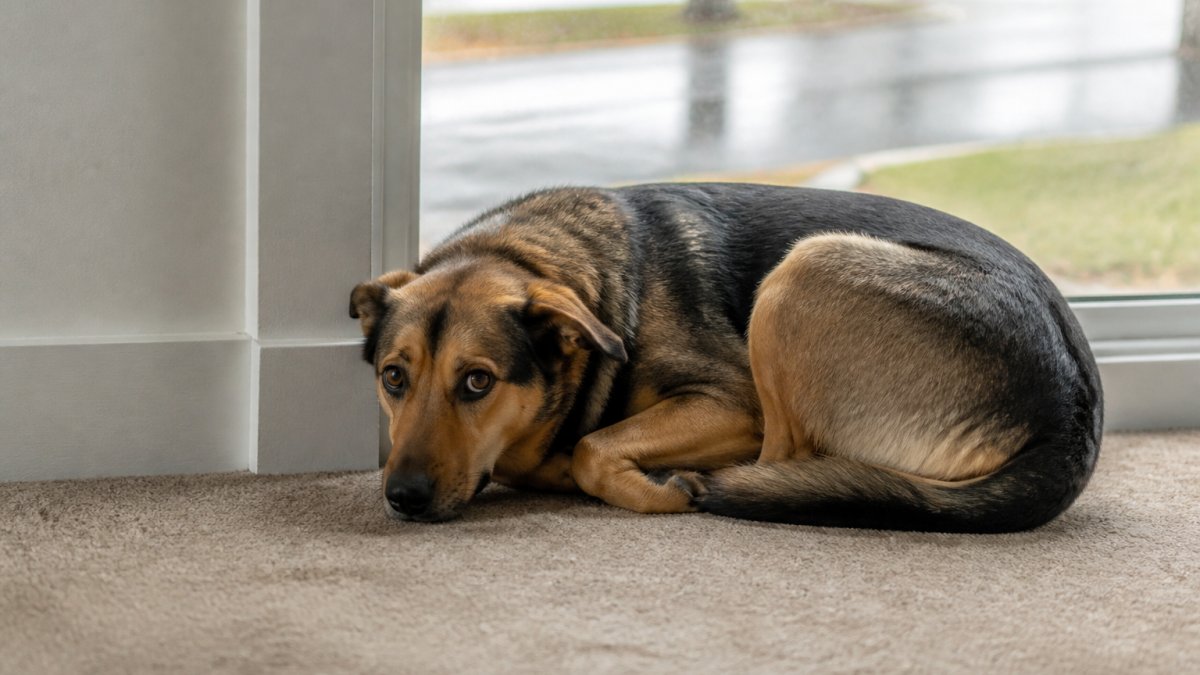
Before you can judge whether training will help, you need to consider what your dog is doing.
Behavioral signals can include:
- Pacing, circling, or an inability to settle even in a familiar room
- Destructive chewing concentrated on doorframes and window frames
- Excessive licking, often to the point of bare patches
- Shadowing one person from room to room
- Reactivity on leash that appears suddenly rather than gradually
- House soiling in a dog who was previously reliable
Behavioral Signals vs. Medical Symptoms
This is why we ask for a veterinary check before any behavior plan begins. If your dog's anxiety appeared suddenly in adulthood, with no obvious trigger, treat the vet visit as step one, not an optional extra.
How Desensitization and Counter-Conditioning for Dogs Works
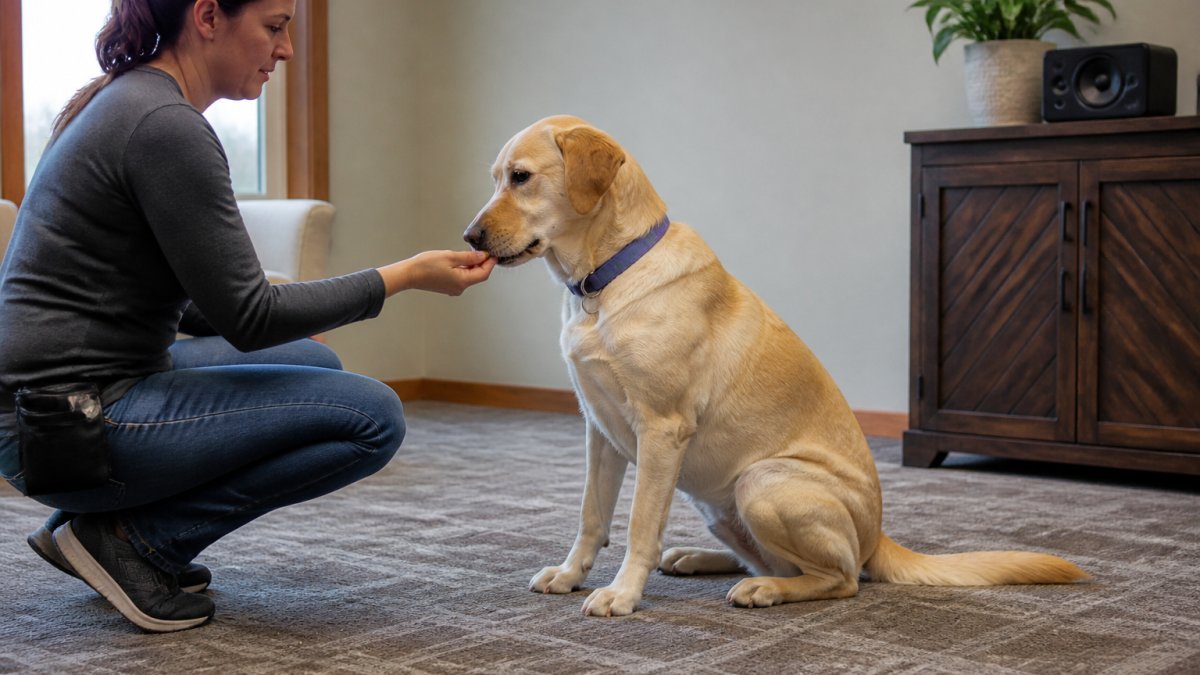
We run this work inside a structured fear recovery program because the pacing is where owners get into trouble. It is genuinely hard to self-regulate when your own dog is trembling.
A Step-by-Step Example for Noise Anxiety
Say your dog panics at thunderstorms. A workable progression looks like this:
- Play a thunder recording at a volume where your dog notices but keeps eating. If he stops chewing, the volume is too high.
- Pair every play with high-value food, not his regular kibble.
- Repeat for several short sessions until the sound predicts treats rather than fear.
- Raise the volume one small step at a time, only after two calm sessions at the current level.
- Add real-world elements gradually: dimmed lights, rain on a window, then an actual distant storm.
Which Training Methods Actually Reduce Anxiety
Practical structure beats theoretical purity. For a closer look at the evidence, see Is Counter Conditioning Effective for Reactivity? A calm, predictable routine, daily enrichment that burns mental energy, and consistent handling from every family member will do more than any single technique applied inconsistently.
When Obedience Training Makes Anxiety Worse
When a dog's anxiety needs more than obedience work, the answer is behavior modification, which targets the emotional response underneath the behavior. Obedience and behavior modification are not competing approaches. They solve different problems, and anxious dogs usually need the second one first.
Veterinary Behaviorist vs Dog Trainer: Who You Need
Choose a veterinary behaviorist when you see:
- Bite history or injury to a person or another animal
- Self-injury, or destruction that endangers the dog
- Anxiety that persists despite a consistent training plan
- Sudden onset in an adult dog with no identifiable trigger
Factors That Decide Whether Training Succeeds
| Factor | Why It Matters | What to Watch For |
|---|---|---|
| Age of onset | Early-onset anxiety often has a genetic component | Puppyhood fear periods need gentle handling |
| Trigger intensity | Low-intensity triggers respond well to training | Daily full-intensity exposure stalls progress |
| Household consistency | Every family member must handle the dog the same way | One person "comforting" during fear undoes the plan |
| Medical status | Pain and illness mimic anxiety | Unexplained late-onset signs need a vet |
| Realistic expectations | Progress is measured in months | Expecting a cure leads owners to quit early |
Booking a Free Evaluation for Your Anxious Dog
At Lake County Dogs, you can book a free evaluation.
We've spent over 25 years in behavior modification, and our lead specialist Gary Boots is an AKC-approved evaluator and an instructor at Animal Behavior College. Our programs are customized for family needs.
Frequently Asked Questions
Can a professional dog trainer help with anxiety?
Lake County Dogs provides behavior modification services for challenging behavioral issues, including anxiety. Book a free evaluation to discuss your dog's needs.
Is anxiety in dogs a behavioral or medical issue?
It can be either, and often both. Some anxiety stems from genetics, early socialization gaps, or traumatic experiences. Other cases involve thyroid problems, pain, or neurological conditions that present as fear. That is why the signs of anxiety in dogs should be reviewed by a veterinarian first. A vet rules out medical causes; a trainer or behaviorist then addresses the behavioral side. Skipping the vet step can mean training a problem that medication or treatment would resolve faster.
How long does it take to see improvement in an anxious dog?
Timelines vary with the severity of the anxiety, the dog's age, and how consistently you practice. Mild cases often show measurable change in four to eight weeks of structured desensitization and counter-conditioning for dogs. Severe fear or reactivity can take several months to a year. Progress is rarely linear. Expect setbacks during stressful periods and track small wins rather than waiting for a complete transformation.
When should you see a veterinary behaviorist for dog anxiety?
See a veterinary behaviorist when anxiety is severe, when it does not improve after several weeks of consistent training, or when it involves self-injury, aggression, or panic during storms and separation. A veterinary behaviorist vs dog trainer decision often comes down to this: behaviorists are veterinarians who can prescribe medication alongside a behavior plan. For moderate cases, a certified trainer with behavior modification experience is usually the right first call.
If your dog's anxiety has you second-guessing every walk and every visitor, you don't have to sort it out alone. Lake County Dogs offers customized behavior programs, fear recovery work, and a free evaluation to map out what's actually achievable for your dog. Get started with Lake County Dogs and book a free evaluation to find out where your dog's progress really begins.