 ultimate-guide
What Does Professional Dog Training Cost in 2026?
Last Updated: October 26, 2026
Quick Summary
The average dog training cost in 2026 depends on format: group classes run $25-$60 per class, private lessons $75-$175 per hour, behavior consultations $125-$250 per session, and board-and-train $500-$1,200 per week. Full programs typically total $150-$350 for group courses, $600-$1,400 for private packages, and $1,500-$4,000 for a 2-4 week board-and-train stay.
- Ask every provider for the per-session equivalent of a package before comparing quotes.
- A 60-minute group class with eight dogs gives roughly seven minutes of direct trainer attention.
- Compare cost per resolved problem, not cost per hour, when choosing a format.
- Get cancellation and refund policies in writing before any deposit changes hands.
- Start with a free evaluation to determine which format fits your dog's needs.
Table of Contents
- How Dog Training Prices Break Down in 2026
- What Is the Average Dog Training Cost Per Session?
- Average Cost of Board and Train Programs
- Behavior Modification Training Cost: Why It Costs More
- Group Classes vs. Private Training: An Apples-to-Apples Comparison
- Hidden Fees, Contracts, and What to Ask Before You Pay
- How to Judge Whether a Trainer's Price Reflects Real Value
- Book a Free Evaluation Before You Commit
- Frequently Asked Questions
How Dog Training Prices Break Down in 2026
The average dog training cost in 2026 reflects a simple truth: you are paying for a trainer's time, expertise, and the structure of the program, not a single flat rate.
Here is the core insight most cost guides bury: the sticker price per session tells you almost nothing until you know what's included. A cheaper hourly rate with no follow-up support often costs more over a year than a bundled package with structured check-ins.
The Four Pricing Formats You'll See
Most providers price training in one of four ways. Per-session rates suit owners testing a trainer before committing. Hourly rates work for single consultations. Bundled packages lower the per-session price in exchange for upfront payment. Board-and-train programs fold training into a multi-week stay and carry the highest total cost.
The format you choose should match your goal, not your budget alone. A dog with mild leash manners needs a handful of sessions; a reactive rescue may need a structured behavior plan. Matching format to need is where value actually lives.
| Format | Typical Structure | Best For | Watch For |
|---|---|---|---|
| Per session | Pay as you go | Testing a trainer | Higher unit price |
| Bundled package | Prepaid multi-session | Consistent obedience work | Refund terms |
| Board-and-train | Multi-week residency | Intensive behavior work | Limited owner involvement |
| In-home/private | Trainer travels to you | Real-world scenarios | Travel fees |
What Is the Average Dog Training Cost Per Session?
Most 2026 cost guides give you a single national average and stop there. That number is nearly useless because a group puppy class and a private behavior consultation are not the same product. Below is a format-by-format benchmark so you can place any quote on a map instead of guessing whether it is high or low.
2026 per-session benchmarks by format
These ranges reflect what providers commonly quote for a single session or the per-session equivalent of a package. They are broad on purpose: a quote outside the range is not automatically wrong, but it should come with a clear reason.
| Format | Typical 2026 per-session range | What the price usually includes |
|---|---|---|
| Group puppy or basic obedience class | $25-$60 per class | Shared trainer time, 6-8 dog class, socialization |
| Private in-home lesson | $90-$175 per hour | One-on-one time, travel to you, customized plan |
| Private facility lesson | $75-$150 per hour | One-on-one time at the trainer's location |
| Behavior modification consultation | $125-$250 per session | Assessment, written plan, progress tracking |
| Board-and-train (per-week equivalent) | $500-$1,200 per week | Around-the-clock care plus daily training |
How we built these ranges
We compiled publicly listed rates from independent trainers, franchise training companies, and behavior clinics, then grouped them by format and adjusted for the cost of living in each provider's market. We excluded promotional intro offers and one-time discounts so the ranges reflect ongoing pricing. Treat them as a starting benchmark, not a quote: your local market, your dog's needs, and the trainer's credentials will move the number.
Why the same service quotes so differently
Three variables explain most of the spread:
- Trainer credentials. An AKC-approved evaluator or a certified behavior consultant typically charges more than a generalist obedience instructor because the assessment and plan work is more involved.
- Format. Group classes spread the trainer's time across many dogs; private lessons concentrate it on yours. Comparing the two rates directly is the most common pricing mistake owners make.
- Market. Urban and high-cost metro areas run higher than rural markets because of overhead, insurance, and demand.
Regional variation you should expect
A common pattern is that per-session rates in major metro markets can run above small-town and rural rates for the same format. If you are comparing a quote from your area to a national average, consider adjusting for that gap before you decide the price is unfair. The better comparison is often a same-format quote from a provider within driving distance.
What to ask before you accept a per-session price
- Is the consultation or assessment fee separate from the first training session?
- Does the hourly rate include follow-up support between sessions?
- Is travel time billed for in-home visits, and at what rate?
A per-session price is only meaningful once you know what sits inside it. Use the benchmarks above to spot an outlier, then use the questions to find out why.
Average Cost of Board and Train Programs
The average cost of board and train programs sits well above session-based training because you are paying for around-the-clock care plus structured training over multiple weeks. Program length and the intensity of behavior work drive the total.
Board-and-train suits dogs that need immersion, but it comes with a tradeoff: the owner isn't present for the daily work. That means the handoff matters as much as the training itself.
American Kennel Club guidance on choosing a dog trainer notes that credentials and methods should be verified before any program, especially residential ones. When you're weighing a board-and-train commitment, it helps to see the board and train program details so you understand what the weeks actually include.
Behavior Modification Training Cost: Why It Costs More
Behavior modification training costs more than basic obedience because it addresses the root of a problem rather than a single command.
This is the part most owners underestimate. Fixing a surface behavior like pulling on the leash is straightforward.
If your dog's issues run deeper than manners, it's worth exploring behavior modification as a distinct service rather than assuming a standard obedience package covers it.
Group Classes vs. Private Training: An Apples-to-Apples Comparison
Most guides list a group class price and a private lesson price and leave you to guess which is the better buy. That is not a comparison, it is two disconnected numbers. A fair comparison lines up the formats on the same five dimensions: total cost, duration, trainer contact, owner participation, and follow-up support.
The five-dimension comparison
| Dimension | Group class | Private lesson | Board-and-train |
|---|---|---|---|
| Typical total cost for a full program | $150-$350 for a 6-8 week course | $600-$1,400 for a 6-10 session package | $1,500-$4,000 for a 2-4 week stay |
| Duration | 6-8 weeks, one class per week | 6-10 weeks, one session per week | 2-4 weeks of residency |
| Trainer contact per dog | Low, shared across the class | High, one-on-one | High during the stay, low for the owner |
| Owner participation | High, you handle the dog in class | High, you practice with the trainer | Low during the stay, high at handoff |
| Follow-up support | Usually none beyond the course | Often included between sessions | Varies widely; confirm in writing |
What the numbers actually mean
Group classes win on total cost and socialization. You pay less per week and your dog practices around other dogs and people in a controlled setting.
Private lessons win on focus and speed for a specific problem. You pay more per session, but the trainer's attention is entirely on your dog and the plan is customized.
Board-and-train wins on immersion and loses on owner involvement.
A worked example
Suppose your dog lunges at other dogs on walks. A six-week group class at $40 per class costs $240 but may not target reactivity at all. Four private sessions at $125 each cost $500 and are built around the specific behavior. The private route costs more upfront but can resolve the problem in weeks rather than leaving you to repeat the group course.
How to choose without overpaying
- Puppy socialization and basic manners: group class is usually the best value.
- A specific behavior problem: private lessons or a behavior consultation.
- Intensive or safety-critical behavior work: board-and-train, with a clear handoff plan.
For a deeper format-by-format breakdown, our professional dog obedience training cost guide compares each option side by side.
Hidden Fees, Contracts, and What to Ask Before You Pay
Hidden fees and contract terms are where a reasonable quote quietly grows. Before you pay, ask directly about travel costs, cancellation policies, refund terms, and whether follow-up support is included or billed separately.
Watch out: a package that looks affordable per session can carry a no-refund clause that leaves you paying for sessions you never use. Get the cancellation and refund policy in writing before any deposit changes hands.
Questions worth asking every provider:
- Is the consultation fee separate from the program cost?
- Does the quoted price include follow-up support between sessions?
- What happens if my dog's behavior needs more sessions than the package allows?
How to Judge Whether a Trainer's Price Reflects Real Value
A trainer's price reflects real value when it buys measurable outcomes, credentialed expertise, and a method you can trust.
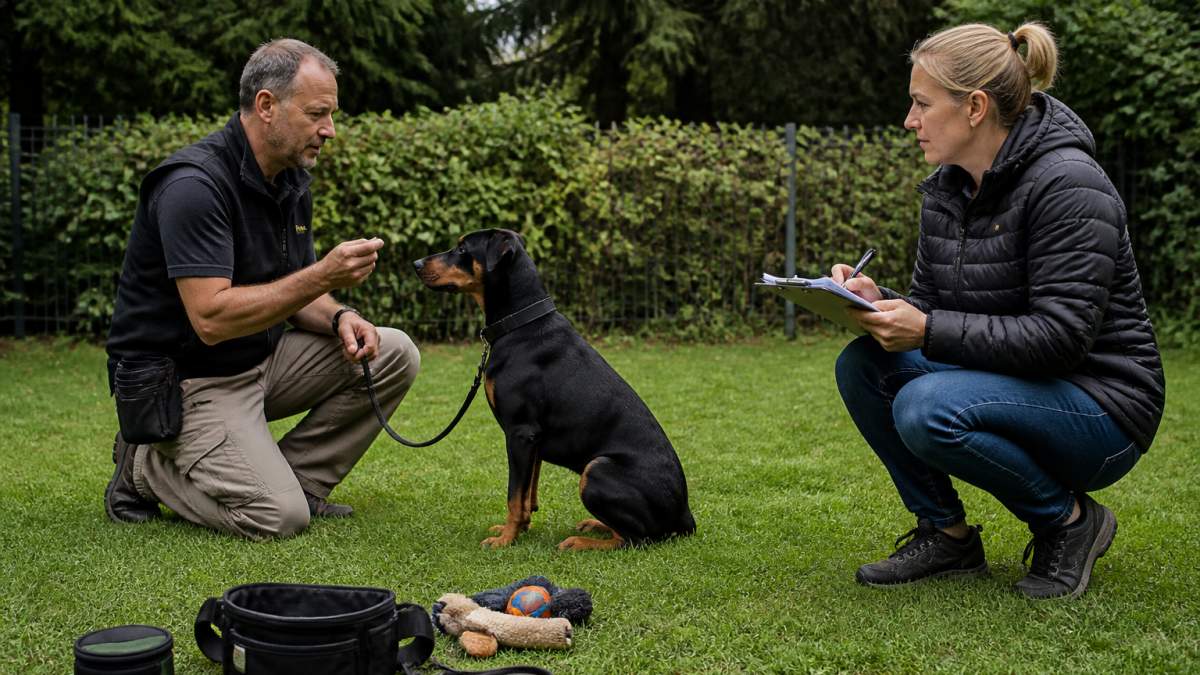
Look for trainer qualifications you can verify: certifications, evaluation credentials, and a clear training philosophy.
Welfare safeguards matter too. Science-based, compassionate methods protect your dog and produce lasting change.
As documented in the American Veterinary Society of Animal Behavior position on humane training, reward-based methods are the recommended foundation for behavior work.
Book a Free Evaluation Before You Commit
The smartest way to spend your training budget is to start with an evaluation, not a package.
At Lake County Dogs, our free evaluation is built for exactly this. Led by specialist Gary Boots, an AKC-approved evaluator with over 25 years of experience in canine behavior modification, we assess your dog's temperament and goals before recommending a program.
You can check our pricing to see how our programs are structured, then book a free evaluation so we can match the right plan to your dog.
Frequently Asked Questions
How much should you budget for professional dog training in 2026?
Budget for the format that matches your goal, not the cheapest single session. Group puppy classes sit at the low end, private one-on-one lessons cost more per hour, and board-and-train programs carry the highest total because they bundle weeks of daily work. Behavior cases add cost because they need longer programs and more follow-up. Ask each trainer for the total program cost, not the per-session rate, so you can compare fairly.
What factors influence the cost of private dog training sessions?
The biggest drivers are the trainer's credentials and experience, session length, whether the trainer travels to your home, and how customized the plan is. A trainer who is an AKC-approved evaluator or teaches at a behavior college typically charges more than a generalist. In-home training adds travel costs and time. Location matters too: urban pricing runs higher than rural pricing, and bundled packages usually lower the per-session rate compared with paying one session at a time.
Is board-and-train more expensive than weekly obedience classes?
Yes, almost always. Board-and-train bundles boarding, daily training, and handling into one program, so the total price is higher than a weekly group class. The tradeoff is speed and intensity: your dog works multiple times a day instead of once a week. For basic obedience, weekly classes plus owner practice often cost less overall. For serious behavior problems, a structured board-and-train or intensive program can be the more efficient path, but confirm what follow-up support is included before you compare totals.
Are there hidden costs associated with professional dog behavior modification?
Common extras include an initial consultation or evaluation fee, travel charges for in-home visits, equipment like leashes, harnesses, or muzzles, and follow-up sessions after the main program ends. Some contracts also have cancellation or refund terms worth reading closely. Ask for the full fee schedule in writing, including what happens if your dog needs more sessions than planned. A trainer who explains the entire cost structure up front is usually the safer choice.
How do I determine if a high-priced training program is worth the investment?
Look at measurable outcomes and credentials rather than the price tag alone. Ask what specific behaviors the program targets, how progress is measured, and what happens if your dog does not improve. Check whether the trainer holds recognized credentials, uses humane science-based methods, and offers follow-up support. A program that resolves aggression or anxiety and includes owner coaching can be a valuable investment compared with cycling through several cheaper trainers who may not solve the problem.
Pricing for professional dog training is only worth what it delivers, and the right evaluation is where real value begins. Rather than guessing at a package, let us assess your dog's needs and build a plan around them. With over 25 years of experience, AKC evaluation credentials, and customized programs for every breed and age, Lake County Dogs is ready to help. Book your free evaluation and start with a clear plan instead of a blind quote.