 how-to
7 Puppy Socialization Techniques That Work in 2026
Quick Summary
Effective puppy socialization means safely exposing a young dog to people, other animals, sounds, places and handling early in life, keeping each experience short and positive while letting the puppy set the pace. Most owners should start in the critical window of roughly 3 to 14 weeks.
- The most sensitive stretch of development is roughly 3 to 14 weeks of age.
- Separate exposure from contact so puppies can meet the world before full vaccination.
- Carry the puppy in a sling or carrier in public, keeping its paws off shared ground.
- Watch for stress signals like a tucked tail, lip licking or whale eye, and end sessions early.
- If a puppy shows strong fear or aggression, work with a qualified reward-based professional.
Table of Contents
- Why Puppy Socialization Matters Long Term
- The Puppy Socialization Window: When to Start and When It Closes
- Puppy Socialization Before Vaccinations: A Safe Plan
- Step-by-Step Puppy Socialization Techniques for People, Dogs and Places
- How to Spot Signs a Puppy Is Stressed
- A Week-by-Week Puppy Socialization Checklist
- Protocols for Fearful or Overwhelmed Puppies
- Book Your Puppy's Socialization Plan With Lake County Dogs
- Frequently Asked Questions
Puppy socialization is the process of safely exposing a young dog to people, other animals, sounds, places and handling during its early development. Done well, it shapes a calm, confident adult.
The core answer is simple. Start early, keep every experience short and positive, and let the puppy set the pace. The techniques below show how to do that in 2026, including a plan that works before full vaccination.
Why Puppy Socialization Matters Long Term
Early experiences shape how a dog reads the world. A puppy that meets many calm people, dogs and sounds usually grows into an adult that handles surprises well.
Socialization is not about cramming in as many experiences as possible. It is about pleasant, low-stress exposure that builds confidence over time. Think of it as teaching the puppy that new things are safe and often rewarding.
The Puppy Socialization Window: When to Start and When It Closes
The most sensitive stretch of a puppy's development is often described as the critical period, roughly from about 3 to 14 weeks of age.
The window does not slam shut, though. Socialization continues throughout life. Puppies that miss early exposure can still improve, but the work usually takes more time and patience. Starting early gives your puppy a strong head start.
Puppy Socialization Before Vaccinations: A Safe Plan
Many new owners hear two conflicting messages: socialize before 16 weeks, but keep the puppy off the ground until vaccines are done. The way out of that bind is to separate exposure from contact. A puppy can learn that strollers, hats, wheelchairs, and crowds are safe without ever touching a contaminated surface or an unknown dog. Ask your veterinarian to review your puppy's specific vaccine schedule and local disease risk before you build a plan, the right balance depends on where you live and what your puppy has already received.
Think in tiers, not a single rule
Pre-vaccination experiences can be sorted into three tiers based on disease risk. Use this as a working framework, not a substitute for your vet's advice.
- Lowest risk, do freely: your own home and yard (if no unknown dogs visit), a friend's home with healthy, fully vaccinated adult dogs, carrying the puppy in a carrier or sling in public, and handling sessions on a towel in your living room.
- Moderate risk, use judgment: quiet sidewalks at off-hours, a parked car with the windows cracked, a friend's fenced yard, and puppy classes that require proof of at least one vaccine and a clean facility. Ask the instructor how they sanitize and whether they screen for illness.
- Highest risk, skip for now: dog parks, pet-store aisles with loose animals, rest stops, groomers that allow unknown dogs to mingle, and any area where stray or unvaccinated dogs frequent.
A safe pre-vaccination routine
- Carry, don't walk, in public. A sling or carrier lets the puppy see, hear, and smell the world from your chest while its paws stay off shared ground. Ten to fifteen minutes, two or three times a week, is plenty.
- Host calm visitors at home. Invite one or two healthy, vaccinated adults or children at a time. Have them sit, toss a treat, and let the puppy choose whether to approach. End after two to three minutes.
- Run daily handling sessions. Touch paws, ears, mouth, tail, and collar for five to ten seconds, then treat. Two short sessions a day beats one long one.
- Play sound recordings at low volume. Start below the level that makes the puppy look up, pair each sound with food, and raise the volume only when the puppy stays relaxed.
- Use a known-safe dog for the first dog meeting. A calm, vaccinated adult dog in a familiar yard, on leash, for two to three minutes, is far safer than a chance encounter.
When to call your veterinarian
Loop in your vet before expanding the plan if your puppy has a compromised immune system, is recovering from illness, came from a high-risk shelter or hoarding situation, or lives in an area with an active parvo outbreak. Your vet can also tell you which vaccines are complete and when the puppy can safely meet unknown dogs on the ground.
Step-by-Step Puppy Socialization Techniques for People, Dogs and Places
Good socialization covers several categories. Work through each one slowly and stop when the puppy looks uncomfortable.
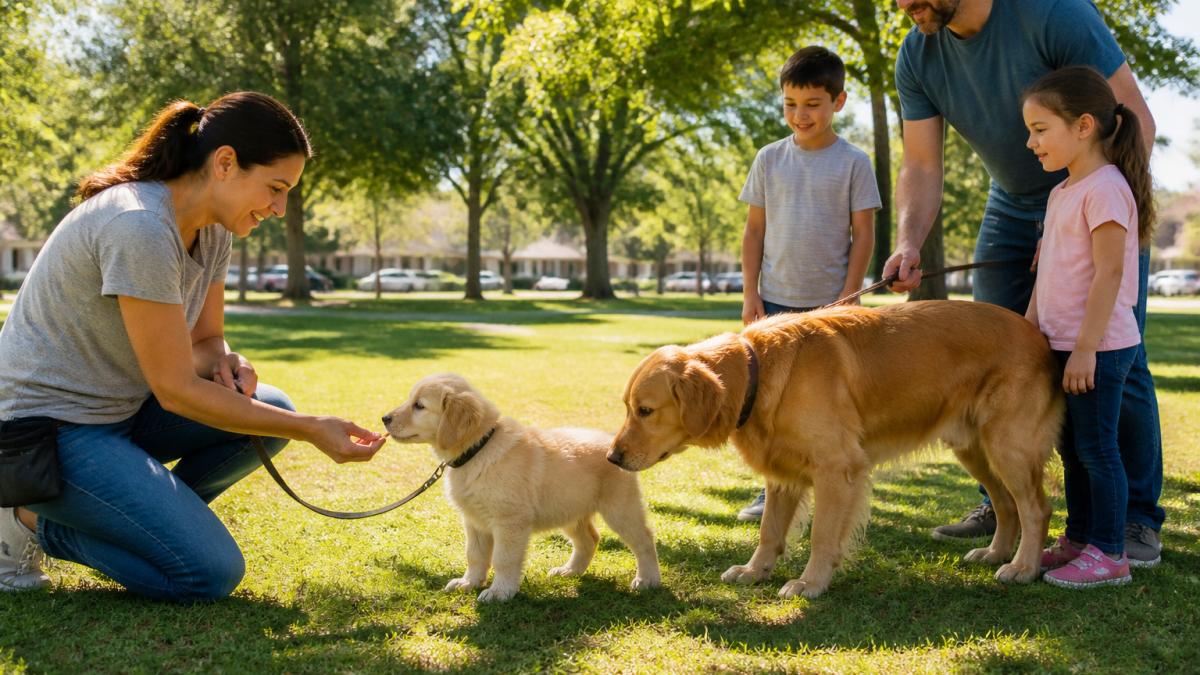
- People: Let the puppy meet adults, teens, children and people wearing hats, glasses or uniforms. Ask guests to offer treats gently and let the puppy approach them.
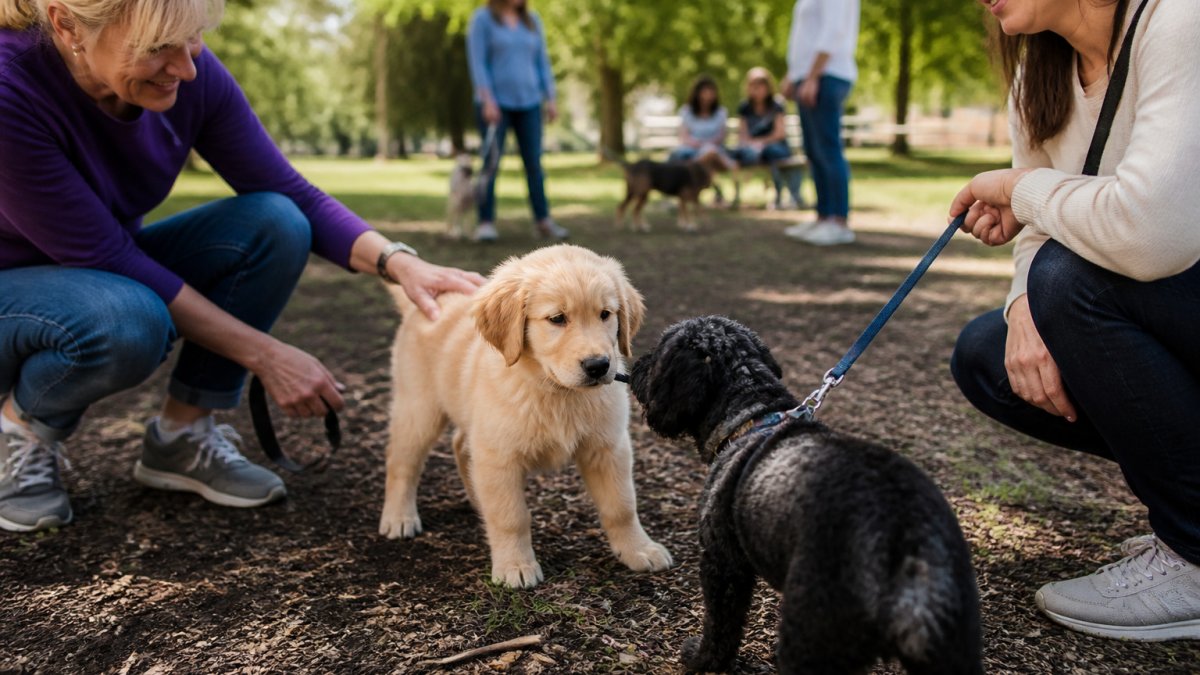
- Other dogs: Choose calm, friendly, vaccinated adult dogs. Keep the first meetings short, on leash, and followed by a break.
- Places: Take short trips to parks, sidewalks, car rides and different floor surfaces such as tile, grass and wood.
Introducing Sounds, Handling and Household Noises
Start sounds at a low volume and increase them slowly. Pair each sound with food or play so the puppy links it to good things. If the puppy startles, lower the volume and try again later.
The four socialization categories below each call for a different kind of exposure, so the table lays out what to do in each one.
| Category | What to do | Key guidance |
|---|---|---|
| People | Calm adults, teens, children | Hats, glasses, uniforms included |
| Other dogs | Calm, vaccinated adult dogs | Short, on-leash first meetings |
| Places | Parks, sidewalks, car rides | Varied floor surfaces too |
| Handling | Touch ears, paws, tail, collar | Reward calm behavior |
How to Spot Signs a Puppy Is Stressed
Learning to read body language matters more than hitting a set number of experiences. Watch for these comfort and stress signals.
Comfort signals:
- Loose, wiggly body and relaxed tail
- Soft eyes and a mouth that looks loose
- Curiosity, sniffing and choosing to approach
- Playful bows or relaxed play
Stress signals:
- Tucked tail or body pressed low
- Lip licking, yawning or turning the head away
- Freezing, whale eye (whites of the eyes showing)
- Trying to hide behind you or retreating
When you see stress signals, end the session on a good note, move farther from the trigger, and try again later at a lower intensity.
A Week-by-Week Puppy Socialization Checklist
A checklist only works if you can tell whether the puppy is actually progressing. Use this six-week plan as a starting point, adjust to your puppy's age and vaccine status, and judge each week by one question: how fast does the puppy recover? For foundational guidance to pair with this plan, see puppy training foundations for beginners.
Keep every session short, three to five minutes for handling and sounds, five to ten minutes for outings, and leave at least one rest day between new experiences.
Weeks 1-2: Home base
- Handling: two five-minute sessions a day touching paws, ears, mouth, tail, and collar, each followed by a treat.
- Sounds: one three-minute recording session at low volume, paired with food, every other day.
- People: one or two calm, vaccinated visitors per week, seated, tossing treats, two to three minutes each.
- Progress marker: puppy approaches the visitor within a minute and takes food from the hand.
Weeks 3-4: The wider world, on your terms
- Carry outings: two ten-minute carrier trips to a quiet store entrance or park edge, puppy in the sling, treats for calm looking.
- Surfaces: introduce tile, grass, wood, and a wobble board or folded blanket at home, one surface per session.
- First dog meeting: one calm, vaccinated adult dog in a familiar yard, on leash, two to three minutes, then a break.
- Progress marker: puppy recovers from a startle (car backfire, dropped pan) within about a minute and resumes sniffing or eating.
Weeks 5-6: Real-world variety
- Short car rides: five to ten minutes to a low-traffic destination, ending somewhere pleasant.
- Quiet sidewalk walks: five to ten minutes at off-hours, one new person or object per outing, puppy choosing the approach.
- Handling by others: a vet tech or groomer touches paws and ears briefly, then treats, a rehearsal for real appointments.
- Brief separations: thirty seconds to two minutes behind a baby gate, building to five minutes, always returning before distress.
If a week goes badly, do not push forward. Repeat it at half the intensity, and if fear persists or escalates, consult a veterinarian or a reward-based trainer before continuing.
Protocols for Fearful or Overwhelmed Puppies
Some puppies are shy or easily overwhelmed. For these dogs, slow down and shrink the exposure. Owners looking for in-person options to keep this work going can compare puppy obedience classes near me.
- Set up a quiet place where the puppy can rest, away from the activity.
- Expose the puppy to a new stimulus from a distance, such as a stranger across the room.
- Reward any calm look or step toward the stimulus.
- Move closer only when the puppy stays relaxed.
- End the session before the puppy shows strong stress.
Forced exposure can backfire. Socialization should feel like a series of small, safe wins, not a test the puppy must pass. A structured fear recovery program can give you a step-by-step path for a puppy whose fear keeps showing up.
Book Your Puppy's Socialization Plan With Lake County Dogs
Socialization is much easier with a clear plan and an experienced guide. Lake County Dogs, led by Gary Boots, an AKC-approved evaluator with more than 25 years of experience, helps owners build confidence in puppies and dogs using science-based methods. Start with a free evaluation to see where your puppy stands and what a tailored program would look like. For current pricing and program details, contact Lake County Dogs through the website.
Frequently Asked Questions
What is the best way to socialize a puppy?
The best way to socialize a puppy is to make short, positive, controlled exposures to people, dogs, sounds, surfaces and places, and to pair each one with treats, praise or play. Keep sessions brief, let the puppy retreat when it needs to, and increase difficulty slowly. Quality matters more than quantity: five calm experiences a day beat one overwhelming outing. Stop any session where the puppy shows stress signals and try again later at an easier level.
When should you start socializing a puppy?
Most trainers recommend starting puppy socialization as soon as the puppy arrives, typically around 8 weeks, since the critical socialization window runs roughly from 3 to 14 weeks of age. Early positive exposure gives the puppy a foundation for confidence later in life. Socialization continues after that window, but new experiences become harder to build and take more patience. Start early and keep going.
How do you socialize a puppy before they are fully vaccinated?
Before full vaccination, you can still socialize a puppy safely by carrying it in your arms or in a carrier to busy places, inviting vaccinated and healthy adult dogs to a clean area, and visiting friends' homes. Avoid dog parks, pet store floors and areas where unknown dogs have been. Ask your veterinarian for a tailored plan, since timing depends on vaccine schedules and local disease risk.
How can you tell if a puppy is overwhelmed during socialization?
Watch for stress signals such as yawning, lip licking, tucked tail, pinned ears, turning the head away, hiding behind you, freezing or refusing treats. A puppy that stops eating treats is often past its comfort threshold. When you see these signs, increase distance, end the session or move to a quieter setting, then reintroduce the experience more gradually.