 listicle
Puppy Obedience Classes Near Me: 7 Best Picks for 2026
Last Updated: October 23, 2026
Quick Summary
Puppy obedience classes are structured training sessions for dogs under about six months that teach foundational cues, house manners, and controlled socialization with people and other dogs. Start them early, since socialization is most effective before roughly 16 weeks, and confirm pricing directly because most providers don't publish rates.
- Lake County Dogs is our top pick, led by Gary Boots with over 25 years in canine behavior modification.
- PetSmart lists its six-week Puppy Training class at $149, roughly $25 per session.
- Many group puppy classes accept puppies around 8 to 10 weeks and cap enrollment near 16 to 20 weeks.
- A six-week group puppy class commonly runs from about $150 to $300, while private sessions often run $75 to $150 each.
- Practice at home in five- to ten-minute sessions two or three times a day between weekly classes.
Table of Contents
- Why Puppy Obedience Classes Near Me Matter for Your New Dog
- Quick Comparison: Top Puppy Obedience Classes Near Me
- 1. Lake County Dogs: Customized Puppy Training Classes
- 2. Petco Dog Training: Group and Private Puppy Classes
- 3. Doggie Academy: Behavior Counseling and Puppy Training
- 4. PetSmart Dog Training: Six-Week Puppy Class
- 5. PumpkinPups Dog Training: Private Puppy Sessions
- 6. DogboyNYC: In-Home, Online, and Group Puppy Training
- How to Choose: Class Requirements, Cost, and Curriculum
- Puppy Training Schedule and At-Home Practice
- Frequently Asked Questions
Why Puppy Obedience Classes Near Me Matter for Your New Dog
Searching for puppy obedience classes near me usually happens in week one, often at 2 a.m. after a chewed shoe. Here's the honest answer: a structured puppy class in the first 16 weeks does more for a dog's long-term behavior than almost anything else you'll buy.
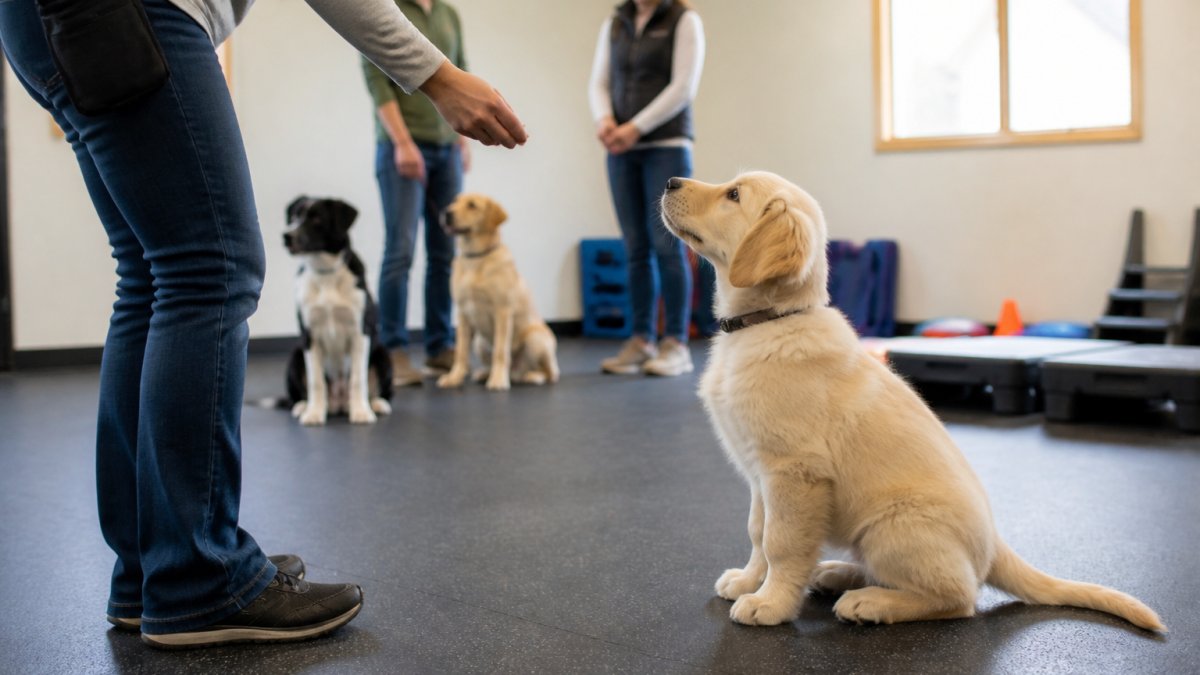
Puppy obedience classes are structured training sessions for dogs under about six months that teach foundational cues, house manners, and controlled socialization with people and other dogs. They differ from adult obedience work because the curriculum targets the developmental window when a puppy's brain is most receptive to new experiences.
That window closes faster than most owners realize. Socialization is most effective before roughly 16 weeks, according to guidance from the American Veterinary Society of Animal Behavior, which recommends starting puppy classes before the vaccination series is complete rather than waiting. The American Kennel Club's puppy training guidance makes the same point: early, positive exposure prevents far more problems than it fixes later.
Below, we break down seven real options, what each one actually delivers, and how to pick the right fit for your puppy's temperament.
Quick Comparison: Top Puppy Obedience Classes Near Me
Here's the short version before the detail. Pricing varies widely, and several providers don't publish rates, so confirm costs directly before you enroll.
| Provider | Format | Best For | Pricing |
|---|---|---|---|
| Lake County Dogs | Customized private and group programs | Behavior issues, fear, AKC certification prep | See website pricing page; free evaluation |
| Petco Dog Training | Group and private classes | Convenience and flexible formats | Contact location |
| Doggie Academy | Group classes, private lessons, behavior counseling | Puppies and rescue dogs needing counseling | Contact for pricing |
| PetSmart Dog Training | Six-week group class | Structured beginner curriculum | $149 for the six-week puppy class |
| PumpkinPups Dog Training | Private sessions and virtual classes | One-on-one attention, remote options | Contact for pricing |
| DogboyNYC | In-home, online, group | Comparing formats under one roof | Contact for pricing |
1. Lake County Dogs: Customized Puppy Training Classes
Our top pick is Lake County Dogs. Led by Gary Boots, an AKC-approved evaluator and Animal Behavior College instructor with over 25 years in canine behavior modification, the practice designs each puppy program around the family's goals, the dog's genetics, and its temperament.
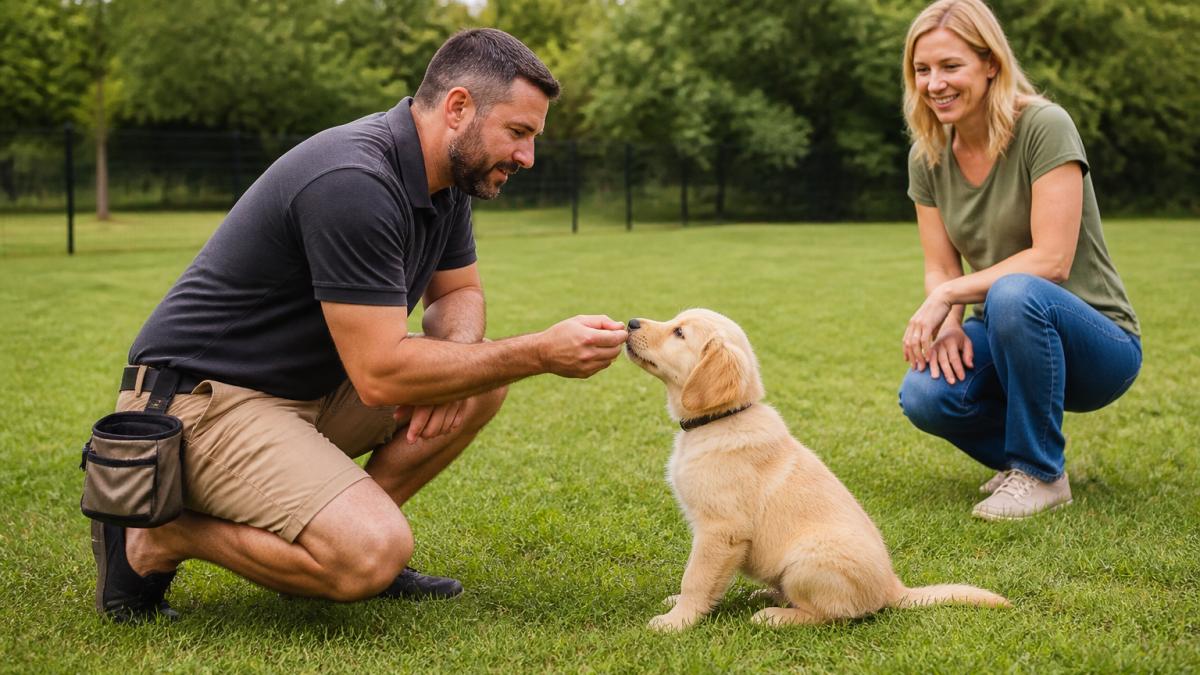
What separates it from a typical group class: the same trainer handles puppy foundations, fear recovery, and multi-dog household harmony. If your puppy shows early reactivity or anxiety, you're not handed off to a different department. Programs also prepare dogs for AKC Canine Good Citizen certification, and the free evaluation means you can see the fit before committing.
2. Petco Dog Training: Group and Private Puppy Classes
Petco runs both group classes and private sessions, which makes it a reasonable first stop if you want to compare formats without switching providers. Puppy training and behavior help are both listed, and classes are led by certified trainers.
The supplied listings don't publish class prices or schedules, so you'll need to call your local store. Availability and curriculum vary by location.
3. Doggie Academy: Behavior Counseling and Puppy Training
Doggie Academy combines group classes, private lessons, and behavior counseling, and it works with puppies, adult dogs, and rescue dogs. That range is useful if your puppy came from a shelter and has an unknown history.
Behavior counseling alongside standard obedience is the differentiator here. A puppy with fear issues gets support beyond sit and stay. Prices and specific puppy-class details aren't published in the supplied listings, so confirm both before booking.
4. PetSmart Dog Training: Six-Week Puppy Class
PetSmart publishes what most competitors don't: a price. The introductory Puppy Training class is listed at $149 and runs six weeks, covering basic skills, communication, and socialization. Beginner and intermediate classes are also listed for dogs who continue.
For owners who want a predictable, budget-friendly starting point, that transparency is genuinely useful. The limitation is that the listed class isn't confirmed for every location, so check local availability.
5. PumpkinPups Dog Training: Private Puppy Sessions
PumpkinPups offers private puppy training classes plus virtual sessions, with virtual sessions listed for Saturdays at 11 a.m. Private instruction suits puppies who get overwhelmed in group settings, and the virtual option removes the commute.
The catch: a single weekly virtual slot won't fit every schedule, and the supplied listings don't include pricing.
6. DogboyNYC: In-Home, Online, and Group Puppy Training
DogboyNYC covers the widest format range on this list: private in-home training, puppy training, behavior training, online sessions, and group classes held at Wag Club. If you're weighing in-home convenience against group socialization, you can compare both under one provider.
In-home training helps puppies who behave differently at home than in a strange room. Group classes add the controlled dog-to-dog exposure that in-home work can't replicate. Prices and puppy-class schedules aren't listed, so ask directly.
How to Choose: Class Requirements, Cost, and Curriculum
Choose on three things: what the class actually teaches, whether your puppy is eligible, and whether the method fits your dog. The checklist below turns each of those into questions you can ask on the phone.
Enrollment requirements. Age limits and vaccination policies vary more than most owners expect. Vaccination rules split into two camps: some providers require proof of the full puppy series before the first class, while others follow the American Veterinary Society of Animal Behavior position that early socialization classes are safe and beneficial before the series is complete, provided the facility requires at least one round of vaccines and cleans between sessions.
Puppy class cost. Published prices are the exception, not the rule. PetSmart lists $149 for its six-week puppy class, which works out to roughly $25 per session.
Curriculum and outcomes. A good puppy class covers basic obedience cues (sit, down, come, loose-leash intro), name recognition, handling and husbandry tolerance, socialization with people and other puppies, and owner coaching.
Group puppy classes vs private training. Group classes build socialization and cost less per session. Private training targets specific behavior problems and moves faster for fearful or reactive puppies. Many puppies benefit from both: group for dog-to-dog exposure, private for the specific fear or leash issue the group can't address.
Training methods and equipment. Ask directly about positive reinforcement and what equipment trainers use. Welfare matters here: aversive methods can worsen fear and reactivity in a young dog. The AVMA's animal welfare resources outline why method choice affects outcomes.
Puppy Training Schedule and At-Home Practice
A weekly class is the anchor, not the whole program. The gap most competitors leave open is the bridge between the two: what owners should actually do between sessions, and how to tell whether it's working. Here is a practical weekly rhythm that fits a typical six-week puppy class.
The weekly rhythm. Short daily sessions at home, five to ten minutes, two or three times a day, build more reliable obedience than one long weekly session. Puppies learn through repetition and consistency, and they lose focus fast. A workable pattern is: one 10-minute morning session on the cue of the week, one 5-minute midday potty-and-name game, and one 10-minute evening session mixing the new cue with a previously learned one. Keep one day lighter so the puppy doesn't fatigue.
What to practice each week. Most six-week puppy curricula follow a similar arc, and you can mirror it at home. Week 1: name recognition and eye contact. Week 2: sit and luring. Week 3: down and stay introduction. Week 4: come when called in low-distraction settings. Week 5: loose-leash intro and polite greetings.
Measurable milestones. Instead of guessing, track three numbers: how many times out of five your puppy responds to a cue on the first ask, how long they hold a stay (start at 3 seconds, build to 10), and how many steps they walk on a loose leash before pulling. Write them down after each session. If the first-ask response rate is below three out of five, the step is too hard; make it easier. If it's consistently five out of five, add distance or a new room.
Generalization. Practice in different rooms, then outside, then in low-distraction public spaces. Add duration and distance slowly. If your puppy fails a cue three times in a row, the step was too big; make it easier.
Post-class support. Ask whether your provider offers follow-up questions between sessions, a shared training log, or a check-in call. If the provider offers a graduation assessment or a next-level class recommendation, use it as a checkpoint rather than a finish line.
Frequently Asked Questions
When should you take a puppy to obedience training?
Most puppies can start foundational obedience classes between 8 and 12 weeks of age, once they have their first set of vaccinations and are cleared by a veterinarian. Early enrollment takes advantage of the critical socialization window, which closes around 16 weeks. Puppy training classes near me typically require proof of age-appropriate shots. Starting early helps prevent behavior problems from becoming habits and builds confidence before fear periods set in.
How much do puppy obedience classes cost?
Puppy class cost varies by format and provider. Group classes at large retailers often run $149 for a six-week session, while private or customized programs cost more because they include one-on-one coaching. Local trainers may price by the class package or offer free evaluations. Always ask what the fee covers: number of sessions, class size, training materials, and whether follow-up support is included. Compare value, not just the sticker price.
Should I choose group puppy classes or private training?
Group puppy classes vs private training depends on your dog's temperament and your goals. Group classes provide structured socialization with other puppies and distractions, which is ideal for friendly, confident pups. Private training suits shy, reactive, or easily overwhelmed puppies, or owners who want a customized puppy training schedule. Many trainers recommend starting with group classes for socialization and supplementing with private sessions for specific behavior issues.
What vaccinations does a puppy need before attending class?
Most puppy obedience classes require proof of at least two rounds of DHPP (distemper, hepatitis, parvovirus, parainfluenza) and a bordetella vaccine, with rabies depending on local age requirements. Some facilities also require a negative fecal test. Check with each provider before enrolling, because requirements vary. Keeping vaccinations current protects your puppy and the other dogs in class. Your veterinarian can advise on the safest timing for group settings.
What should you look for in a puppy obedience class?
Look for certified trainers who use positive reinforcement, small class sizes, and a clear curriculum covering basic obedience, socialization, and leash skills. Ask about trainer experience, continuing education, and whether the program includes owner coaching for at-home practice. A good class provides measurable learning outcomes and post-class support. Visit or call ahead to observe the training methods and equipment used, and confirm the class schedule fits your routine.